collaborative artist interview: Todd Ford on inspiration

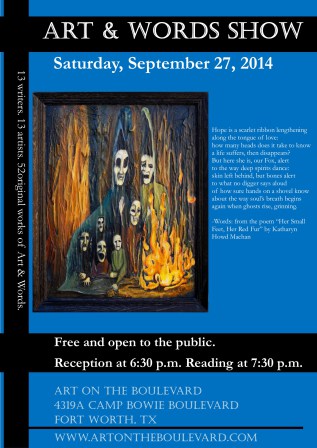
I love collaborations. I know we both recently participated in the Art & Words Show in Texas curated by Bonnie Shufflebeam, a show that starts with a CFP for art and words. After the art is selected, the curator assigns one short story, essay, or poem to an artist and one piece of art to the writer. The artists and writers then have a few months to create something inspired by the assigned work. I enjoyed hearing all the writers and seeing all the art. It was nice to see the art and writing together. You’ve participated in other Art & Words Shows, too. What has this collaborative experience been like for you?

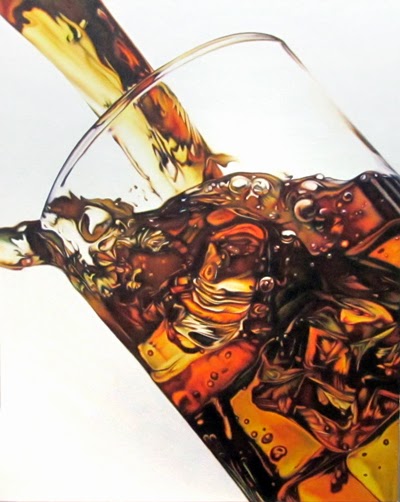
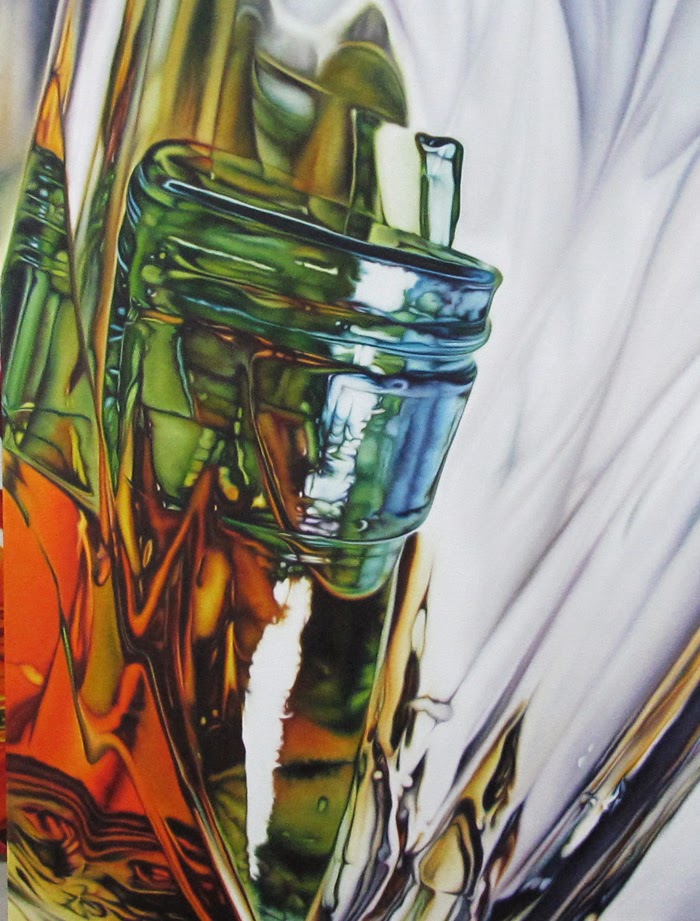
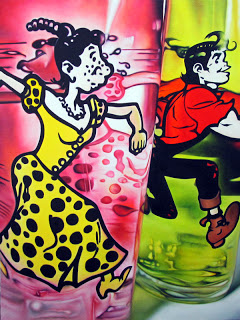
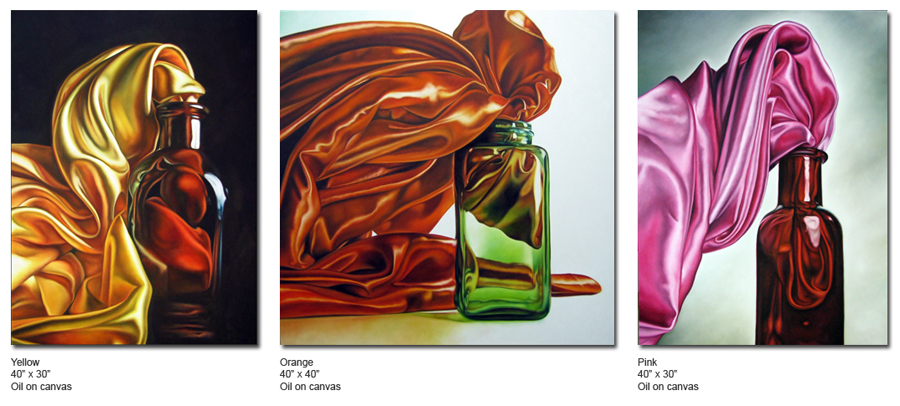
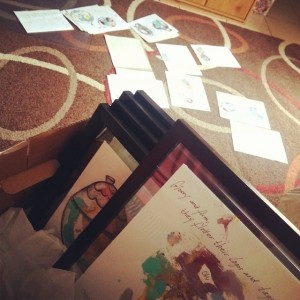
This is the second year that I have been part of the Art and Words Show. The only reason I decided to participate last year was because of the challenging nature that forced me out of my comfort zone. I enjoyed it so much that when I was invited again, I jumped on the opportunity. As an artist, I would say that I am not subject matter driven but certainly gravitate towards compositions and objects that hold visual appeal to me and fit with my aesthetic. The Art and Words show collaboration allowed, or forced, me to work in a different way. I used my sketchbook to write ideas down. I know this is not uncommon, but it is for me. Each idea seemed better than the previous, but many seemed like a good avenue to explore. When I typically start a new painting, I am 100% positive on every aspect of the future piece and my ability to realize it. Not so much on this Art and Words painting. Before I started sketching the composition on the canvas, I felt the urge to sneak up on the easel. A completely irrational approach but I wasn’t sure if the Art Gods would allow me ruin a perfectly good blank canvas with so much doubt in what I had decided to create. That point was the hardest part for me, right before I made the first mark on the canvas. Coming up with the ideas and narrowing down was challenging too, but committing to the first mark was tough. After I sketched it out and started painting though, all was fine.

A thoroughly enjoyable painting to work on and I was pleased with the outcome too. After finishing the painting, I started thinking about how it would be received by you. I knew I liked it, but I also knew that you had probably envisioned very different images when you wrote Kissing Death. I chose to create an interpretation of your piece, and not a literal “illustration”. To me, that is exciting. I am not a writer, but I have to believe that a blank canvas and a blank page hold the same possibilities. There is no right or wrong, but degrees of success. A very subjective notion, but it keeps the creative fire stoked.

Todd, I adore the painting you made. It’s so fresh and interesting. Talking to you at the Art & Words show and listening to you explain your inspiration and process was fascinating. I like the way you play with light, shadows, and the texture of glass. I thought the whole process was exciting too, especially the thrill of getting to the show, doing the reading, seeing the entire exhibition, and talking with fellow artists and writers, some from the Texas, and others from across the country. You’re currently working in Texas. What’s that like? How does it influence your art?

This will be a very boring response. Texas is a great state to live in and I really like it here. However, I would say that it does not influence my art at all.

Who were the artists you admired when you first started making art?

I was one of those kids who never lost the desire to make marks. I enjoyed art and took art classes every year at school from 6th grade until I graduated high school. During this time, there really was not one artist or group of artists who influenced me. It was all exciting and new, and I loved it all. When I started college studio and art history classes, things changed. I quickly discovered what I was exposed to in high school art only scratched the surface. I had always been able to render adequately, but it wasn’t until I discovered Photorealism that I felt a connection. I would say that Richard Estes and Ralph Goings were the two main artists who had the first big impact on me.

How do you start a new series—with a theme, an image, a question or with a material, a technique, a color? Or something else?

Good question. I consider composition to be the driving force in my art. The subject matter is not nearly as important to me as how it is presented. Sometimes, this type of visual exploration leads to a series. I do have a fascination with static and dynamic relationships in my pieces too. A vast majority of my paintings include some variation of that.

Were you ever scared to experiment in art?

No, not really. Experimentation is what led to my current style of painting. I would say that I probably experiment less these days than in the past. My limited time in the studio is dedicated to producing, so not much time to experiment.

What is inspiring you these days?

It may be somewhat narrow minded to say this, but I am sort of creating art in a bubble. I don’t hang out with other artists, regularly attend openings at galleries, or even follow artists. I do enjoy some Pop Surrealism, but that influence rarely inspires my actual work. Although on occasion, when the subject matter is “correct”, you might see a nod to Mark Ryden.

How are you trying to get better as an artist?
Every time I place a new canvas on my easel, I feel like I have an opportunity to grow. It is a literal clean slate each time, and I do not take that lightly. I strive to improve my ability to compose, see color, model, and create a painting better than the one before.

Number of art pieces you own: other than my work, about 5

Number of collaborative art pieces you own: none

Number of art pieces you admire: Too many to count.

Ways you promote and serve other artists: Links to other artists websites/blogs listed on my blog.

Ways you help initiate new collaborations: The only collaborations I have been involved with are the Art and Words show in Fort Worth (2013 and 2014). These were both very positive and challenging experiences. As far as collaborating with another visual artist, I am indifferent.

Where you spend your art earnings: Some to perpetuate the art making, some blown on indulgences, most in a saving account.

Your collaborating artist wish: No real desire, but Jackson Pollock if I had to choose.

Residence: Krum, TX

Job: High School Art Teacher and Artist

Education: B.A. Art Ed

Bio Note: I paint in a style that is similar to, but certainly not true photorealism. I am much more interested in creating work that is a synthesis of my own vision and sensibilities without the strict confinements of photorealism. I want to show a familiar object in an unfamiliar way, as something that has importance. I want the viewer to be engaged. That is my goal with every painting I create. More information available: http://fordsart.blogspot.com/ and https://www.facebook.com/pages/Todd-Ford/241748422539196?sk=wall

“a chapbook evangelist”: the chapbook interview: Allyson Whipple on feminism, festivals, and freewriting for ekphrasis

2014-07-17 12.17.07

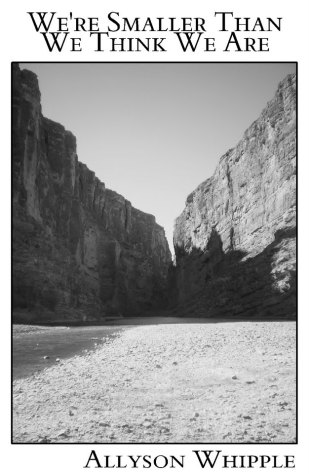
At the Midwestern mythmaking panel at the Omaha Lit Fest, panelists discussed how their characters and stories are influenced by the landscape. One of the panelists, Karen Shoemaker, noted that though great books are written about Nebraska every few years, the general reading public forgets about them in the interval and that Nebraskan writers have to continually reinvent Nebraska, because after each great book about Nebraska there is a silence. What I love about your chapbook We’re Smaller Than We Think We Are (Finishing Line Press, 2013) is your attention to place, landscape, and travel, and the people encountered there. Talk about the Texas literary tradition. And, talk about landscape and place in your work.

That’s a hell of a question, and gave me a lot to think about. To be honest, I knew very little about Texas literary tradition until after I moved here in 2008. And while I have learned about some of the big names, like the literary great James Michener and the political brilliance of Molly Ivins, I feel like I have only scratched the surface of our literary history. I still have a lot to learn, especially about minority authors. But I feel very lucky to be part of a dynamic and diverse literary community, based in Austin but stretching out to other cities.

My chapbook is about journey and landscape, but it’s really about falling in love with Texas (despite how I feel about its politicians). There’s Ohio landscape in there as well: the suburbs, Lake Erie. I don’t think I could have put this collection together without acknowledging the state where I lived for the first 24 years of my life. It’s still important to me, and in fact the longer I am away from Ohio, the more I appreciate it. But this book is about learning to love a place and feel part of it, not simply because you were born there, but because you have traveled and explored and found that the place itself resonates with you so much that you want to make it home.

There’s also ambivalence here: about traffic and the way the cities have been constructed, about the heat. But whether you love a person or a place, you can’t really avoid ambivalence. There’s some part of love that requires taking a critical look at your beloved, recognizing the flaws or the things you don’t like, and deciding you accept them anyway.

I love collaborations. I know we both recently participated in the Art & Words Show in Texas curated by Bonnie Shufflebeam, a show that starts with a CFP for art and words. After the art is selected, the curator assigns one short story, essay, or poem to an artist and one piece of art to the writer. The artists and writers then have a few months to create something inspired by the assigned work. I enjoyed hearing all the writers, including you, read their work at the show, as well as walking around the gallery to study the art and writing together. What was the collaborative experience like for you?

The interesting thing to me about ekphrasis is that it’s a collaboration, but one that is a lot more solitary than other collaborations I’ve done. Especially if you’re working with a very old piece of art, you can’t just call up the artist and ask for advice on how to shape your poem. I’ve always felt with ekphrasis, you’re collaborating more with the work of art itself than the artist who created it.

In this case, I spent a lot of time freewriting, and wrote lots of drafts that I tossed out because they relied so heavily on description. I think that’s one of the challenges of ekphrasis: to not rely so heavily on description of the piece, or to use description in a way that doesn’t come across as prose or as a list. The Art & Words pieces all did a terrific job of that.

In the end, I came to the poem through focusing on sound. The “Syncopated Rhythm” painting struck me as quite musical (in fact, I think the slopes in it represent a sort of sound wave), and I came to the poem through playing with the different sounds that were drawn from the vowels and consonants of the title.

I was happy with how it turned out, and the artist who did the painting loved it as well. I was glad I could do something that the artist felt embodied her work. My biggest fear was to write a piece that the artist didn’t like.

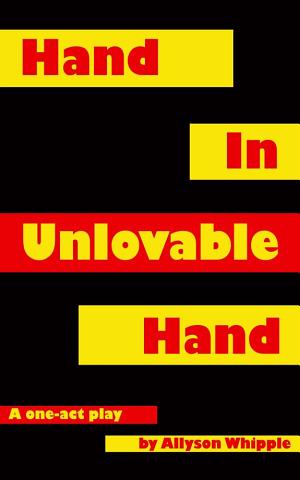
In her interview in the March/April 20013 issue of The Writer’s Chronicle Kim Barnes talks a lot about women and violence and when we as a culture allow women to perpetrate violence and when we do not. She says, “It’s hard for us to accept female authors writing violence that is not linked to the victimization of women” (105) and also “trying to change that paradigm is a fascinating exercise and frustrating” (104). Reading your one-act play Hand in Unlovable Hand made me think about the lingering effects of child abuse, gender violence, and addiction, but also the interview with Kim Barnes on women who are violent and how one writes such women into fiction. Talk about depicting complicated violence in a given genre.

When I wrote Hand in Unlovable Hand, I wasn’t even trying to write a play. I was trying to write a short story and come to terms with the abusive relationships I had witnessed as a child. But it was so dialogue-heavy that the critique group I was in told me to just write a play instead!

Although most of my poems are based on life experience, Hand in Unlovable Hand is probably the most personal, intimate thing I have ever written. Although none of the events of the play actually happened, the spirit of mutual destruction is there. I grew up in a situation where the violence was, at least in my perception, mutual. (If my parents see this they might disagree, but that’s how I saw it.) I spent a lot of time as a teenager blaming one parent, and a lot of time in my twenties blaming the other. In writing this play, I got to explore mutual violence on an exaggerated level, and really came to terms what I grew up with.

It wasn’t hard to write. But it was scary to produce and then publish, because in some ways it still makes me feel very raw. It was difficult to rub rehearsals and hear those violent sentiments over and over. But I was glad I did it. The act of getting it off my hard drive and into the world added another level of closure.

The funny thing is, it sat on my hard drive for about three years before I did anything with it. And it was produced just as I was getting divorced. I had so many people assume it was based on my marriage, which was both amusing and unsettling.

Though I was unable to attend, I do have the notes from the “Toward an Inclusive Feminist Poetics” workshop you gave at this year’s Austin Feminist Poetry Festival. What brought you to think critically about feminist poetics? How can feminist poetics be apply to the art of writing a chapbook?

Feminist poetics was something that only recently piqued my interest. While I don’t regret getting my M.A. in English, I will say that it did sour me on academia for a while (though that sourness has subsided and I’m considering going back for an MFA). But now that I’ve spent several years of my life concentrating on writing poetry, I’ve become interested in the ways we understand, study, and write about it. Being interested in the ways in which people understand/receive/learn about poems has become important to me as someone focusing on poetry as my creative mode of choice. And since I’m getting more focused on the intersection of art and politics, it was only natural for me to start considering questions about the ways in which gender and feminism influence approaches to poetry, both in the past and in the present.

I wasn’t really interested in poetics at the time I did We’re Smaller Than We Think We Are, but as I look back on it, I think that the act of organizing a chapbook (or a full-length collection) is about doing the best you can to look at your work from the mind of an outside reader, a stranger who might encounter your book. It involves really studying your work not just to select the poems, but to put them in the best arrangement.

I think that if you’re a feminist poet, and one who is conscious about the fact that you are writing feminist poetry, approaching poetics in your own chapbook or collection is about creating a book that reflects the blending of your artistic and political vision. It’s not just about presenting you as a poet, but about what you envision for art, and for the world.

I know that you’re participating in Choice: Texas, an interactive fiction about reproductive rights in Texas (www.playchoicetexas.com) by writing the last character. Talk about this project, what it hopes to accomplish in terms of addressing reproductive rights in Texas, and creating a character that seeks to represent the complicated issues women face when considering family planning.

Just to clarify: I just finished writing the last character, but have been involved with the writing of all 5. The first two characters, which are currently up online, were 50-50 collaborations on the writing. The third character, Jess, who will be out soon, was all my work. Maria, who will also be out soon, and Alex (the 5th character who I just sent for beta testing this weekend), started with Carly as the author for the first 25%, and I finished the rest.

This started out as Carly Kocurek’s vision. She had originally wanted to do a tabletop RPG about reproductive rights, but had trouble creating a balanced game. She eventually came up with the idea of a text-based computer game, with five characters, each with a different set of financial, emotional, and familial circumstances that can stack the challenges they face in different ways. So Leah is poor, lives in a rural area, and is a rape victim. On the other hand, Latrice is financially stable and lives in an urban area, but choosing motherhood doesn’t mesh well with being an attorney, and she doesn’t have a family situation where the decision to abort is acceptable.

The point of this game is to illustrate the social and financial barriers that women encounter no matter which option they choose. Adoption might be consistent with your moral views, but it gets romanticized in the media, and the emotional trauma of giving a child up gets glossed over. (I’m not saying that all mothers who give up their babies regret it, but the fact is that those who do are often silenced or ignored.) Choosing an abortion might mean more stability, but it’s not an easy way out. And motherhood is fraught with a mix of intense frustration and intense love, even under ideal circumstances. We want to show that women don’t make any of these choices lightly, and that no matter what choice you make, the path is not black and white, not necessarily simple.

How do you define chapbook? A collection of anywhere from 10-25 poems, usually with at least a loose thematic structure.

What is inspiring you these days? Found poetry, the ModPo MOOC, rules and restrictions (both in terms of poetic form and as a subject of exploration in the poems themselves), spiders.

How are you trying to get better as a poet? Attending open mics or giving readings at least once a month; going to critique groups when my schedule allows (I’m testing for my black belt next month so most of my time is spent on that right now), taking workshops/classes when finances permit, applying to an amazing MFA program, studying self-publishing (because I love small presses but feel it’s important to be aware of all of my options).

What makes a good chapbook? Being thematic, but not being too heavy-handed about that theme. I like when chapbooks are unified around a concept, but have some poems that bend the constraints of the overall subject matter.

What’s next for you? Testing for my black belt in Kung Fu, getting the Feminist Poetry Festival registered as a nonprofit and planning for 2015; co-editing the 2016 Texas Poetry Calendar; being a featured poet at the 2015 Austin International Poetry Festival; applying to an MFA program; publishing my first full-length collection (possibly self-published, and possibly with a publisher).

Your chapbook credo: Quality of poems, not quantity of poems.

Number of chapbooks you own: I don’t have an exact count, but at least two dozen.

Number of chapbooks you’ve read: There are 23 on my shelf, and I’ve read all of those, so the 6-8 I haven’t read are somewhere in my to-be-read shelf.

Ways you promote and serve other chapbook poets: Even when I was blogging more regularly, I rarely did book reviews, but I do try to promote chapbook authors and presses on Twitter, and buy them whenever I can. Really, I just try to be a chapbook evangelist! A lot of people who aren’t in the poetry community, or who are new to poetry, haven’t heard about chapbooks, and don’t realize how amazing they are.

Where you spend your chapbook earnings: Most of my sales come directly from readings I do at bookstores or open mic events. So I usually spend most of my earnings either on books from other poets at the event, or on drinks at the bar. Really, I’m just happy when I don’t have to use the cash to pay for parking!

Your chapbook wish: To do another one! I have a full-length collection out for submission, but I’d love for what comes after that to be another chap. I had so much fun with the first one.

Residence: Austin, Texas

Job: Adjunct Associate Professor in the Technical and Business Communication department at Austin Community College
Administrative Assistant at Master Gorhing’s Tai Chi an Kung Fu

Chapbook education: Spending the summer of 2011 working with poet Abe Louise Young to work on revising and assembling. Plus, reading chapbooks!

Chapbook Bio: My bio has changed so much since this chapbook came out! The up-to-date version: Allyson Whipple is the director of the Austin Feminist Poetry Festival and co-editor of the 2016 Texas Poetry Calendar. She is also the author of the chapbook We’re Smaller Than We Think We Are and co-creator of Choice:Texas. In her spare time, Allyson is working toward a black belt in Hung Gar Kung Fu. Her weapon of choice is the staff.

Where we can find your chapbook: Via Finishing Line Press or Amazon (Or, if you’re in Austin, at BookWoman Bookstore)

“necessity is the mother of experimentation”: the chapbook interview: Brenda Sieczkowski on research, experimentation, and goodness

author1

I adore collaborations and couplings of art and poetry. I recently attended the Art & Words Show curated by Bonnie Shufflebeam, a show that starts with a CFP for art and words. After the art is selected, the curator assigns one short story, essay, or poem to an artist and one piece of art to the writer. The artists and writers then have a few months to create something inspired by the assigned work. Can you talk about the collaborative work you did with Chad Woody who illustrated your fabulously titled chapbook Wonder Girl in Monster Land (Dancing Girl Press, 2012)?

Yes! I share your enthusiasm for cross-media collaborations. The type of collaborative process you describe as part of the Art & Words Show is so fertile—as an individual who works primarily in text, I appreciate the ways a compelling piece of visual art can jump-start me from a groove I’m stalled in and propel me in new directions. (I recently reconnected with an old friend who started a press with a similar collaborative mission, Prompt Press: http://promptpress.com/). The collaborative process between Chad Woody and me for Wonder Girl in Monster Land was somewhat different, however, because I’ve known Chad, and his work, since 1999, when we met in the M.F.A. program at the University of Florida. Chad is one of those insanely talented people who excels in a multitude of creative fields—(a vast range of) visual media, poetry, prose, performance art . . .To experience what I mean, spend some time exploring his blog: http://cranialstomp.blogspot.com.

When I wrote Wonder Girl in Monster Land, my process diverged from previous writing projects, was inverted, in the sense that I arrived at the umbrella mood and logic of the chapbook before I had any of its specific text or details. Although Monster Land shifted and adapted as the individual poems in it took shape, the composition felt primarily like a top-down operation. But when I eventually completed a draft of the manuscript, I couldn’t shake the feeling that there was an element of its world I couldn’t realize in text; that’s when I first thought about enlisting the aid of a visual artist. Chad was the first person I thought of since I have always felt that, despite differences in our projects or processes, our work shares an affinity for the dark, the irreverent, and the whimsical/absurd. But at the same time, his work commits to risk and doesn’t fold its hand when the emotional stakes are high.

Chad and I have kept in sporadic contact since Florida. A few years before I wrote Wonder Girl in Monster Land, I had sent Chad an (unrelated) email asking if he could build me a bird-sized coffin. His response was classic Woody: “Crow-sized or sparrow-sized?” I wrote back “sparrow-sized,” and a hinged wooden coffin, just what I had wanted, arrived soon after. This anecdote perhaps demonstrates why I had such a high level of confidence that I could just send Chad the chapbook manuscript, and he would come up with brilliant illustrations. I felt more comfortable NOT dictating a lot of instructions or parameters because I didn’t just want to enlist his technical skill; I wanted to enlist his visual imagination and energy. And the results were amazing. My one regret is that I had no clue how labor-intensive the illustrating work I had asked Chad to do would turn out to be. You get a sense from the reproduced illustrations, for example the ones for “On Halloween” and “On the Conditional,” how incredibly detailed the drawings are. But the reproductions don’t even come close to the originals. I have a print from the original etching of “On Halloween,” and the level of detail is unbelievable—you can make out the expressions on the most distant faces in the crowd around the door, and you can see each grain of wood in the kitchen table. I owe him significantly more than one.

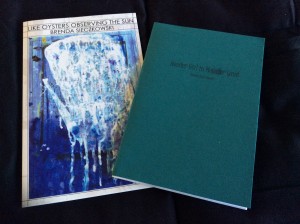
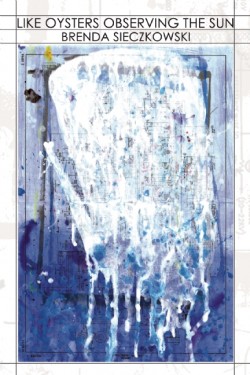
I love the poems “Mix Tape (Hypothetically in Love)” and “10 Amendments (An Erratum).” These, like so many in your chapbook and like other poems collected in your full length collection Like Oysters Observing the Sun (Black Lawrence Press, 2014), are funny and smart as they experiment with poetic form. Can you talk about poetic experimentation?

I’m glad you mentioned “Mix Tape” because the background to its composition is particularly funny in the context of your question. As my family can attest, I’ve always had a stubborn streak, so when someone lectures me on why I can’t do a certain thing, my brain immediately starts spinning out how and why I can. If someone tells me I must do x, I immediately begin to transform that x into y/why. I wrote “Mix Tape” in response to the assignment, given in one of my graduate workshops, to write a sonnet. I occasionally do write sonnets of my own volition, but being asked to produce one on command activated knee-jerk evasive maneuvers. For some reason, the translation of sonnet as “little song” was floating around in my head, and I think I was (somewhat subconsciously) thinking, “I’m not giving you that little song; you’re just getting a bunch of little song titles.”

Though I certainly don’t model my poetic vision on Plato, I’m happy to twist his words into a more general response to your question; for me, necessity is the mother of experimentation. If I’m adapting or distorting a particular form or mode of expression, it’s because I can’t work out any other way of communicating what I mutably perceive I might mean. I can’t snap my notions of poetic experimentation into line with ideas of objectively designed experiments or implementations of controlled variables. I have no hypothesis until a discovery is already palpable. And then the discovery sensibly rediscovers itself.

brenda's chap

I love the idea of knee-jerk evasive maneuvers activated by workshop assignments and the ways they can inspire poems. And too, that friendships started in graduate school can manifest later into collaborations that produce beautiful chapbooks. I’ve been thinking about writing and community, those that foster creative exploration and others. The Writer’s Chronicle September 2014 issue features an interview with novelist Xu Xi who contrasts her business life with the writing life. She explains, “Publishing is a loathsome industry, one that is too much about connections and where you came from and privilege…publishing and the literary life, generally, is a lot about whom you know and even where you went to school…the whole literary scene is a lot more about the one degree of separation than not. In time, you learn to play the game” (73). Xu Xi is a novelist. How true do you think this is for poets? How important is community for a poet, who you know, where you went to school, and learning to play the game?

The question of community, how to cultivate and sustain it, is vitally important for any writer—poet or fiction writer. I think it is crucial, however, to distinguish between network and community. Although networking, making professional connections, overlaps with and can absolutely lead to community, it can also jeopardize the potential for real companionship if it privileges elitism over sincere, mutual respect and support. My suspicion is that “playing the game” is a bigger factor in fiction, where the stakes are (or are at least perceived to be) higher than in poetry. But I am not familiar enough with the intricacies of the publishing industry to make any definitive claims. It does seem clear, however, that the lifeblood of contemporary poetry is in small presses. I can only speak about those with which I have personal experience, but I think that, largely, small presses are building essential channels for community. I’m thinking about Kristy Bowen at dancing girl press, and what she has accomplished, almost single-handedly, towards providing exposure for a huge community of women writers. Jen Tynes, Mike Sikkema, Erica Howsare, and Jennifer Denrow at Horse Less Press; Nathan Hauke and Kirsten Jorgenson at Ark Press; Gina Myers at Lame House Press; Dawn Pendergast at Little Red Leaves; the folks at SP_CE in Lincoln, NE; Bruce Covey and Co. at Coconut—all these people exemplify for me a true spirit of and dedication to community. Diane Goettel and the editorial staff at Black Lawrence Press had likely never heard of me when they plucked my full-length manuscript for publication, but they believed in my work and labored tirelessly to bring it into print. Do editors of small presses sometimes publish people whose work they already know? Sure. This is a problem when it interferes with those presses’ abilities to provide access and range. We all need to push ourselves harder to expand the borders of our community. This extends, in my mind, to pushing ourselves, those of us who are teachers, to expand the communities of writers we assemble in our syllabi. This extends to pushing ourselves to diversify and challenge the community of writers we make a place for on our bookshelves.

One of my mentors at the University of Utah, Don Revell, said very early on in my studies that only “a good person can write good poetry.” In typical knee-jerk fashion, I immediately thought to myself, “Nope, obviously not true. I can think of plenty of poets who act like total assholes and write pretty brilliant poems.” But Don’s statement stuck with me. The more I began to let go of worrying about whether I thought other poets and writers met this standard and focused only on how it applied to me, the more I realized it was true. I couldn’t be a good poet if I wasn’t a good person. This realization has been my salvation in some very challenging times.

brenda's chap 2

In your forthcoming chapbook Fallout & Flotation Devices (Little Red Leaves, 2014)—which includes the pieces “Notes,” “Conflated Color Index, Autocad,” and “Memorandum” with subsections of intention, discussion, background, and foreground—gestures towards research, a research that might resist some readers expectations. Let’s talk about research and writing the chapbook. How do you deal with the transition from research to writing? At what point in the writing process do you research and why do you do that research? When do you take notes?

The transition between research and writing in most of my projects—Fallout & Flotation Devices is no exception—is extremely fluid. From the moment I learned to read, my appetite for knowledge and explicit detail has been insatiable. Whatever spare moments I had were lost in books—to the extreme that when I turned 16 and learned to drive, I realized that I really didn’t know how to get much of anywhere in the city I grew up in; all my passenger time had been spent reading. Reading (in a frenetically wide range of subjects—neuroscience is an enduring stimulant) sparks most of my writing. A sheer infatuation with some fact or idea fuels initial lines or sketches. But then those lines or sketches are not sharp enough to satisfy me, so I have to go back and dig up more information on the subject, or basically on the subject, or very tangentially related to the subject. I’ve had to learn to cut myself off from research at a certain point, however; otherwise, I find that the research process often becomes a procrastination technique to avoid the sometimes-difficult generative work that needs to follow.

I also often borrow forms from genres that I, somewhat unwilling, have had to engage with in my professional life. “Memorandum,” for example, opened out from my need to find creative outlets when I’ve been forced to teach technical and business writing classes. (I once made my business students convert William Carlos Williams’ “This Is Just to Say” into memo format. They loved it?).

Every aspiring writer who has sat through a creative writing workshop has probably heard that old gem: “Write what you know.” I think this is terrible advice if you interpret it as your cue to circumscribe your writing into the narrow, limited world you ordinarily inhabit. If, however, you take this advice as a challenge to know more, to know widely, then I think it is genius.

tiny-house-movement

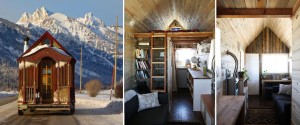
How do you define chapbook? I think of a chapbook as the tiny house model (artisanal and/or DIY) in the poetry construction industry.


What is inspiring you these days?

monowi_signMonowi_mason

1) Close to home:

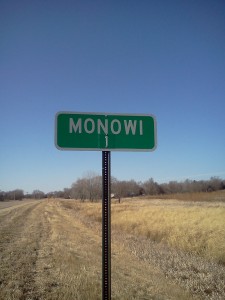
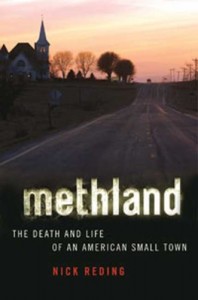
When I moved back to Omaha after spending most of my 20s and 30s in other parts of the country, I found myself re-enamored with the Mid-West’s grassy, unraveling spaces, all its rusting mills and factories. Over the past few years, I’ve taken frequent regional road-trips, from Moscow, IA, to Oregon, MO. My favorite of these journeys, however, took me to Monowi, NE, population 1. The sole resident (and mayor, bar-tender, librarian) was unfortunately out of town for the weekend, but I had a great time exploring Monowi’s abandoned frame houses and trailers. It’s a town I definitely plan to revisit. These mini-journeys, coupled with Nick Reding’s Methland: The Life and Death of an American Small Town, provided much of the inspiration for “The Great Plains Alchemy of Weather” (the second section of Fallout & Flotation Devices).

methland

2) Cross-section of more universal pursuits:

Marxist and post-Marxist theory. Dialectic force fields.

marx

Dreamers, self-starters, work-horses scrambling every day to provide and improve the poetry community. In addition to those people and presses I mentioned above: Megan Kaminski and the Taproom Poetry Series, Hanna Andrews and the women of Switchback Books, Zack Haber and the Other Fabulous Reading Series, Lara Candland Asplund’s features on her Girls in a Tight Place blog, this wonderful chapbook interview series (!), MC Hyland at DoubleCross Press, Nate Pritts and H_NGM_N, the folks behind The East Bay Poetry Summit, everyone at VIDA fighting the good fight, Pussipo, 100 Thousand Poets for Change . . .I could go on in this vein for a LONG time.

DIY websites.

The Eclipse archive and UbuWeb.

Neuroscience, phrenology, biology, apiology, gross anatomy, taxidermy, botany, natural history, geology, Victorian sciences . . .

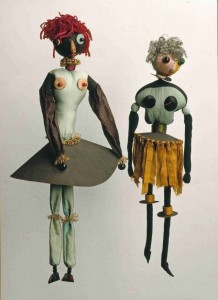
Dada dolls.

hoch_dolls
How are you trying to get better as a poet?
I’m always trying to increase the depth and breadth of my reading. That’s my abiding longitudinal tactic. But I’ve taken a much different approach in the last five or six years. When my graduate funding evaporated, I had to put my studies on hold to work full time (+). I wasn’t sure if or how I would ever find the resources to finish my degree, and I think the potential for despair or bitterness was there. But, at the same time (this was right at the start of the economic recession), I was acutely aware of how many people’s lives, particularly those who were already extremely underprivileged and vulnerable, were being devastated by the financial crisis. I funneled my employment search into social services and began working in support services for chronically homeless individuals, street kids, prison inmates. Although this may seem paradoxical—because committing to the work I was doing severely limited the time and emotional resources I had left to invest in writing and academic pursuits—struggling every day to combat (in whatever tiny way I could) the enormous heartaches of poverty, mental illness, and addiction was the single most important thing I could have done for myself to improve as a poet.

What makes a good chapbook? Elliptical vision. Embroidery that curls away from strict linearity.

What’s next for you? I’m hoping to finally complete my PhD in the next year, and I’m very purposefully trying not to think past that hurdle yet. If I do, I may never finish.

Your chapbook credo: Sew love, not war.

Number of chapbooks you own: 40-50

Number of chapbooks you’ve read: 70-80

Residence: Omaha, Nebraska

Job: I recently took a hiatus from working in homeless outreach and support services, and am now employed as a graduate consultant at the University of Nebraska Omaha’s Writing Center. I work part time as a free-lance editor and also for Disability Support Services at a local community college. In my spare time, I’m attempting to wrap up my much-delayed PhD in creative writing and literature.

Chapbook Bio: Brenda Sieczkowski’s poems and lyric essays have appeared widely in print and on-line journals including The Colorado Review, Versal, The Seneca Review, Bone Bouquet, Ilk, The New England Review, Poetry Daily, Verse Daily, Diagram, The Florida Review, Gulf Coast, Poet Lore, Dusie, Sidebrow, and Subtropics among others. Her chapbook, Wonder Girl in Monster Land, was published in 2012 by dancing girl press. A second chapbook, Fallout & Flotation Devices, is forthcoming from Little Red Leaves. Like Oysters Observing the Sun, her first full-length collection, was recently released by Black Lawrence Press.


Where we can find your chapbook:

You can find Wonder Girl in Monster Land here:
http://dulcetshop.ecrater.com/p/14189202/wonder-girl-in-monster-land-brenda

Fallout & Flotation Devices will be available shortly from Little Red Leaves’ Textile Series:
http://www.textileseries.com/

If you’re game for a longer ride, my full-length collection, Like Oysters Observing the Sun, is available here:
http://www.blacklawrence.com/like-oysters-observing-the-sun/

the chapbook interview: Sandy Marchetti on letterpress collaborations

I recently attended the Omaha Lit Fest and one of the themes I heard repeated among the panelists focused on what we include in our books as writers that work in “service to the book” or in “service to the story.” In the case of the Omaha Lit Fest with its theme of “Warped Historical In/Accuracy” panelists spoke to issues of lyrics, song titles, historical fact, and local and cultural trauma, as well as others. I’m curious about the images by Erika Adams in your chapbook A Detail in Landscape (Eating Dog Press, 2014). Can you talk about the collaborative work and how the art and words are in service to the larger chapbook?

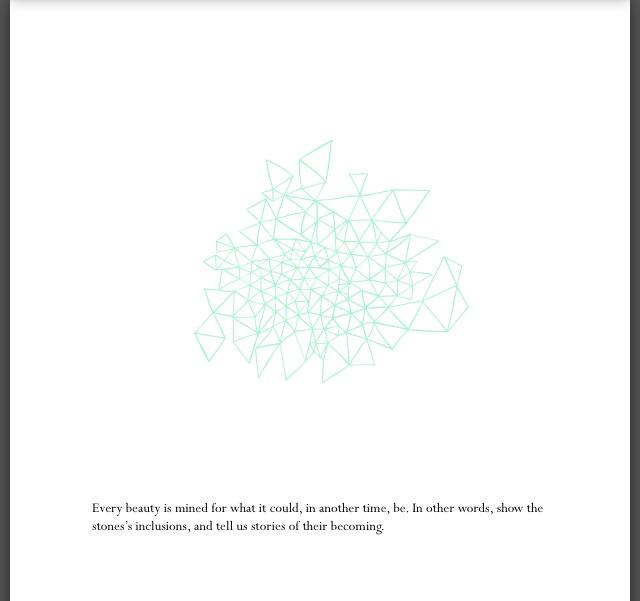
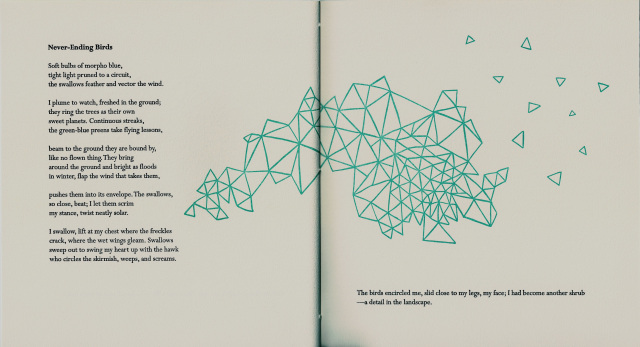
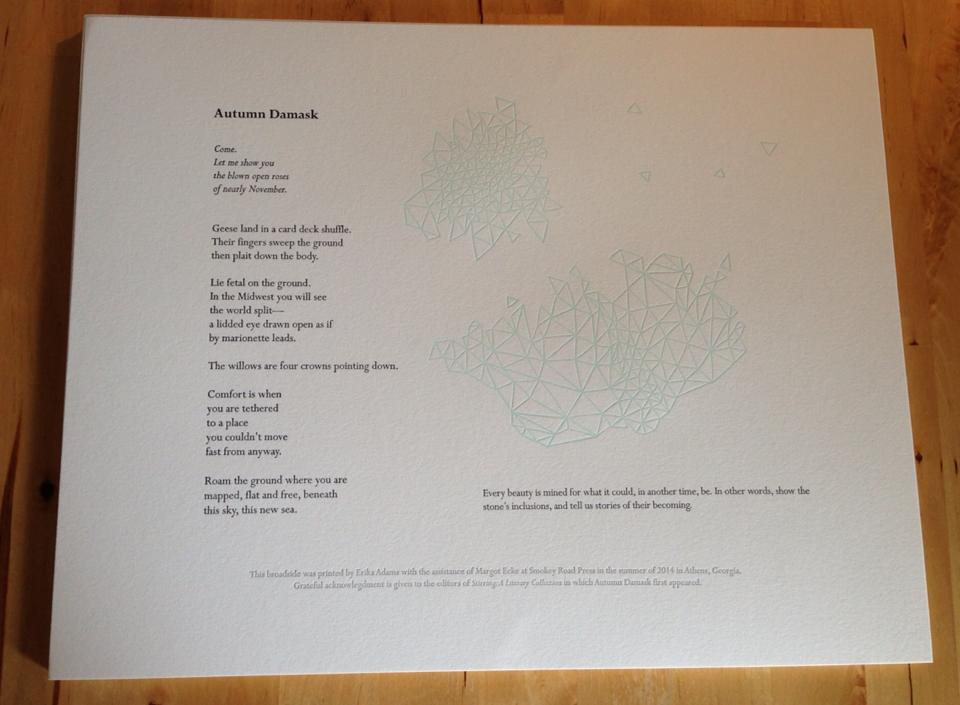
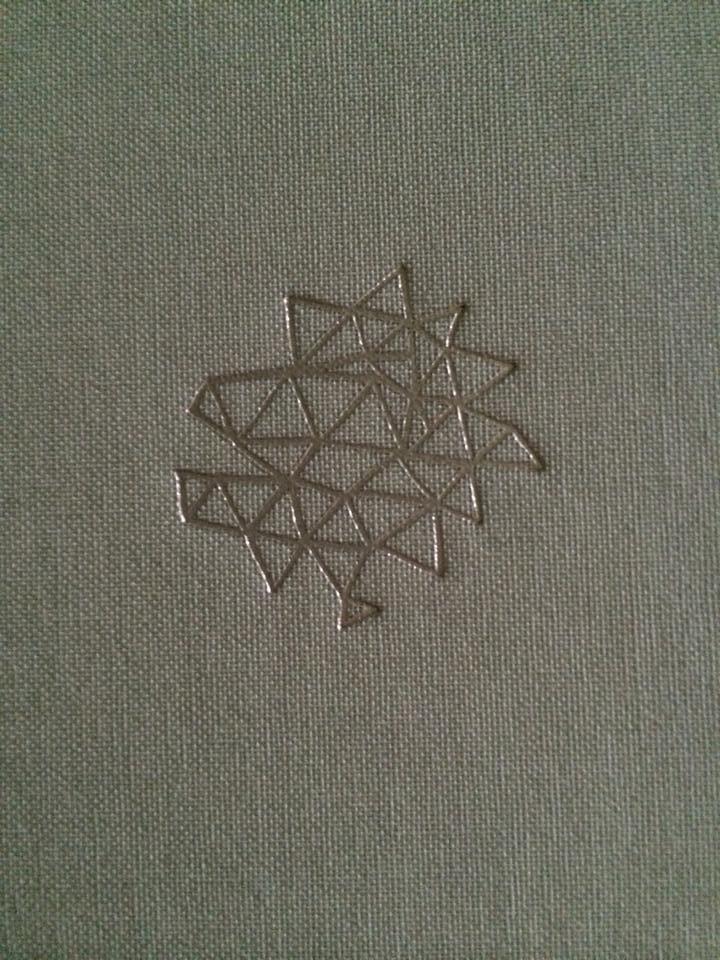
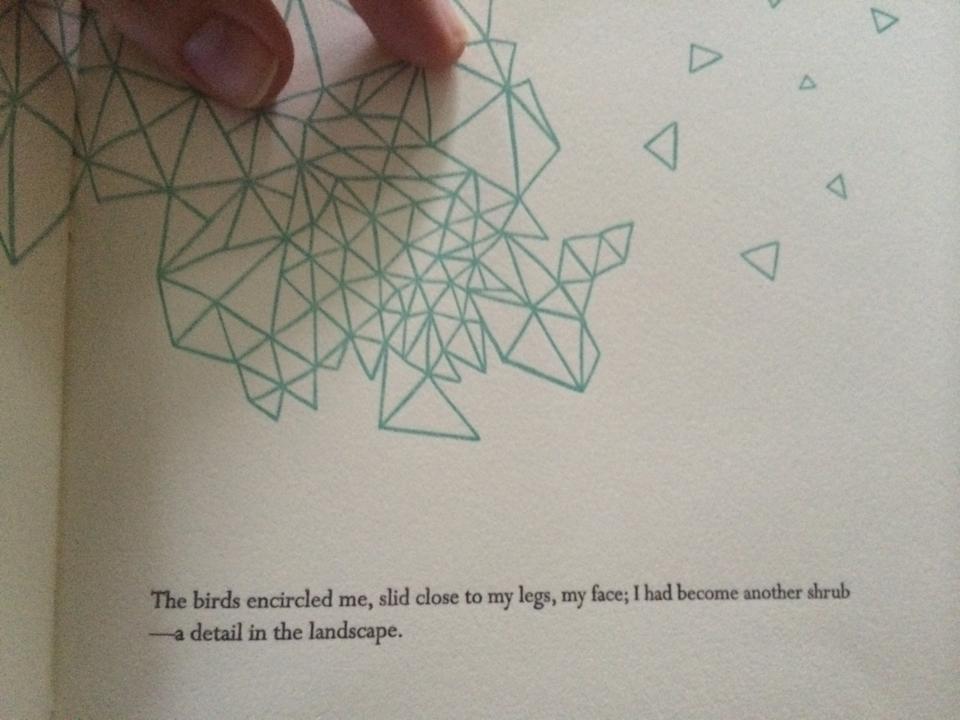
Madeline, thank you so much for inviting me to be a part of your interview series. A Detail in the Landscape is a true collaboration, so I especially identify with your query here. The sum of the visuals and words being greater than their parts was an equation Erika (founder of Eating Dog Press) and I constantly negotiated in the making of this book. We wanted to work together, after meeting at Vermont Studio Center last year, because we both knew her talent and vision as an artist and master printer could challenge and bloom my words. This is why we decided, early on, to give each other freedom to create our own “sides” of the book-hers the visual, and mine the written. We did give each other suggestions, though. For example, I mentioned a square might be the right shape for the book, and she suggested that I cut the micro-essays that accompany each poem from a paragraph down to one vibrant sentence. We trusted each other and took each others’ advice, but there wasn’t pressure to do so. Ultimately, though, this freedom enhanced the book so greatly. Erika teased out motifs in my poems beyond what I had found. For instance, Erika’s illustrations consist of abstract geometric forms made up of triangles in five colors, mostly shades of green and blue. These forms spread against the spine and could conjure the image of a flock of birds or a cloud. I would never have thought of geometric shapes as a panoramic concern of the book, but the poems really do take on a discussion of symmetry, shapes, and distances. In essence, the illustrations, shape, colors, size, and letterpress design (all executed at Erika’s hand) provide a type of critique or extrapolation of the words right inside the chapbook itself.

SM chap 1

This process that you and Erika engaged in sounds like it was lots of fun, while also inspiring and motivating—the types of projects all of us need in our lives—not to mention producing a beautiful letterpress book. At the Omaha Lit Fest at one point the director and founder, Timothy Schaffert said, “I always tell my students the difference between a published writer and an unpublished writer is the published writer finishes the book.” Were you ever scared to finish a book? Can you talk about your process of finishing your chapbook The Canopy and your forthcoming book from Sundress Publications?

Really interesting question, Madeline! That Timothy Schaffert quote is making me feel pretty good about myself! I probably should have been scared knowing what I am aware of now regarding the process of finishing a book. I was naive, as many young writers are, of the wherewithal it takes. I was lucky regarding The Canopy. At the time, in 2011, I was working on Confluence, my full-length collection that is now forthcoming with Sundress Publications. I hoped to finish it after two years of hard work. I had blinders on, and never thought of publishing a chapbook from a section of Confluence, but when I heard about the Midwest Writing Center Press contest, my interest was sparked. It was regional-only open to Midwestern poets-and I thought I might have a better chance because of that. After all of the money and time spent on rejections from Yale and the Walt Whitman Award, I took a shot. In one day, I culled a 16-page manuscript from this big book of 60 poems and sent it. I continue to pin it on sheer beginner’s luck that I won! If I had realized at the time what I know now-that a chapbook is an important publication for a poet and a great accomplishment-I might have been more anxious about sending. Really, my ignorance saved me.

After working on Confluence for a couple of years, and just after publishing The Canopy, I began to realize how difficult it was going to be to finish the full-length collection. This was incredibly frustrating, seeing as how the chapbook was picked up straightaway. I was no longer naive at this point, so instead of becoming scared this time, I got angry-more at myself than the publishers, I should note. I overhauled the book at least six times in the next three years, each time I had a crop of new work. I weeded out every lackluster poem and made sure the revisions/replacements shone. I waged a war against that manuscript, taking each poem through 80 drafts. I learned just how badly I wanted Confluence to be a book. If someone had told me it would take five years to complete the manuscript and find a publisher, I wouldn’t have believed them. I’m fairly confident about my work, but contests and publishing in general humbled me. The revision and submission process also made me a better, more tenacious poet, as it called on all of my reserves. I also met the most amazing folks along the way. I realize I have used all of these aggressive metaphors, but the vision I had for this book guided me to keep writing, revising, and sending. Even mentors told me I should move on to other projects. By the time Confluence was picked up, I knew there was nothing else I could do to make the book better. I told myself, “this book deserves to be published,” and once I really believed that, it was.

SM chap 3

I really appreciate your discussion on process for Confluence—the revision work, dedication, and the weeding out of lesser poems. It’s a process many writers go through as they revise—work that can be difficult, but necessary to make it a book. I’ve been thinking and rereading your collaborative chapbook A Detail in the Landscape. I particularly adore the last page—the last words and image of A Detail in the Landscape. Talk about endings. How do you decide where to end a chapbook, a book, a poem?

Great question! I knew I wanted to end Detail on “Never-Ending Birds” because it is the poem that begins my full-length collection, Confluence. In fact, all five lineated poems in Detail appear in Confluence, though the five prose pieces do not. I originally wanted “Birds” near the end of my full-length, but settled on it as the opening poem in service to the manuscript as a whole. A wish of mine was to have this poem end some project, and Detail felt appropriate. Hopefully “Never-Ending Birds” will lead readers out into the landscape appropriately, as the poem moves from ground-, to eye-, to sky-level. When I wrote the prose fragment for “Birds,” much later than when I wrote the lineated piece, I wanted to reflect on the process of writing the poem itself. I actually did go out and stand in a field of swallows at a local arboretum to draft “Never-Ending Birds,” so I tried to write about that process. I settled on the line, “The birds encircled me, slid close to my legs, my face,” to begin and then realized that the title of the project, “a detail in the landscape” provided a natural metric chime with “my legs, my face.” The final line now reads, “The birds encircled me, slid close to my legs, my face; I had become another shrub-a detail in the landscape.” My words surprised me. As Yeats says, this poem “clicked shut” to my ear, and that’s how I knew it was “done.”

SM chap 4

There’s a tension created with the longer poems and one the one line poems and essays in A Detail in the Landscape. It adds breath and space to the work, while also giving the reader a moment to meditate on the imagery and art. What collaborative work do you admire and what inspired you and your collaborator to structure the chapbook as you have?

Madeline, I appreciate the fact that you picked up on the “breath and space” of the book! That’s exactly what Erika and I were attempting to create. I wanted the book to be square and work diagonally-this book is about angles in so many ways-and I knew some of my shorter lineated poems would leave white space at the bottom of the lefthand pages (“By Degrees” is a good example). I thought that a poem at the top left of each left page and at the bottom right of each right page would stretch the reader visually. Both of us envisioned the illustrations as spread against the spine of the book. We thought this would allow us and the readers to use all of the page without the book appearing cluttered.

I had a chance to look at Erika’s other collections, namely Pickles I Have Known and her collaborative book Wood with poems by Brooks Wright, which helped me to envision the aesthetic of Eating Dog Press not as a publishing house but as a producer of visual art with text. I thought seriously about the collaboration we were entering into with our landscape and environment while making this book. I went out into the woods and the rivers to write these poems and Erika trekked from Montreal to Georgia to Minnesota to make the books. We met in Vermont where the idea was born, and the project took shape over the course of a full year, or four seasons. So, the collaboration that was most inspirational to me was the one we had with the land while making this object.

SM chap 2

How do you define chapbook? A chapbook to me is a poetry book I can read and enjoy in one sitting. In essence, it’s a digestible bite of poetry (or maybe prose as well!).

How are you trying to get better as a poet? I found that once I started mining and honing the voice that I used in my two chapbooks and the bigger full-length book project they came from, Confluence, that it became more difficult for me to try new things. Perhaps this was because I found a modicum of success with these projects. This risk-adverseness dovetailed with my MFA graduation. Although I’ve never been a poet who needs deadlines to write, I often need to be prodded to read new works or experiment a bit, and the MFA often helped me to do this. It’s been tough, but right now I’m attempting to become a bit less perfectionistic with my poems and explore a rawer, more ragged edge in my images. I’m trying to resist my need to totally control my poems before I send them out into the world, I suppose.

What makes a good chapbook? Any chapbook I can read in a sitting that teaches me something about the world that seems true and/or new to me.

Your chapbook credo: Do it with less. Make it count. I want epiphany.

Number of chapbooks you own: Hundreds! They are beautiful and addictive, right? Current favorites include Lucy Biederman’s The Other World, Alessandra Bava’s They Talk About Death, Lynn Emmanuel’s The Technology of Love, Nancy Kuhl’s In the Arbor, and many chapbooks from dancing girl press, Midwest Writing Center Press, Sundress Publications, Hyacinth Girl Press, and of course, Eating Dog Press!

Ways you promote and serve other chapbook poets: I do write chapbook reviews, most recently of Alessandra Bava’s They Talk about Death and Lucy Biederman’s The Other World. Prick of the Spindle, The Bakery, Extract(s), Speaking of Marvels, and of course this interview series, Laura, are great online spaces to promote chaps!

Where you spend your chapbook earnings: Actually, combined sales of the hardcover edition, softcover edition, and letterpress broadsides of A Detail in the Landscape will fund my trip back to Vermont Studio Center for a writing residency in May of 2015. VSC is where I first met Erika Adams and we hatched the idea of this collaboration. It seems only fitting that I would return there fueled by the success of our project.

Bio: Sandra Marchetti is the author of Confluence, a debut full-length poetry collection forthcoming from Sundress Publications, and holds an MFA in Creative Writing-Poetry from George Mason University. Eating Dog Press also published an illustrated edition of her essays and poetry, A Detail in the Landscape, and her first volume,The Canopy, won Midwest Writing Center’s Mississippi Valley Chapbook Contest. Sandy won Second Prize in Prick of the Spindle’s 2014 Poetry Open and was a finalist for Gulf Coast’s Poetry Prize. Her work appears in The Journal, Subtropics, The Hollins Critic, Sugar House Review, Mid-American Review, Thrush Poetry Journal,Green Mountains Review, South Dakota Review, Phoebe, and elsewhere. She currently works as a writing teacher and freelance creative manuscript editor in her hometown of Chicago.

Where we can find your chapbook: Actually, since A Detail in the Landscape was produced in a one-time, limited edition run, the book itself, in hardcover and softcover, is completely sold out. I do still have broadsides available. If you are interested, please message me here:

https://www.facebook.com/sandywritingservices

Also, stay tuned to the above space, as I may release the virtual edition of the chap as an ebook in the near future.

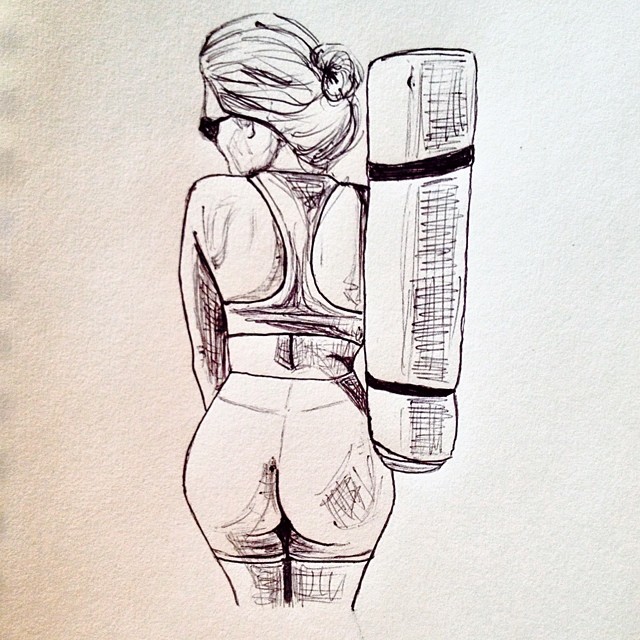
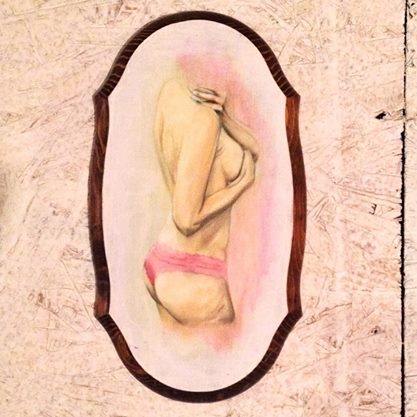
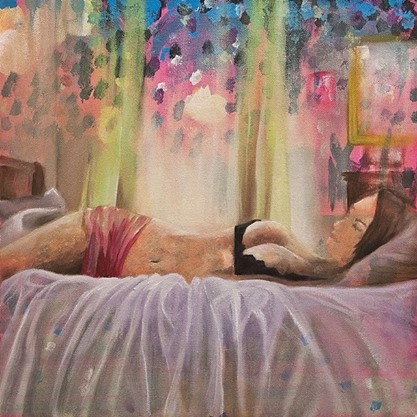
collaborative artist interview: Lauren Rinaldi on the beautiful body

LR

You grew up in Brooklyn and Lancaster County, PA. What was that like? How did it influence your desire to be an artist?

I moved from Brooklyn to Lancaster County, PA when I was around twelve years old, it was a little difficult transitioning from diverse city life to living in a small suburban town with Amish buggies driving by. I was able to assimilate, though, consciously dropping my Brooklyn accent and making plenty of friends. But, I did feel like I was always studying everybody – their mannerisms, culture, speech, families, homes and interactions. I think my desire to be an artist comes from more of a need to process what I observe and experience and make something with it and show it to somebody. Like, this is what I’m seeing, but it’s hard to verbalize it, do you see it, too? Do you feel like this, too? It’s like a need for reassurance, I think.

Who were the artists you admired when you first started making art?

When I was younger, mostly old masters and then modern masters, I found their lives fascinating. In college I was introduced to female and feminist artists and that opened up a whole new world for me. Studying artists like Hannah Wilke, Janine Antoni, Cindy Sherman and Tracy Emin just to name a few, influenced the direction of my work when I was beginning to paint. They gave me permission, in a sense, to put my life into my art, to use the female body and work with my own body.

How do you start a new series—with a theme, an image, a question or with a material, a technique, a color? Or something else?

The female body has always been a constant in my paintings and drawings and everything I make stems from the relationships between the body, the self and the viewer. My work tends to evolve as these three components of it change and respond to each other. For example, most recently I’ve been thinking about the way women choose to portray themselves and their bodies in what I like to call the age of digital narcissism, with self applied filters and crops, where private moments are made public and where our self worth is often measured in numbers of likes. These ideas have been reflected in my latest body of work along with my own personal narratives and how I fit into this landscape of carefully curated projected identities.

You teach yoga, correct? How does your teaching of yoga impact your work?

Yes! I am a certified yoga teacher and have been teaching for the past few years. Taking the time to just be a person, moving and breathing in your body is such a beautiful thing and the practice impacts so much of my life. Yoga is work, it’s patience, it’s showing up every single day and not being attached to the results. I take that discipline to the studio by showing up whenever I can, even if I don’t feel like it, even if I end up painting over everything and starting over. When I sequence the classes I teach I work with layers, I gradually stretch and strengthen areas and work towards a potential peak posture – sometimes the students get there, sometimes they don’t and sometimes they discover something better along the way. I like to work like that on my paintings, set up foundations and framework, move towards a goal, but maybe end up somewhere else, and be ok with that.

How does motherhood inspire your work? Do you create art with your child? What’s that like?

I made a lot of self-portraits while I was pregnant and a new mother, I think it helped me to accept the changes in my body and manage the fears about the changes in my life. My son is almost seven now and we make art together all of the time. Sometimes I bring him to my studio and set him up with an easel and paint, we draw and color together, I bring him to community paint days where we can work on murals together and I’m constantly taking him to museums, art markets and gallery openings – art is something that is always incorporated in our lives. It’s so important, especially since he does not have an art program at his school.

Were you ever scared to experiment in art?

The anxiety and fear that comes with constantly putting myself outside of my comfort zone is usually worth the growth. I ask myself what’s the worst that can happen? Maybe somebody won’t like it? If art were easy and always palatable it would be boring, so I have to experiment and accept that there will always be criticism and that’s a good thing.

What do you think is at stake when people make art that challenged notions about the female form?

It’s hard to say. There’s always an unrealistic standard of beauty that women put pressure on themselves to live up to. When I was younger thin was in, emaciated models were the ideal and then there were artists like Jenny Saville juxtaposing that with her massive fleshy paintings and Lisa Yuskavage painting her erotic impossibly voluptuous women. Now, we have ad campaigns like Dove Real Beauty celebrating what “real” women look like, standing in their underwear together smiling. It’s such a strange thing. Women are expected to have big round asses, muscular arms and legs, tiny waists, young skin, perky breasts – the laundry list of attributes to qualify as beautiful keeps growing and is confusing and unattainable. Work that responds to these notions is important and is an ongoing conversation that needs to be had – I think women need it and I think they connect with it.

With a young child, is it difficult to balance family life with making art?

Yes, it’s very difficult. I feel like everything I do is packed into time slots where I’m constantly shifting my focus all day every day. My son and his needs are always my top priority, though, so other things often get pushed on the back burner. I am extremely lucky to have a supportive partner… and I drink a lot of coffee J

What is inspiring you these days?

Life, love, other artists, yoga, talking to friends, binge watching shows on Netflix, binge reading series’ of books, people watching, anything that gets me out of my own head for a chunk of time inspires me.

How are you trying to get better as an artist? I try to draw or paint almost every day and to see as much artwork as I can.

Number of art pieces you own: Not enough.

Number of art pieces you admire: Too many to count!

Ways you promote and serve other artists: I attend other artists’ openings and events as much as I can and, of course, I use social media to share work I admire and other artists’ events and work – it’s such a great tool.

Where you spend your art earnings: Normal boring life stuff like bills, groceries, etc.

Your artist wish: It would be nice to support myself financially with my artwork some day, but for now I’m just grateful to do what I love and be able to devote myself to my family, too.

Residence: Philadelphia, PA

Job: Artist, mural artist assistant, yoga teacher, mother

Education: BFA in painting, Tyler School of Art, Philadelphia

Bio: I was born in Brooklyn, NY in 1983 and moved to Lancaster County, PA with my family in 1994. I received my BFA in painting from Tyler School of art in 2006. I am currently living and working in Philadelphia with my husband, son and cat. My work, paintings and drawings focusing on the female body, is represented by Paradigm Gallery + Studio. I am also a trained muralist and certified yoga teacher.

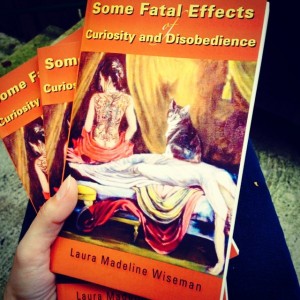
fatal effects in the hands of artist Lauren Rinaldi

Collaborate Artist Interview: Sally Deskins on the female form

IF in a show 2014

You grew up in Oregon and Nebraska. What was that like? How did it influence your desire to be an artist?

Well I lived in Oregon twice growing up, and Missouri for a few years as well. Most of my upbringing was in Omaha, perhaps twelve or so homes/apartments total. My upbringing was the foundation for myself and art, so it in fact impacts it quite a lot, in ways I really can’t even express, remember or understand. But perhaps here I can start with this fact—moving frequently—kept me on my toes, taught me to see and understand ways of living differently. I was also raised with foster children and foreign exchange students. My parents are from opposite ends of the United States, and my extended family has always been spread around the states as well, so constantly seeing different ways of living made me recognize and accept different perspectives. I’ve always been an introvert, always listening and seeing. As both of my parents are creative in their own ways, as well, I learned to define “artist” broadly. My brother was often lauded the “talented artist” growing up, drawing clever comic strips and caricatures. I actually fell into theatre and loved it, starting my own “theatre club” in elementary, which I directed for a few years. In high school my shyness took over, I didn’t even want to draw in front of people, but I enjoyed journalism, and sewing, where “coolness” or “being the best” didn’t take precedence. Maybe it was all in my head. Anyway, the actual lands of Oregon, Nebraska and Missouri, I can’t actually articulate their environmental impact on me any more than my traveling anywhere. It has been more the people and direct experiences—perhaps though, the Midwest instilled in me a strong work ethic—which, if you’ve lived anywhere else, you will then appreciate. And, there is nothing like the Oregon beach, the coolness, the breeze, the free feeling it brings and back down to earth.

Wanda and Sally

Who were the artists you admired when you first started making art?

Well, way back when I wanted to be a fashion designer, it was Anna Sui. I loved her quirky, dark designs—culturally inspired and beautiful for being edgy. When I read about Marcel Duchamp in high school art history class, I fell in love with the whole Dada art movement (or non-art, effectively). When I switched to being an art major in college, I was really inspired by Jim Dine who is considered part of the “Neo-Dada” movement, but I didn’t think technicalities. I loved his expressive line quality, his personification of robes, hearts and tools. I still do. I also admired Alice Neel, her very real and patchy portraits of her friends and family, not prettified, just existent. I’ve always loved the expressionists, too. Oskar Kokoschka was one of my favorites who played with the female body, as were Gustav Klimt, Henri Matisse. (Of course here I’m talking purely aesthetically, not of their personalities or personal lives.) Different artists impact me now more specifically, but those were the artists I looked to from the start. Quite honestly, since women are notoriously skipped over in art history books I did not learn of many women in art until I began doing the work myself! I never was a huge fan of Georgia O’Keeffe until recently (perhaps because in eighth grade my teacher had us try to draw a flower like her and I was so frustrated mine turned out to look like a pink chewed up piece of gum), or Judy Chicago even. My parents had a “Women in Art” coffee table book, and perhaps a Mary Cassatt print on the wall, growing up, but I didn’t really appreciate that until later. After undergrad and when I came back to drawing, Omaha based artist Wanda Ewing was (and continues to be) a huge inspiration for me artistically and personally (see my writing about her on Les Femmes Folles here).

more early work with Intimates and Fools, LFF Books

How do you start a new series—with a theme, an image, a question or with a material, a technique, a color? Or something else?

With the collaborative work I’m doing with you, that starts with reading the poetry! J I suppose each series is different and depends on what is going on with my life personally, and what art supplies I have on hand. With my self-portrait series I did in college, I don’t know if I knew I was doing that. It just ended up being what I drew over and over, before I was assigned to do one. I was my natural subject since I guess I was also “finding myself” in a matter of speaking. After my hiatus and having babies, I came back drawing my babies over and over.

Yearning to get outside of baby-mode for a bit and try to almost re-find my Self and my Own Body, my next series doing body prints was another form of self-portraits. I came to this after doing some art-modeling and seeing an exhibit of Yves Klein’s “Anthopometries” series. I used my children’s finger paint and whatever paper I had, and went at it. This was also the same time I started my journal Les Femmes Folles, interviewing women in art, as I enjoyed hearing about other women’s work and their finding their way, I began to find my own. With this first series I call “Voice” (after the group exhibit I co-curated with Megan Loudon Sanders) I used some of their quotes and texted them onto my body prints to put another layer on the series. Upon the first exhibit of this series, I found more people querying about my role as mother and how my artwork might impact this, rather than the work itself. Thus was born my next series “What Will Her Kids Think?” again with body prints and text from famous and infamous women artists who are mothers about this very issue.

My children were growing as well. I would color and paint with them. I became interested in their very gendered imagery from their children’s books, as well as their lovely, carefree brush strokes and color choices. Again, I used what I had and began drawing figures on the many “leftover”/ “recycle-pile” pages.

common prayer

Most recently with this next collaboration with you for Leave of Absence, I began with your poetry on the topic of trees. I knew I wanted to utilize body prints but in a different way—more twisted and more abstracted parts of the body and maybe some leaf-prints as well. I knew I wanted to also incorporate some of my children’s playful imagery too. So, once again, I began with what I had—taking stock of my paper, paint, and pages from my kids’ “recycle art” pile. I found paper that would work, and laid out the colors of paint I had, and went out in the yard quick to find some interesting leaves with my kids, and just painted and printed the whole pad of 30 pages. With these and with the pile of kids’ art, I sift thru them over and over to see in them—where a figure might lie, or text, or another small illustration to add to it.

I find the “use what I have” helps me focus—as you know, Madeline, I start many works at once, leave them, start others, and keep coming back, changing, many times until they are done. So having just a certain kind of paper and media, helps me focus just a little bit, enough to get an idea formed and out into space. So I suppose, all of that having been said, a new series starts with an image (body) and then with the material.

weeping hawthorn (2)

You’re starting a masters program in art history at the University of West Virginia with a teaching assistantship, correct? How do you anticipate teaching art history will impact your work?

Tenfold. It will help me with interviews like this, at the very least—ha! As one of the professors said to me, I have all of these ideas and projects, and this will help me understand and articulate them much better. In college, I minored in art history (and English) but really only touched the surface of what I’d really like to dig into—women in art, feminist art movements, modern art, art about the body—and how they did it all (theory/methodology). I am so excited (and nervous!) to dig into the books and inner workings of artists I have never uncovered before, to seek more inspirations and find new ideas and hopefully share them with others as well—continuing the spirit of Les Femmes Folles in a bigger, broader way.

even more early work with Intimates and Fools, LFF Books

How does motherhood inspire your work? Do you create art with your children? What’s that like?

Inevitably. I am so fortunate to have healthy, happy, supportive kids and husband, and I am still alive. I am so lucky to be able to practice my art while being a mother. It helps me make and create by not having time. It makes me appreciate it when I do. It brings me down to earth and around it—further enhancing my understanding and empathy for humanity, I’d like to think (most of the time). It makes me think of the future (with this next series about environment for instance), and stick to the present (process).

Yes, I create art with them, most of it just playful and process-oriented, but sometimes something comes of it, as I discussed above. Basically, it’s on the fly; what should we paint on today? Yesterday we found some rocks to paint on, the other day they painted on every one of their toy trucks and cars and examined each of their tire tracks. Sometimes it’s just coloring books or a piece of scrap paper in my purse. At the park, my daughter likes to gather things and create “sculptures” out of sticks, rocks, leaves, whatever she finds. Sometimes I’ll get out some toys in the corner of my studio so I can get a few things done, or let them work with my pastels on the floor. It works for a few minutes but mostly they like to see what I’m doing!

I am so thankful to be able to practice my art, do what I love, and see it from their point of view. These crazy little monkeys. Too, I hope they see part of what I do intrinsically in a feminist fashion—appreciating and accepting femininity and the female form, and me being a strong (when I can) woman doing what she loves. I recently read this quote by Maya Angelou: “I would like to be known as an intelligent woman, a courageous woman, a loving woman, a woman who teaches by being.” Says it perfectly; I think of this while I work and aspire to it. So yes, motherhood is a constant. It would be hard to separate these living beings I am literally a part of, and am responsible for their well-being’s.

layout in progress

Were you ever scared to experiment in art?

Oh yes, definitely. In college, I only used charcoal for the longest time, as I was afraid color would ruin my work. I would draw and erase for hours the same line with charcoal. Then when a professor “insisted”, I would only use 1-2 colors per piece. Then in another class, we “had” to use our whole palette, and mine turned into a mess, and after that I think I just sort of let it go. That is perhaps why I love the body prints, they’re just (mostly) uncontrolled expressions in paint. I still get that hesitation with drawing though, each stage I get worried I’m going to ruin it if I go further. I still love black and lots of white. With pencil I let it all out, as I love erasing and seeing the lines underneath. But it’s different with pen and paint (when I’m hand painting). Usually when I’m drawing with pen or paintbrush in hand, I just have to take a deep breath and pull it out.

early page layouts, LFF books

What do you think is at stake when people make art that challenges notions about the female form?

Everything and nothing. This is such a big question! Women have been utilizing the female form for eons but only recently (within past 50-60 years) has their work been brought to light (and still not very brightened light). I get asked “why don’t you use the male form in your work?” and right now, I just am not drawn to create work about the male form (but actually perhaps in the near future)—but maybe that is because I have seen so many nude females in art history, the subject is ingrained in us. Maybe, on this same note, I have seen so many nude females depicted in art history by male artists, I want to contribute alongside other women artists, to show our own perspective of our own bodies. Art plays a major role in history and defining and describing our culture, and also by challenging current and past conventions. Thankfully, artists like Lorna Simpson, Judy Chicago, Ana Mendieta, Carolee Schneeman, Yoko Ono, Marina Abramovic, Hanna Wilke, Michalene Thomas and Wanda Ewing have used the nude female form to take on issues of identity, race, sex and class. With all of the negative imagery of the female form in media, add-to, the quieted and cloaked-over women-defined female form, alternative views are necessary to create a feminist, accepting world for women—as we are women by our bodies first.

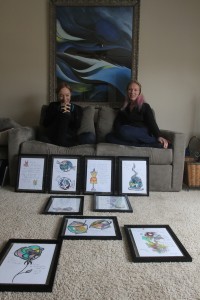
framed pages of Intimates and Fools for Ohio show 2013

With two young children, is it difficult to balance family life with making art?

Oh sure, “how do we do it all?” or whatever. There isn’t really “balance” just being and doing. Sometimes I get obsessed with a project or idea and I can’t focus when I’m present with the kids. Sometimes when I’m blocked artistically I’ll endlessly sit at my studio table looking at pictures of my kids or just play with them in the studio. But I figure, if at least I get one line drawn, one paragraph written or chapter read, I did something. And I try to make moments count with family, as well, sometimes blending the two. Everyone has to balance so we all make those choices, I suppose, though it is different when other’s lives’ are at stake, whether children, elderly or other loved ones. Again, thankfully I have healthy and supportive children and husband. Still, at times, it can be a guilt-game, either way.

experiment with leaves

What is inspiring you these days?

Along with your poetry for this upcoming project, fresh air. Though I don’t think about living in Nebraska necessarily impacting me thru its plains, living in West Virginia seems to thru its hills. When I was growing up, I dreamed of being a fashion designer living in New York with a flat and a garden on the roof. I never thought I’d be living on two acres in the hills of West Virginia with two children and a husband J. But now that I’m here I feel it suits me—I’m a bit rough, gritty (not to mention of course I love my family), and the hills constantly remind me of how small I am in the world. Really, I am still alive; why is that? Why am I so lucky? I am thinking; what artwork am I really supposed to be creating, what projects am I meant to be doing? I look at the trees and breathe in each moment, my kids learning to ride bikes, my husband painting the house, pause, and wonder.

How are you trying to get better as an artist?

Going to graduate school, for one. Visiting art shows, reading about and interviewing other artists, listening to people’s critiques (getting reviewed!) and I suppose, just keeping at it!

Number of art pieces you own: I have no idea! Maybe 20-30 (this does not count my own, and does count small pieces).

Number of art pieces you admire: ? Infinite!

lff2013
Ways you promote and serve other artists: All right let’s toot my own horn some more! My journal, of course, Les Femmes Folles, promotes artists of all genre/media (poets, performers, activitsts however you define) and the Les Femmes Folles Books promotes writers and artists via the anthologies, and the series of collaborative books that begun with our collaboration, Intimates and Fools (stay tuned for more!). I curate exhibits, readings and other events. I write reviews and articles for other publications of visual art exhibits, projects and news, and book reviews, exclusively (as of late) art and books by women. I’m constantly pitching story ideas to new publications about art and writing by women. I would like to do more though.

Where you spend your art earnings: That’s a laugh, isn’t it. The money is already spent on its frame! Any art earnings are spent on the gas to get to the gallery, or future art supplies, or lunch for the family, or a cocktail afterwards. As for LFF Books, I do donate a portion of the proceeds to the University of Nebraska-Omaha Wanda Ewing Scholarship Fund, to honor my late friend, mentor, stellar artist and inspiration behind Les Femmes Folles. (Donate at nufoundation.org.)

Your artist wish: Just one? Ha. I don’t know, perhaps that art would be more of a mainstream thing like football—then we can really make a difference—I guess on top of that, that women’s perspectives seen through the art with which is on the front page regularly, would make a major difference with respect to women (and thus men) in everyday life. Could you imagine (most) people reading about (and thus perhaps appreciating/taking part in) non-violent expression every day? Dreamworld.

Residence: West Virginia

Job: Artist, Editor, Writer

Education: BA, University Nebraska-Lincoln; MPA, University Nebraska-Omaha

Bio: Sally Deskins is an artist, writer, mother, wife and feminist enthusiast. She is a Teaching Assistant in the Art History Graduate Program at West Virginia University. Deskins’ art explores womanhood, motherhood and the body via body-prints, drawing and text from her life and others’. Her work has been exhibited in Omaha, New York, Philadelphia, Charleston, Pittsburgh, Ohio and Chicago; and published in Certain Circuits, Weave Magazine, and Painters & Poets. She has curated exhibitions, readings and performances centered on women’s perspective and the body. Her writing has been published internationally. She is founding editor of LES FEMMES FOLLES an organization supporting women in art. She has published three LES FEMMES FOLLES anthologies of art and writing. Her first illustrated book Intimates & Fools, with poetry by Laura Madeline Wiseman, was published in 2014 by Les Femmes Folles Books. She is currently working on her second collaborative book, Leave of Absence: An Illustrated Guide to Common Garden Affection. She is also currently exhibiting in a group show at Taylor Books’ Annex Gallery in Charleston thru July 31; and will be exhibiting a solo exhibit at Future Tenant Gallery in Pittsburgh in August.
LFFB

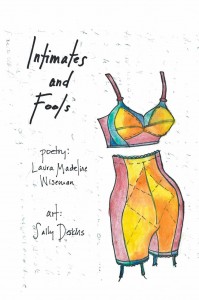
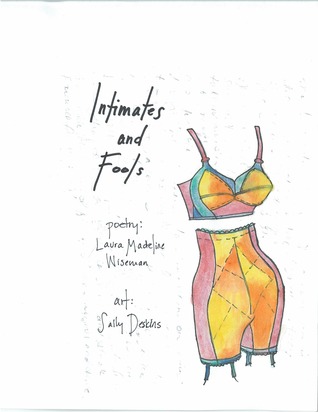
Intimates & Fools: A Collaborative Book with art by Sally Deskins

IntimatesFools

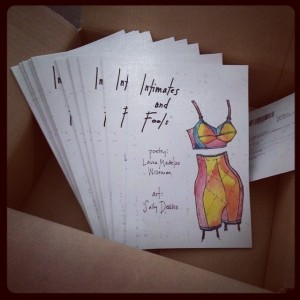
My collaborative book with artist Sally Deskins was released January 1st this year and today is the book’s Half Birthday. Hooray! Happy Half-Birthday Intimates and Fools! I thought I’d post an update on all the fun things and happenings that have been going on.

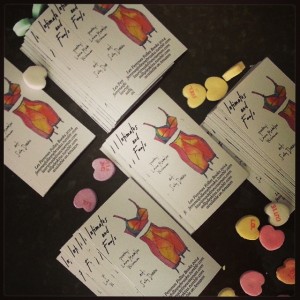
Intimates and Fools magnets and candy hearts

The book couples poetry and body art and illustrations by Sally Deskins. Intimates and Fools intimates the complicating pairing of the female form and cultural notions of beauty while playfully seeking to bare and bear such burdens of their weight. The poetry explores notions of the bra and its place near the hearts of women, while contemplating literary and pop cultural allusions and illusions of such intimate apparel. The body art and illustrations make vivid and bright the female form while calling into question the cultural narratives on such various shapes we hold dear, be they natural, consumer, or whimsy.

even more early work with Intimates and Fools, LFF Books

Sally and I have had the opportunity to talk about Intimates and Fools in recent interviews. With Julie Brooks Barbour Sally talked about the process of adding the text to her art for Connotation Press.

To be honest, each page’s process was different. I didn’t originally start from beginning and go to the end. I selected phrases and sentences I liked, drew images, scanned them into the computer and tried out fonts, but nothing clicked. So I decided to write it myself, first writing the history of the bras in pencil on page one and two. I wasn’t happy with my own handwriting of course, so I erased that, and liked the erased, raw look, and kept some of that in there, as you can see.

early page layouts, LFF books

Forthcoming in AMRI we discussed the entire collaborative process with Kristina Marie Darling. Specifically, I talk about thinking about how a poem might appear in a book when coupled with poetry. Here’s another sneak peak.

Ultimately, Sally decided to handwrite the poems—a decision I loved. When she illustrated the poem, she broke the lines where it made sense from a visual artistic and literary perspective. It was a “changing, shifting, and expanding” moment for me as a poet, because her visual presentation of the poem was not what I had typed into the computer when it was my poem alone. And yet, this was a collaboration. Sally’s art was being transformed to tell a story about bras and suddenly, so was my poetry.

Box of Intimates and Fools

In Mixitini, this super cool journal that focuses solely on collaborations, we discussed the collaborative work we’d done with other artists and writers. Here’s a sneak peak.

My first collaboration felt organic, fun, and playful. I think there’s something fresh and delightful when art and poetry are combined. The interpretation of poetry that happens when paired with art offers a new way of looking at words and art.

Sally Deskins and Laura Madeline Wiseman after WV reading

Editor Mel Shapcott featured Intimates and Fools in Wild Women Rising. Sally talked about making body prints.

So at once, the real feelings of the paint on my body is utterly physical and resounds as the sensations are stamped onto paper or canvas. Too it is a means of working out all of the noise of body image — what I should look like according to magazines, movies, the clothing ads, my mind. In these prints, my body looks beautiful in the various acrylic colors. As I mix and swirl the paint on my body parts, the image comes out skewed and conceptual, and beautiful in this state — various colors, shapes, sizes. It is perhaps sensual, perhaps an object in itself, but not decried or distanced, violent or Photoshopped to some advertiser’s view of perfection. It is stunning in its complexity, simplicity and in definition yet materiality, a peaceful yet spirited view of the female figure.

In Blotterature we talked about our personal history with the bra and the research we did for the book. I discussed reading about the bra in college.

My first intellectual endeavor into bras was in college when I added a second major of women’s studies after taking one women’s literature class. I took scores of classes—sociology of gender, feminist theory, African American women’s literature—and somewhere in there I read The Body Project: An Intimate History of American Girls by Joan Jacobs Brumberg, a look at the ways in which girls have worked on improving themselves and how that has shifted from a focus on the personality to a focus on the body. One section on body projects made note of bras and I found it fascinating that all women didn’t always wear bras.

box of Intimates and Fools art

We talked about the collaborative composition in Storyacious. Sally discussed her creative process.

After reading Madeline’s poem, I decided to let it sit, scratch down visions and ideas, and make dozens of body prints in preparation. Instead of the larger torso body prints I had been doing for the gallery shows, I did smaller, page-sized prints of various body parts to allow closer focus and more pause and insight for each word.

radio3

Beyond written interviews, we gave radio interviews in It’s the Beat! (mp3 starts at 8:05-15:04), KIOS-FM, Omaha Public Radio, and The Joy Factor.

kzum1

Our book has also been featured in Foliate Oak Literary Magazine, Painters & Poets, Best Dressed Wardrobe, Z-Composition,Luciferous, Daily Dose of Lit, Certain Circuits, and Miracle Ezine.

radioGroup

Intimates and Fools has been reviewed in [Pank], Busting and Droning Magazine, Ivory Owl Reviews, Broad Blogs, Underrated Reads, Luna Luna, and Connotation Press.

“Poet Laura Madeline Wiseman takes what every girl and woman has thought about her breasts and adds a imaginative twist. Artist Sally Deskins fun, contemporary-styled illustrations take it even further.”- Underrated Reads
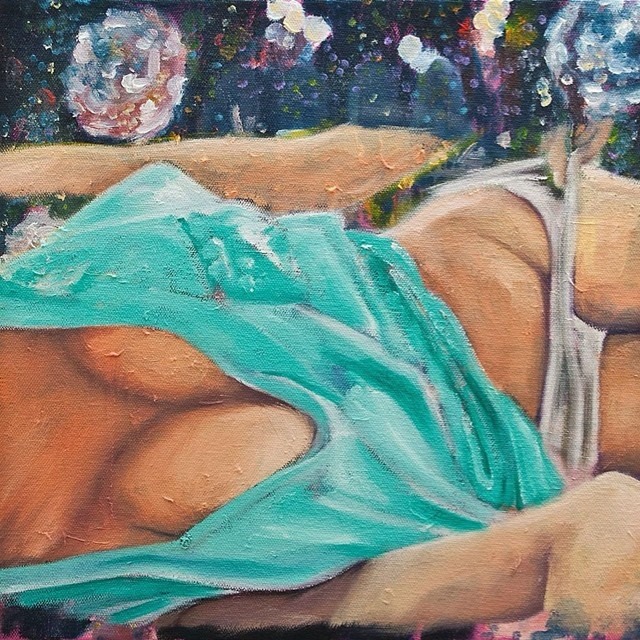
 

“…for me what Intimates and Fools is aiming to get to the heart of, and often does quite handily: the struggle against both nature and the commodification of women, a struggle that is defined with and against sexuality, and a struggle that is far more complex than it at first seems. Wiseman and Deskins have created a deceptively pleasant collaboration here, one that is both arch and light-hearted, and which deepens the more it is read and pondered. There are few bra-wearers who won’t see themselves in these clever poems and illustrations; there are few readers who won’t look at bras, and the world, a bit differently after reading this book.” – Luna Luna


Intimates and Fools is a visually stunning book. This insightful collaboration between poet Laura Madeline Wiseman and artist Sally Deskins gives us not only a look into the bras that hold women’s breasts, but uncovers the history and honesty of what women wear beneath their garments… Throughout, we never leave what holds up the breasts, what women desire in a bra, what women might do without them, even how these intimate garments are cared for over time. This is a book about the female body and what adorns it, what is bought and given away in so many forms.” – Connotation Press

“What we wear under our clothes tells a quiet story, as playfully and artfully explored in the book “Intimates and Fools,” with poetry by Laura Madeline Wiseman and artwork by Sally Deskins… The concept of having a book of illustrated poems dedicated to breasts and undergarments is charming and yet sweetly simple… The artwork of Deskins is so vibrant, with playful poems surrounding their form… the overall feeling from the collection is that of simple joys in these sacred garments we hold close.” – Busting and Droning Magazine

“Deskins’s own art, colorful sketches and body prints, unapologetically splash across the page in bright strokes while Wiseman’s handwritten prose snakes up and around, balancing and accompanying the art… It made me want to linger, to touch the page, run my hands across the color and script. It was more of an experience than just interpretation… it’s what’s just under the busy surface that’s most appealing: the wildly complex social constructs of female body, and the symbol of the bra as the ultimate carrier of all things female: shame, sexuality, strength.” – [Pank] Magazine
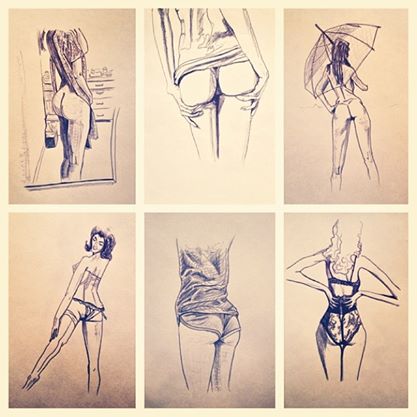
Intimates and Fools is a cheeky, fun read…Laura Madeline Wiseman’s poetry will have you conspiratorially chuckling and each page of Sally Deskins’ painted illustrations are frame-worthy.” - Ivory Owl Reviews

“Women can be mistaken for their sexuality. Or, women can make their sexuality work for them. Intimates and Fools, with poetry by Laura Madeline Wiseman and illustrations by Sally Deskins, is a thought-provoking, conversation-starting coffee table book…Here, brassieres emerge as the main characters…In this love-hate relationship, bras just want a little appreciation. Don’t we all?”- Broad Blogs.
In March, I traveled to West Virginia where my collaborator currently lives. We had super fun reading together at a local art center there. In April, my collaborator traveled to Nebraska where I live. We gave two readings. At the Apollon, we read collaboratively.

Intimates and Fools has also been to readings in Chicago, South Dakota, and elsewhere. I will be giving a reading at MMLA in Detroit, MI about the collaborative process in the Fabricating the Body panel in November. Other recent readings are on our YourTube playlist.

Beautiful pages from Intimates and Fools with Sally’s original art have appeared in shows in galleries in Ohio and West Virginia, and will be featured in Sally’s series “What Will Her Kids Think?” in an exhibit at Future Tenant Gallery, August 8-24 in Pittsburgh. Pieces from that series also appeared at the Ohio University Eastern Campus, in St. Claireville, Ohio in February.

IF in a show 2014

“Les Femmes Folles: WV” had a group exhibit at the Monongalia Art Center, Morgantown, West Virginia in March.

LLF and IF in WV march 2014

Intimates and Fools is available on Amazon and at readings and events. Check out Intimates and Fools from the library - Chattanooga Public Library,Chattanooga in TN; Sallie Bingham Center for Women’s History and Culture at Duke University Library, The Jane Pope Geske Heritage Room of Nebraska Authors and Lincoln City Libraries in Lincoln, NE, Des Moines Public Library in IA. Or enter for a chance to win a copy in the Goodreads Book Giveaway .

Goodreads Book Giveaway

Intimates and Fools by Laura Madeline Wiseman

Intimates and Fools

by Laura Madeline Wiseman

Giveaway ends September 17, 2014.

See the giveaway details
at Goodreads.

Enter to win

More information about the book is available at:
http://www.lauramadelinewiseman.com/writing/books/intimates-and-fools/
https://www.goodreads.com/book/show/20104018-itimates-and-fools
http://www.amazon.com/Intimates-Fools-Laura-Madeline-Wiseman/dp/0615947492/
http://femmesfollesnebraska.tumblr.com/LFFBooks

framed pages of Intimates and Fools for Ohio show 2013