the chapbook interview: Jennifer Franklin on myth, autism, and pedagogy

JenniferFranklinLooming

The myth of Demeter and Persephone is such a rich story to retell, a task taken up by other poets such as Louise Gluck, Alicia Ostriker, Rita Dove, and others. Talk about your interests in myth and why the Homeric Hymn to Demeter was particularly evocative and inspirational to your work.

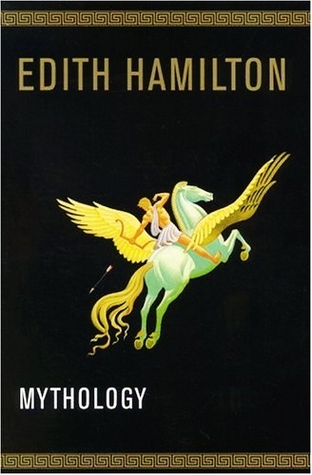
Although I knew that poets have explored the Persephone and Demeter myth for centuries, it was the story to which I kept returning when I sat down to transform my grief about my daughter’s illness into poems. The use of myth in literature has always fascinated me. When I was a child, Edith Hamilton’s Mythology was a crucial book for the development of my imagination. In high school, The Iliad and The Odyssey were two of my favorite texts, and as an undergraduate, one of my first classes was a comparative literature course devoted to a semester long exploration of James Joyce’s Ulysses and Literary Theory. Louise Gluck, my favorite living poet, used the Persephone and Demeter Myth to great effect in Averno. The power of the complex and all-consuming love depicted in the myth is universal. Gluck, Rita Dove, another influence (Thomas & Beulah was the model for my undergraduate thesis), and Laurie Sheck all wrote full-length collections using the Persephone & Demeter myth within a few years of each other. Gluck’s Averno, Sheck’s The Willow Grove, and Dove’s Mother Love were all seminal collections for me and although I did not go back to read them when I decided to write my series, I know that they inform the poems in the collection because of the impact they had on me in my twenties before I became a mother and felt the power of the myth even more strongly. All three include Persephone’s sexuality as a central component of their retelling of the story. As a feminist and a reader, I am interested in that part of the myth, but it is not one that I chose to tackle directly in my appropriation. I focus on Demeter’s suffering in response to Persephone’s suffering as well as the “loss” of her life as she knew it, which includes her loss of freedom.
I recently re-read Gregory Orr’s thoughts on the use of myth in lyric poetry, and I agree with his thesis that one of the things that continues to compel poets to retell myths or to use myth to tell their own stories is that our collective consciousness already knows the “plot” and the poet can hone in on the aspects of the myth that are most relevant to the poets’ individual messages. As both a mother and as a writer, one of the most painful things about my daughter’s autism is that she cannot use language to express how she feels and what she thinks. As an empathic person, the thing that hurts me most is the extent of my daughter’s suffering because of her autism and epilepsy. As much as I try to imagine the lives and emotions of others (I am a fan of reading and writing persona poems) I did not want to imagine her interior world. Even though I believe that one never “knows” another “person” or the multiple and layered selves and personas that make up a “person” (we are lucky if we ever really know ourselves), one of the great tragedies of autism is that the afflicted person is in many ways even more “unknowable.” These poems were written towards the end of a long grieving process. I would argue that the process of writing the poems was the greatest tool in achieving understanding of the nuanced feelings surrounding my “loss.”
In your poems “My Herculaneum” and “The Tulips are Dying” and others, you bury the turn and revelation halfway through the poem. In these poems it’s the revelation of grief that turns. Can you talk about your sense of the placement and power of the poetic turn?

That is a very interesting observation. I was not aware of how often the turn resides in the middle of the poems in Persephone’s Ransom. I find it particularly interesting given the prevailing notion, in criticism, that the turn is the center or the soul of the poem. When I was reading about mid-course turns, I discovered that most often they represent drastic or sharp shifts in meaning. I believe that most of the turns in my chapbook are “retrospective-prospective” turns that examine the past and the present/future. I believe that this was the unconscious choice that I made while writing most of the poems in this series because the before and the after that I am describing in the poems are so jarringly different. There is an urgency, a need to get to the heart of the matter—on which all of these poems rest—the devastating recognition that nothing is ever going to be the same again. These poems, which were written in a great burst over one month in the summer of 2008, while riding in the back seat of my daughter’s “bus” on the way to pick her up from her year-round school, are essentially elegies for the loss of the “normal” lives that I knew neither of us would be able to have. Although no one literally dies in the pages of Persephone’s Ransom, there are hundreds of figurative deaths. To me, the turn is always a crucial part of the poem, no matter where it is placed, since it is where the most important ideas or revelations appear.
Your chapbook and forthcoming book address via myth the emotional impact autism has on a family. Were there other literary sources that enabled you to consider how a writer might make art of grief?

My beliefs on the power of lyric poetry are similar to those of Gregory Orr, as he presents them in the critical work Poetry as Survival. Lyric poetry contains an abiding power to transform deep experience into something transcendent. Some of the most important books for me have been works of art and literature that center of the exploration of great emotion, including deep suffering. When I was a New Jersey Scholar in the summer program at The Lawrenceville School, my poetry teacher, Clayton Marsh, sparked a love of Keats that has continued to this day. When I was in college, my mentor, Arnold Weinstein, a great humanist and scholar, taught all my favorite classes. The first class I took with him was called, “Exile and the Conditions of Writing.” The entire course focused on poets who were literally or figuratively exiled. We read poets including Tu Fu, Dickinson, Ovid, Nelly Sachs and Paul Celan, Baudelaire, and Anna Akhmatova. What I love most about Dickinson’s poetry is that she plumbs the great depths of human emotion in all of its authentic forms. Nothing is taboo or off limits; every emotion is given its due. That course was a master class in the power of poetry to give voice to deep suffering. Some of the modernist novels of Woolf, Faulkner, and Jean Rhys have influenced me a great deal. The plays of Sophocles and Ibsen, especially Antigone and Little Eyolf, also informed my idea of how the topic of suffering can be transformed into literature. The contemporary poets who influenced Persephone’s Ransom and my project of transforming my grief into something more are: Mary Jo Bang (particularly her book Elegy), Marie Howe (especially What the Living Do), and Emily Fragos (Little Savage), as well as the work of Jane Kenyon, Lucille Clifton, Sharon Olds, and Sylvia Plath. Perhaps, the most powerful example I know of a writer devoted to transforming his grief into song is Miklos Radnoti. In 1946, when his wife found his body, which had been exhumed from a mass grave, she retrieved a notebook that contained all of the poems he wrote during his imprisonment in a work camp in Yugoslavia. Surviving prisoners smuggled copies of his poems out of the various camps in which he was interned, but the five he wrote in his last days of the death march before he was shot were unknown, until his wife found them in his pocket.
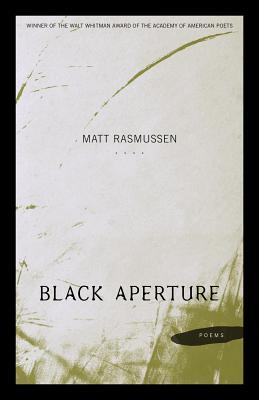
Another book that I think is a masterpiece of transforming pain into poetry is Black Aperture by Matt Rasmussen. It won the Walt Whitman Award from The Academy of American Poetry and was published after Persephone’s Ransom, so it did not influence my collection but I teach it in my classes. I think that it’s a very brave book. It looks at a bother’s tragic suicide from different perspectives, and it grapples with how one goes on living after the unthinkable has occurred. As the philosopher Heidegger wrote, “The Terrible has already happened.” I have read excerpts from Edward Hirsch’s long poem Gabriel about the death of his only child, but I am planning to teach it to my students this autumn. I have always admired his poetry, and I have read several reviews of the book. In the interview on NPR, he said something that resonated with me: “One of the things that happens to everyone who is grief-stricken . . . is there comes a time when everyone else just wants you to get over it, but of course you don’t get over it. You get stronger; you try and live on; you endure; you change; but you don’t get over it. You carry it with you.” This is something that I experienced as well. I suspect that only people who are willing to authentically mourn are able to prevail.
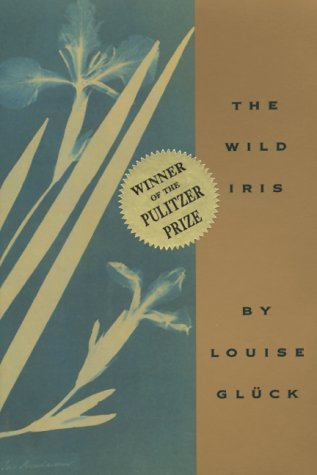
Like Louise Gluck’s The Wild Iris, flowers in Persephone’s Ransom speak in ways that humans in the collection cannot speak. Talk about the use of flowers as a trope in your poetry.

Like Gluck, who has said that she was shy and withdrawn from her peers as a child and that she regarded Blake and Keats as her friends, I felt the same way about writers I admired. I was a year and a half younger than everyone else in my grade, and my social skills had not caught up with my reading ability. I spent most of my childhood with family or alone reading books. My mother had a garden she loved and tended that I always admired, but it wasn’t until I read The Wild Iris that I wanted to plant my own garden. Having lived in Providence and New York City most of my adult life, this posed a challenge but for two years, I lived in a house in Central Massachusetts. It was there, for the year and a half before I became pregnant, that I planted my garden. I visited Emily Dickinson’s home and toured her gardens that are restored to include all of the flowers she planted in her lifetime. I bought her herbarium and poured over it as well as a book on flowers and their meanings. Tulips have always been my favorite flower and I planted hundreds of bulbs in the autumn before my pregnancy. So, those flowers and the loss of them when I returned to the city before my daughter was born were inextricably linked to all of the losses surrounding my daughter’s illness. Demeter’s long depression during which she wanted to stop the beauty of the world by turning it to winter is something that resonated with me. I am always struck by natural beauty, during times of tragedy, and how shocking and jarring that disconnect is. It seems to make the pain all the more palpable. When people recount their escapes on 9/11, many of them talk about the stunning beauty of the weather that day. In almost all of the accounts I have read about life in Auschwitz, the survivors mention the shocking natural beauty of the place. Something in us wants life, wants beauty so much that when we are propelled into the tragic, we cannot connect the two. The life cycle of nature is something to which I have been attuned since I was a small child. Growing up in the suburbs, I often read under a special crabapple tree that has long since been cut down to make first a soccer field and then a lacrosse field. My mother, a great seasonal decorator, marked the months and seasons with care.

Flowers in my chapbook represent all the beauty of the natural world as well as everything constant, unchanging, permanent in the uncertainty of our great cosmos. They also represent God’s presence as well as the power of the human soul to look in the face of great suffering and great pain and choose life, to choose beauty. Their seeming fragility and delicacy—their improbability to survive the elements is a constant source of inspiration to me. The snowdrops in the fields, the bulbs that emerge from the ground in spring, even after the most brutal winter, mirror the human will to continue against adversity. Thoreau wrote, “the most attractive thing about flowers is their beautiful reserve.” In cultures throughout the world, flowers represent love and my daughter loves looking at them and even labeling them and their colors. One of the things for which I am most grateful, despite my daughter’s autism is that she is able to show love and affection for me, my family, and for her teachers. She is deeply intuitive, and she knows who loves her and who does not. With people she doesn’t love, she is very reserved. The use of flowers in the collection began with the myth—Persephone was picking flowers when she was abducted. I then began thinking of the flowers as the loss of innocence. The way Demeter turns on the flowers in her grief and anger represents the rejection of life in the initial stages of shock and trauma.


What is inspiring you these days?

The autumn has always been my most creative season for writing poetry so I am working on several new pieces for both a chapbook and my second collection. I am putting my syllabus together and reading the new collections by Mary Ruefle and Louise Gluck. Other literature and art are always my greatest sources of inspiration. I just saw Cate Blanchet in Jean Genet’s The Maids and I have been seeing many dance performances this summer. Yesterday, a friend and I saw a fantastic exhibit called “Strong Language” by Mel Bochner at the Jewish Museum. It’s particularly fascinating for people interested in language because most of the paintings in the show consist entirely of words—a list of synonyms compiled from Roget’s Thesaurus. One of my students, Gillian Cummings, shared a draft of her forthcoming chapbook that is based on Ophelia. The power of her language and the homage to, as well as the departure from, Shakespeare deeply impressed me. I cannot wait for it to be published and to reach its audience.
How are you trying to get better as a poet?

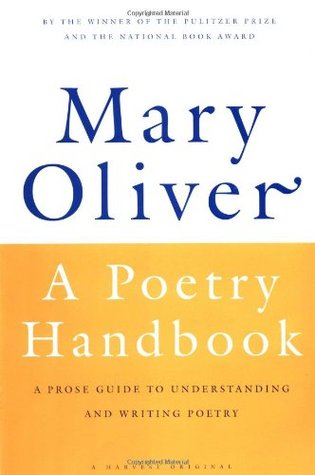
I believe, as Mary Oliver instructs in her book, A Poetry Handbook, that one only becomes a better poet by being a copious reader, especially a reader of other poetry. I am also listening to poets reading their own work. Thanks to The Poetry Foundation, poets.org, and YouTube, one has access to thousands of recorded poems. My uncle has been listening to Eliot on his iPod while walking in the countryside of Southwest France, where he lives. After he mentioned that to me, I started listening to Eliot again, and it is truly mesmerizing. Listening to poets read can be even more useful than reading. It helps to train the ear to focus on the language, each word. During the summer, I taught books by Gluck, Szybist, Fragos, Merwin, Seshadri, and Rasmussen, and we all wrote a poem inspired by the collections we were reading. The fascinating thing is that although we could all see the influence of the target poet on our work, we were still writing our own voice. The students came in with attributions, “after W.S. Merwin” and by the end of class, more often than not, we had voted to remove those attributions. It is always exciting to see growth and change in the work of one’s students and colleagues as well as in one’s own. I am lucky to be part of a weekly workshop with some of my colleagues at The Hudson Valley Writers’ Center. Their work inspires me and their feedback has been invaluable to the revision of my new work.

Your chapbook credo: Good things come in small packages. No book is more beautiful than a handmade letterpress chapbook.

Number of chapbooks you own: I own about 70 chapbooks. Most of them were published by Slapering Hol Press (designed by the amazing Ed Reyher of Swamp Press in Northfield, Massachusetts) where I have been co-editor since January 2014. Other chapbooks in my collection date from my first semester in college; these were all published by Burning Deck Press in Providence, founded and run by Rosemarie & Keith Waldrop. I had never heard of a chapbook before I was enrolled in my first poetry workshop at Brown. The teacher, a graduate student in the MFA program, put the chapbook My Name Happens Also by Elizabeth Robinson on the syllabus. I was stunned when I went to the bookstore to buy it and saw the artistry of the design of these limited edition collections. Many of my chapbooks are signed copies of those written by friends and students. Still others were purchased at AWP, readings, and the annual CUNY chapbook fair. Although I sometimes have to sell books at The Strand or give books away to friends because I live in an apartment, I have never parted with any of my chapbooks.

Number of chapbooks you’ve read: I think that I’ve read over one hundred published chapbooks and hundreds of chapbook manuscripts.

Ways you promote and serve other chapbook poets: I am co-editor of Slapering Hol Press, the small press imprint of The Hudson Valley Writers’ Center, a chapbook publisher; we publish two chapbooks per year and host readings for emerging poets. One chapbook is selected through a national competition for poets who have yet to publish a chapbook or a full-length collection. The other chapbook is a “Conversation” between an established woman poet and an emerging woman poet chosen by the former. I also help emerging poets and students edit, revise, and order their chapbook manuscripts. So far, I have written blurbs for two chapbook poets and have been asked to write blurbs for two more.

Where you spend your chapbook earnings: I use my chapbook earnings to buy more of my chapbooks to sell at readings, and whatever is left—I spend on entry fees for book awards.
Your chapbook wish: I am currently working on collaboration with the amazing self-taught photographer, Arnaldo Reyes. He is from the Dominican Republic and has been my daughter’s bus driver for the past six years. His other job is delivering specialty cookies all over Brooklyn and Manhattan so he sees the people of the city—really sees them—the way Marie Howe instructs us all to do. He shows me his photographs each week and I write ekphrastic poems for the ones that speak to me. Sometimes, I see something and write a poem and then he takes a photograph that literally or figuratively matches what he believes to be the intention of the piece. It can be difficult to get poems published beside other art forms, which seems particularly archaic in 2014, when technology and multidisciplinary art is so prevalent. I hope that we find a press for this chapbook soon.

Residence: I live in New York City.

Six_Portraits Julie Danho

Job: I teach at The Hudson Valley Writers’ Center in Sleepy Hollow. We own a beautiful restored train station and it’s a wonderful place for our community of writers of all ages, from all walks of life, to come together to help each other become better in our craft. It is a supportive environment for writers at every stage of his or her career. I love teaching poetry workshops; I feel like it’s what I was born to do. I am blessed to be working with such interesting, talented, and inspiring students. I can’t wait to read their new poems and spend two hours with them in class each week.
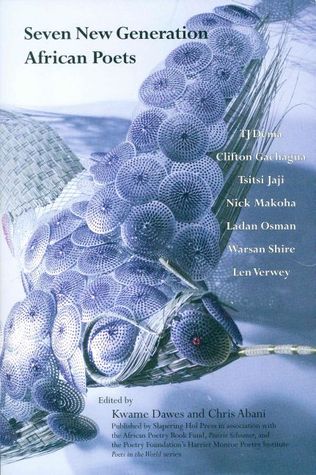
Chapbook education: I was first introduced to the concept of chapbooks in college but my real education came from working with Margo Taft Stever and Peggy Ellsberg, my wonderful co-editors. Margo founded HVWC in 1988, and she has been supporting emerging writers since then. She began Slapering Hol Press in 1990, and while I helped her copy edit Seven New Generation African Poets box set, in collaboration with The Poetry Foundation Poets of the World Series, Prairie Schooner, and African Poetry Book Fund, she shared her vast knowledge of the importance of continuity and theme in writing and arranging a chapbook.
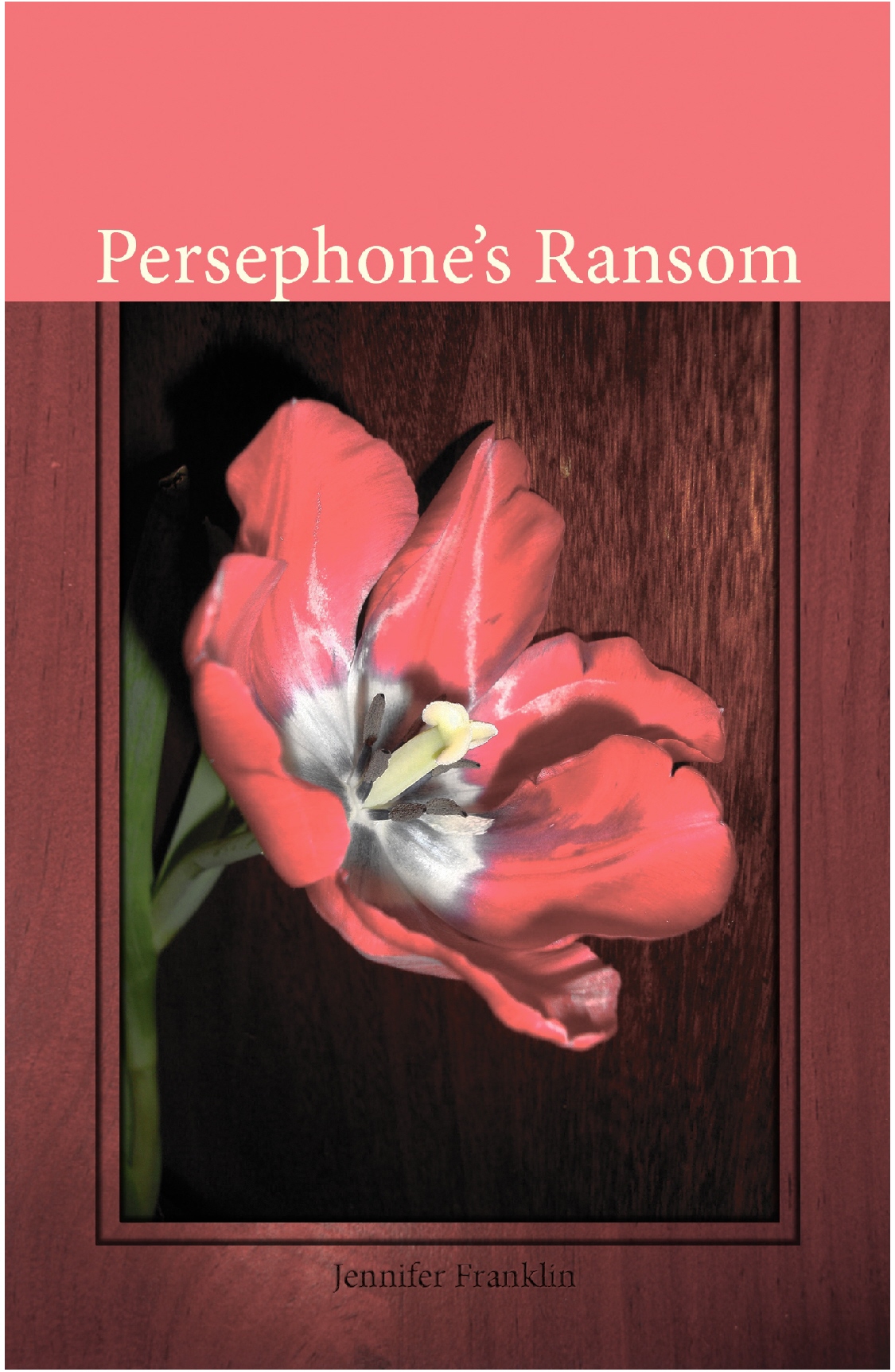
Jennifer Franklin concentrated in English and Creative Writing at Brown University. She was the Harvey Baker Fellow at Columbia University School of the Arts where she received her MFA. Her poems debuted in the Paris Review’s “Ten New Poets” issue #141. Her first full-length collection, Looming, won the 14th Annual Editor’s Prize from Elixir Press and will be published in January 2015. Her poetry has appeared widely in anthologies, literary magazines, and journals such as Antioch Review, Boston Review, Gettysburg Review, Guernica, The Nation, New England Review, Pequod, poets.org, Poetry Daily, Salmagundi, Southwest Review, Western Humanities Review. Her chapbook, Persephone’s Ransom (Finishing Line Press) was published in September 2011. Her work has been translated into Romanian and Portuguese. A selection of her poetry is featured in Andrew Solomon’s award winning book, Far From the Tree. Franklin is co-editor of Slapering Hol Press, the small press imprint of The Hudson Valley Writers’ Center. She teaches poetry workshops and seminars at The Hudson Valley Writers’ Center and lives in New York City. Her website is jenniferfranklinpoetry.com and she can be reached at [email protected]
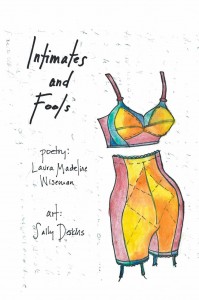
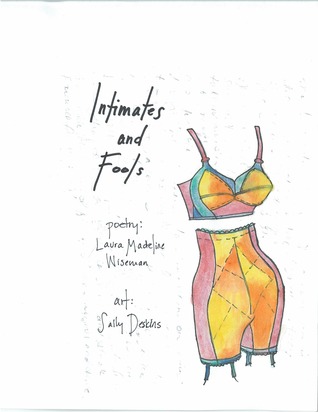
Intimates & Fools: A Collaborative Book with art by Sally Deskins

IntimatesFools

My collaborative book with artist Sally Deskins was released January 1st this year and today is the book’s Half Birthday. Hooray! Happy Half-Birthday Intimates and Fools! I thought I’d post an update on all the fun things and happenings that have been going on.

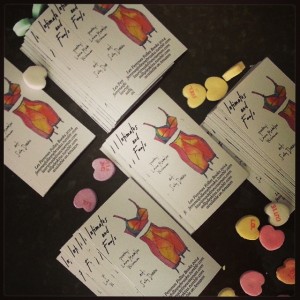
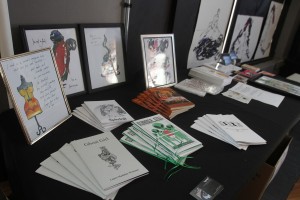
Intimates and Fools magnets and candy hearts

The book couples poetry and body art and illustrations by Sally Deskins. Intimates and Fools intimates the complicating pairing of the female form and cultural notions of beauty while playfully seeking to bare and bear such burdens of their weight. The poetry explores notions of the bra and its place near the hearts of women, while contemplating literary and pop cultural allusions and illusions of such intimate apparel. The body art and illustrations make vivid and bright the female form while calling into question the cultural narratives on such various shapes we hold dear, be they natural, consumer, or whimsy.

even more early work with Intimates and Fools, LFF Books

Sally and I have had the opportunity to talk about Intimates and Fools in recent interviews. With Julie Brooks Barbour Sally talked about the process of adding the text to her art for Connotation Press.

To be honest, each page’s process was different. I didn’t originally start from beginning and go to the end. I selected phrases and sentences I liked, drew images, scanned them into the computer and tried out fonts, but nothing clicked. So I decided to write it myself, first writing the history of the bras in pencil on page one and two. I wasn’t happy with my own handwriting of course, so I erased that, and liked the erased, raw look, and kept some of that in there, as you can see.

early page layouts, LFF books

Forthcoming in AMRI we discussed the entire collaborative process with Kristina Marie Darling. Specifically, I talk about thinking about how a poem might appear in a book when coupled with poetry. Here’s another sneak peak.

Ultimately, Sally decided to handwrite the poems—a decision I loved. When she illustrated the poem, she broke the lines where it made sense from a visual artistic and literary perspective. It was a “changing, shifting, and expanding” moment for me as a poet, because her visual presentation of the poem was not what I had typed into the computer when it was my poem alone. And yet, this was a collaboration. Sally’s art was being transformed to tell a story about bras and suddenly, so was my poetry.

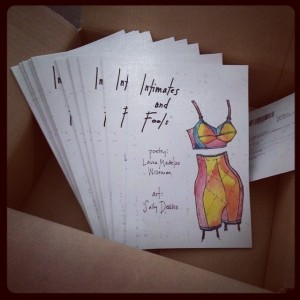
Box of Intimates and Fools

In Mixitini, this super cool journal that focuses solely on collaborations, we discussed the collaborative work we’d done with other artists and writers. Here’s a sneak peak.

My first collaboration felt organic, fun, and playful. I think there’s something fresh and delightful when art and poetry are combined. The interpretation of poetry that happens when paired with art offers a new way of looking at words and art.

Sally Deskins and Laura Madeline Wiseman after WV reading

Editor Mel Shapcott featured Intimates and Fools in Wild Women Rising. Sally talked about making body prints.

So at once, the real feelings of the paint on my body is utterly physical and resounds as the sensations are stamped onto paper or canvas. Too it is a means of working out all of the noise of body image — what I should look like according to magazines, movies, the clothing ads, my mind. In these prints, my body looks beautiful in the various acrylic colors. As I mix and swirl the paint on my body parts, the image comes out skewed and conceptual, and beautiful in this state — various colors, shapes, sizes. It is perhaps sensual, perhaps an object in itself, but not decried or distanced, violent or Photoshopped to some advertiser’s view of perfection. It is stunning in its complexity, simplicity and in definition yet materiality, a peaceful yet spirited view of the female figure.

In Blotterature we talked about our personal history with the bra and the research we did for the book. I discussed reading about the bra in college.

My first intellectual endeavor into bras was in college when I added a second major of women’s studies after taking one women’s literature class. I took scores of classes—sociology of gender, feminist theory, African American women’s literature—and somewhere in there I read The Body Project: An Intimate History of American Girls by Joan Jacobs Brumberg, a look at the ways in which girls have worked on improving themselves and how that has shifted from a focus on the personality to a focus on the body. One section on body projects made note of bras and I found it fascinating that all women didn’t always wear bras.

box of Intimates and Fools art

We talked about the collaborative composition in Storyacious. Sally discussed her creative process.

After reading Madeline’s poem, I decided to let it sit, scratch down visions and ideas, and make dozens of body prints in preparation. Instead of the larger torso body prints I had been doing for the gallery shows, I did smaller, page-sized prints of various body parts to allow closer focus and more pause and insight for each word.

radio3

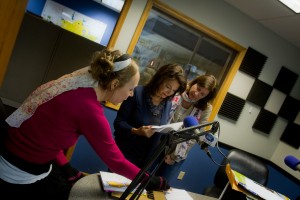
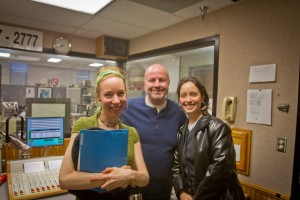
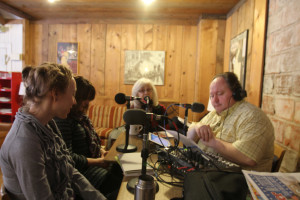
Beyond written interviews, we gave radio interviews in It’s the Beat! (mp3 starts at 8:05-15:04), KIOS-FM, Omaha Public Radio, and The Joy Factor.

kzum1

Our book has also been featured in Foliate Oak Literary Magazine, Painters & Poets, Best Dressed Wardrobe, Z-Composition,Luciferous, Daily Dose of Lit, Certain Circuits, and Miracle Ezine.

radioGroup

Intimates and Fools has been reviewed in [Pank], Busting and Droning Magazine, Ivory Owl Reviews, Broad Blogs, Underrated Reads, Luna Luna, and Connotation Press.

“Poet Laura Madeline Wiseman takes what every girl and woman has thought about her breasts and adds a imaginative twist. Artist Sally Deskins fun, contemporary-styled illustrations take it even further.”- Underrated Reads


“…for me what Intimates and Fools is aiming to get to the heart of, and often does quite handily: the struggle against both nature and the commodification of women, a struggle that is defined with and against sexuality, and a struggle that is far more complex than it at first seems. Wiseman and Deskins have created a deceptively pleasant collaboration here, one that is both arch and light-hearted, and which deepens the more it is read and pondered. There are few bra-wearers who won’t see themselves in these clever poems and illustrations; there are few readers who won’t look at bras, and the world, a bit differently after reading this book.” – Luna Luna


Intimates and Fools is a visually stunning book. This insightful collaboration between poet Laura Madeline Wiseman and artist Sally Deskins gives us not only a look into the bras that hold women’s breasts, but uncovers the history and honesty of what women wear beneath their garments… Throughout, we never leave what holds up the breasts, what women desire in a bra, what women might do without them, even how these intimate garments are cared for over time. This is a book about the female body and what adorns it, what is bought and given away in so many forms.” – Connotation Press

“What we wear under our clothes tells a quiet story, as playfully and artfully explored in the book “Intimates and Fools,” with poetry by Laura Madeline Wiseman and artwork by Sally Deskins… The concept of having a book of illustrated poems dedicated to breasts and undergarments is charming and yet sweetly simple… The artwork of Deskins is so vibrant, with playful poems surrounding their form… the overall feeling from the collection is that of simple joys in these sacred garments we hold close.” – Busting and Droning Magazine

“Deskins’s own art, colorful sketches and body prints, unapologetically splash across the page in bright strokes while Wiseman’s handwritten prose snakes up and around, balancing and accompanying the art… It made me want to linger, to touch the page, run my hands across the color and script. It was more of an experience than just interpretation… it’s what’s just under the busy surface that’s most appealing: the wildly complex social constructs of female body, and the symbol of the bra as the ultimate carrier of all things female: shame, sexuality, strength.” – [Pank] Magazine

Intimates and Fools is a cheeky, fun read…Laura Madeline Wiseman’s poetry will have you conspiratorially chuckling and each page of Sally Deskins’ painted illustrations are frame-worthy.” - Ivory Owl Reviews

“Women can be mistaken for their sexuality. Or, women can make their sexuality work for them. Intimates and Fools, with poetry by Laura Madeline Wiseman and illustrations by Sally Deskins, is a thought-provoking, conversation-starting coffee table book…Here, brassieres emerge as the main characters…In this love-hate relationship, bras just want a little appreciation. Don’t we all?”- Broad Blogs.

In March, I traveled to West Virginia where my collaborator currently lives. We had super fun reading together at a local art center there. In April, my collaborator traveled to Nebraska where I live. We gave two readings. At the Apollon, we read collaboratively.

Intimates and Fools has also been to readings in Chicago, South Dakota, and elsewhere. I will be giving a reading at MMLA in Detroit, MI about the collaborative process in the Fabricating the Body panel in November. Other recent readings are on our YourTube playlist.

Beautiful pages from Intimates and Fools with Sally’s original art have appeared in shows in galleries in Ohio and West Virginia, and will be featured in Sally’s series “What Will Her Kids Think?” in an exhibit at Future Tenant Gallery, August 8-24 in Pittsburgh. Pieces from that series also appeared at the Ohio University Eastern Campus, in St. Claireville, Ohio in February.

IF in a show 2014

“Les Femmes Folles: WV” had a group exhibit at the Monongalia Art Center, Morgantown, West Virginia in March.

LLF and IF in WV march 2014

Intimates and Fools is available on Amazon and at readings and events. Check out Intimates and Fools from the library - Chattanooga Public Library,Chattanooga in TN; Sallie Bingham Center for Women’s History and Culture at Duke University Library, The Jane Pope Geske Heritage Room of Nebraska Authors and Lincoln City Libraries in Lincoln, NE, Des Moines Public Library in IA. Or enter for a chance to win a copy in the Goodreads Book Giveaway .

Goodreads Book Giveaway

Intimates and Fools by Laura Madeline Wiseman

Intimates and Fools

by Laura Madeline Wiseman

Giveaway ends September 17, 2014.

See the giveaway details
at Goodreads.

Enter to win

More information about the book is available at:
http://www.lauramadelinewiseman.com/writing/books/intimates-and-fools/
https://www.goodreads.com/book/show/20104018-itimates-and-fools
http://www.amazon.com/Intimates-Fools-Laura-Madeline-Wiseman/dp/0615947492/
http://femmesfollesnebraska.tumblr.com/LFFBooks

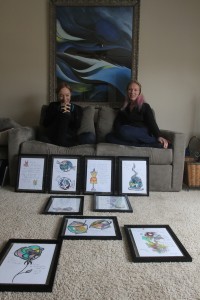
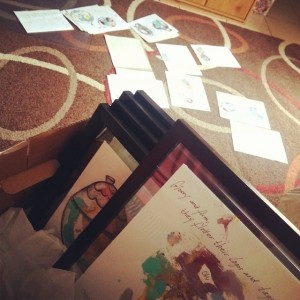
framed pages of Intimates and Fools for Ohio show 2013


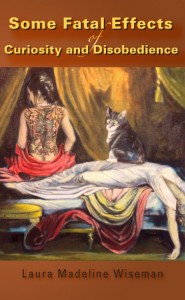
Lavender Ink releases Some Fatal Effects of Curiosity and Disobedience

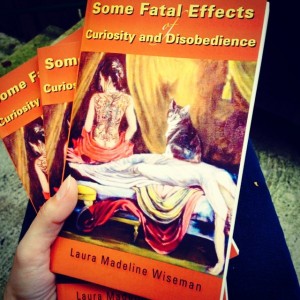
My book Some Fatal Effects of Curiosity and Disobedience was released this spring from Lavender Ink. I thought I’d post an update about what’s been happening since it’s release. Some Fatal Effects of Curiosity and Disobedience is a campy, contemporary retelling of the Bluebeard myth, that charts the love of three sisters who each marry the same man upon the demise of the sister who preceded her. Bluebeard is usually framed as a story of blood and gore, but this telling focuses on the love each of his unfortunate wives felt, the first blush of romance and young marriage, the complicated turns of mature desire and the past we bring into our present affections.

lmw_omaha1

I’ve given readings from my new book in West Virginia, Nebraska, Illinois, and elsewhere, including at the Nebraska Book Festival in April. There’s a YouTube playlist of poems from the book.

Recently, I had the opportunity to have a conversation with sister poet Sara Henning about her Lavender Ink title A Sweeter Water in The Sundress Blog. I was able to talk about reading and researching the bluebeard myth, as well as her own smart, lovely book.

My mother had a baby blue hardback edition of the Grimm fairy tales, one with gold embossed lettering on the cover and edge gilding. Sometimes at bedtime we were allowed to crawl into her queen-sized bed and she would read us a story from those pages of onion skin, those tiny words, under that soft glow of her bedside light. I’m not sure if she read the versions of the bluebeard story from Grimm to us, but it was a story I recognized later while I was working on my masters degree in women’s studies at the University of Arizona.

I also spoke with sibling poet Megan Burns about her Lavender Ink title Sound and Basin in Pank. I discussed the interconnectiveness of desire and violence within the bluebeard myth.

If fairy tales and myths are meant to be didactic, even if we no longer live in the time of their original construction, I wrote Some Fatal Effects of Curiosity and Disobedience because I was curious to know what it offered us today. I kept coming back to a line from Charles Dickens’ version: “But the fair twin loved him, and the dark twin hated him, so he chose the fair one.” I thought about hate and resentment and marriage and why we might stay with someone, sensing the threat of bodily harm towards us, even if that violence isn’t manifested until our murder. I also was working within the bluebeard frame and the ways in which each of the sisters may have been aware of plot—a meta-awareness of the larger story their small place fit into—much as any of us may reflect on our place in plot (e.g. marriage, American Dream, keeping up with Jones’, etc.) even as we may (or may not) think of them as story lines, narratives, fiction. The sister in “Self-Portrait” chose to desire a violent man. Or perhaps he chose her. Or perhaps, she was framed and so thus framed, was made to be what she became.

npr_interview2

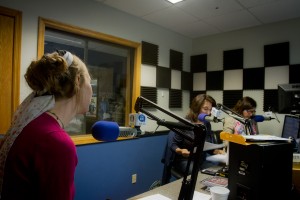
I also talked about Some Fatal Effects of Curiosity and Disobedience on KIOS-FM, Omaha Public Radio and read from the book on air. Here are a few mp3s from that reading and more.

Fruits

Widower’s Insomnia

Our Sister Cared

The Blue Funeral

apollon-books-2

Right after the book’s release, I featured the cover artist Lauren Rindaldi about her gorgeous cover art. Here’s Lauren’s artist description of the piece:

Desire’s Conquest and Demise
The Nightmare, which depicts an incubus, a horse and a sleeping woman. In my painting, the incubus is replaced by my deceased cat. The woman takes a position believed to encourage nightmares, and the horse (or mare), in my piece, is replaced by another woman. It is meant to simultaneously show a woman dreaming and the contents of her dream or fantasy. This painting is part of my most recent series of works exploring ideas about the pursuit of fantasies resulting in deterioration, decay or even death.

fatal effects in the hands of artist Lauren Rinaldi

Here’s some praise about my new book.

Some Fatal Effects of Curiosity and Disobedience is an ingenious narrative of poems that transposes the Bluebeard myth to our contemporary lives with a chilling authenticity. The juxtapositions of desire and danger, trust and betrayal, innocence and cunning all seem absolutely modern, as if they could be happening down the street or in our own lives, even as we recognize their ancient, terrible truths. Laura Madeline Wiseman’s command of the language and balance between irony and dead seriousness is pitch-perfect and this is a haunting book. - Ellen Bass


What happens when a woman dares to enter forbidden spaces? Tucked into legend, the poems in this collection shift from sensual to sexy and from enchanting to haunting, as they explore the question. Laura Madeline Wiseman is both poet and storyteller, deftly moving back and forth through time, weaving breathtaking parts into a heart-stopping whole. - Tania Rochelle


Predicated on the Bluebeard tale, Wiseman weaves a contemporary mythology that reaches more deeply and pervasively into the very human psychology and psychosis we name love. These poems traverse a dark storm of sexuality—the forbidden, the cruel, the guilty-pleasures. Lunacy and denial pulse mysteriously as mating ritual, as in these lines from “Solo Artist, Another Late Wife”: “…and she pretends for a moment / that this cheap condo is Carnegie Hall and his hands / that rain down on her are applause…” Control and conviction are knives bladed as sharply as the key to truth. Some Fatal Effects of Curiosity and Disobedience is erotic, disturbing, and utterly compelling. This collection, the stuff of nightmarish transformations, may cause you to see an altered face when you gaze in your day-lit mirror. - Lana Hechtman Ayers


Wiseman’s imagination is expansive, sultry, and wild. Some Fatal Effects of Curiosity and Disobedience is a masterpiece of antonyms. Wiseman’s speaker first appears to be a traditional woman: married, want of secrets, but curious and complex. Like many women, she wrestles with society’s fetters, which is easily identifiable and sympathetic. It is in this way she acts as a great literary heroine; the reader, perhaps lost themselves, roots for her to find her footing. Just as we think we have her understood, the book quickly transforms from a biography of a marriage into a lesson in the subversive. Wiseman’s speaker does reference work in the taboo. She struggles with the direction of her sexuality, fidelity, even marrying her late sister’s dangerous husband seems to be out of her control. She has simultaneous desires: to be dominant, to be taken, to be voyeur/watched, to be pursued/left alone, to be safe, to be killed. Ultimately, this book begs the question: how well can we ever know those closest to us? And perhaps more importantly, how well can we ever know ourselves? - Danielle Sellers


Drawing from Bluebeard and other renderings of misogynistic myth, Wiseman captures the universal experience of love skewed by an imbalance of power. Seduction, eroticism, betrayal, self-knowledge in the aftermath—it’s all here in this beautiful book, in fierce, aching lines chiseled with elegance and compression. - Rebecca Foust

radio2

What’s next? I’ll be on the local radio on The Joy Factor next week.

Interview on The Joy Factor with Shelia Stratton
6:00-6:30 pm, June 24th, 2014
89.3, KZUM FM & HD (radio)
Lincoln, NE’s community radio

sd_4

I’ll also be reading from this book and more soon. I hope to see you there!

Reading in the Wit Rabbit Reading Series
with Lavender Ink Poets Sara Henning & Megan Burns
7 pm, Tuesday September 2, 2014
Quencher’s Saloon
2401 N. Western, Ave.
Chicago, IL

Reading in the Smoking Glue Gun‘s Sunchild Austin Summer Readings
with Christopher Klingbeil, Jerrod Bohn, Kendra Fortmeyer, & Kelly Luce
Sundown, Friday, September 26, 2014
SSG House, 2845 B San Gabriel St.
Austin, Texas

Poetry & Pints Reading
with Lavender Ink Poets Megan Burns & Sara Henning
8 pm, Sunday, November 16, 2014
Harmony Brewing Company
1551 Lake Drive Southeast
Grand Rapids, MI 49506

magnets

It’s the Beat! and Tuesday with Writers, plus recent readings in Nebraska

radioGroup

I’m going to be interviewed on It’s the Beat! this week and I’m reading with Grace Bauer and Michelle Menting next week at Tuesday with Writers. Here’s the information for those upcoming events:

Interview with Karen Sokolof Jovitch & Jody Vinci
It’s the Beat Radio show, Mighty 1290 KOIL (am)
noon-1pm, Saturday May 3, 2014

Reading with Grace Bauer and Michelle Menting
Tuesday with Writers
7 p.m., May 6, 2014
South Mill, 48th & Prescott
Lincoln, Nebraska

I hope you can catch the radio piece if you’re near a radio Saturday. It will also appear on the site’s website and I’ll link to it here. The South Mill reading with Tuesday with Writers should be great fun!

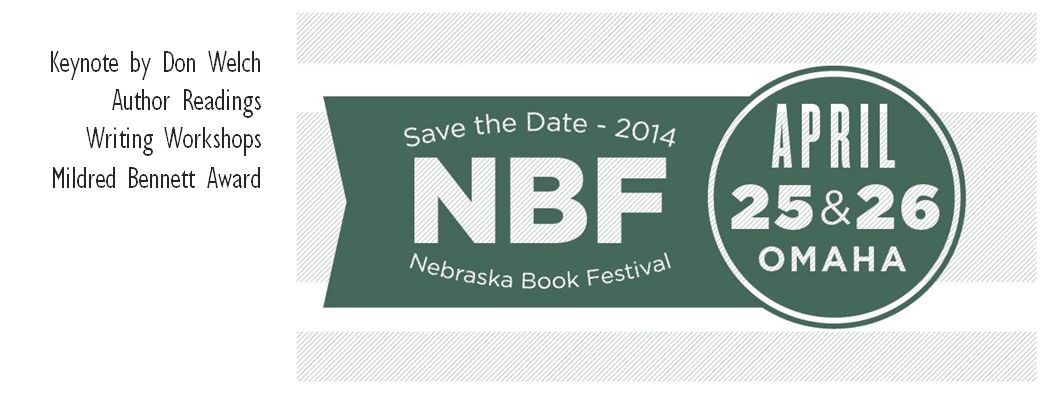
Last week, I read from Women Write Resistance at the Nebraska Book Festival. It was a great turn out! It was such an honor to read from the anthology that I edited. I read from the preface and from a poem by Wendy Barker. I also read from Intimates and Fools and my new book on the bluebeard myth Some Fatal Effects of Curiosity and Disobedience.

Earlier in the week, I read at Connect Gallery with Sally Deskins and Cat Dixon. It was a great turn out, too!

connect reading image

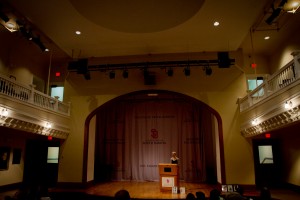
Finally, Monday I was part of the Bodies of Work: a Collaborative Exhibition and Reading. Sally and I were able to read from Intimates and Fools collaboratively - a real treat!

g. thompson higgins photography did a beautiful job at capturing the event. Thanks, Greg!

bodies of work 3

I was graciously interviewed with Rachel Mindrop by Michael Lyon on KIOS-FM early that same morning. It was so much fun! Thanks, Michael!

npr_interview2

If you missed the airing, you can listen to the mp3 of Bodies of Work on KIOS-FM, Omaha Public Radio and Michael Lyon. My poem “The Blue Funeral” is about 3/4ths in.

Recent Readings

I gave three readings the first week of April to begin April’s poetry month celebration. I read with several readers in an Art Block Party at the LUX Center of the Arts.

Lux-LMW-2013

I also read with Twyla Hansen at Indigo Bridge Books on the theme of women and land. I was able to read a few poems from my forthcoming collection MEN AND THEIR WHIMS.

TH-and-LWM-Q&A-Indigo-2013

I read with Marjorie Saiser at Tuesdays with Writers on the theme of women and creativity. The event included art by Wendy Bantam.

Part of that event included an interview on “Friday Live” at the Mill by William Stibor (starts 26:50, or 28:23) with both Marge and Wendy. It was completely fun to be on the radio and to be in that environment at the Mill in the morning.

Friday-Live-3

To celebrate Women’s History Month, I was asked to be the visiting writer at Bradley University. I read from my letterpress books UNCLOSE THE DOOR and FARM HANDS.

bradley6

bradley1

The Collum-Davis Library there displayed my letterpress books.

bradley5

bradley4

I also gave a poetry workshop and was the visiting writer at the New Hampshire Institute of Art.

nh2

nh1

They filmed the reading I gave in entirety at Teti Library. It’s featured in In Place LIVE. Fabulous.

wwr_lincoln

To officially release Women Write Resistance, several WWR poets joined me in “Shakespeare’s Sister” for Women’s Week on UNL’s campus, including Becky Faber, Grace Bauer, Sarah A. Chavez, Deborah McGinn, Lucy Adkins, Twyla Hansen, and more. I also read from the critical introduction and preface to Women Write Resistance in No Limits.

No Limits 2013

Finally, I read in March’s First Friday event in Femme Qui Bercent with Cat Dixon, Marilyn Coffey, Mary Spittler, Denise Eileen Brady, and more at Noyes Gallery.

And, because I forgot to mention this in February’s news, I also read in Poetry at the Moon with Fran Higgins.

Fall Reading List

I thought I’d post what I’ve been reading this term, when I was reading for fun. Though given Goodreads, I think I’ll post this type of info there in the future, given it’s proclivity for other bibliophiles and their yearly Reading Challenge.

Fiction:

Poetry:

Other:

  • the current issues of Blue Collar Review, Poet Lore, The Writer’s Chronicle, Crab Orchard Review, Poets & Writers, and The Journal
  • many, many student papers

Podcasted

The No Name Reading Series have been podcasting the readings by the talented work of creative writing graduate students. Back on March 26, 2010, I gave a reading. I read four poems from My Imaginary, and a poem from my dissertation on Matilda Fletcher.

Two weeks ago on November 12, I gave my reading at the No Name, reading poems from My Imaginary, Ghost Girl, and from my forthcoming Branding Girls.

The sound quality is really good. And what a wonderful addition to an already wonderful reading series.