Women Write Resistance at the Omaha Lit Fest

I hope you’ll join us at the (downtown) Omaha Lit Fest for a Women Write Resistance: Poets Resist Gender Violence Anthology Reading with Leslie Adrienne Miller, Sara Henning, Laura Madeline Wiseman, and Jennifer Perrine

SATURDAY NIGHT, September 13, 7 pm
The Apollon, 1801 Vinton St
Omaha, NE 68108
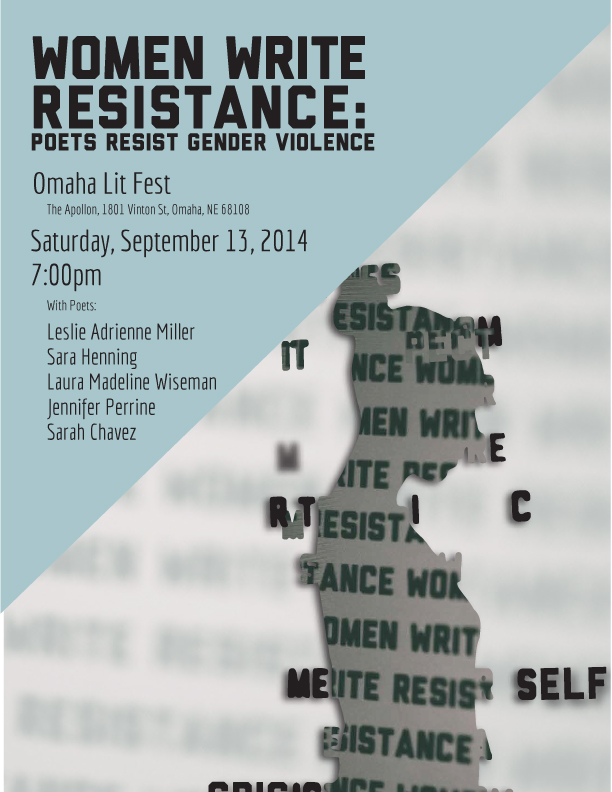
WWR_poster_omahalitfest

About the Anthology and Event:

Women Write Resistance: Poets Resist Gender Violence (Hyacinth Girl Press, 2013), edited by Laura Madeline Wiseman, views poetry as a transformative art. By deploying techniques to challenge narratives about violence against women and making alternatives to that violence visible, the over one hundred American poets in Women Write Resistance intervene in the ways gender violence is perceived in American culture. Indeed, these poets resist for change by revising justice and framing poetry as action. This Omaha Lit Fest reading will include an introduction by the editor and feature several Women Write Resistance poets who will read their poems and others from Women Write Resistance.

About the Poets:
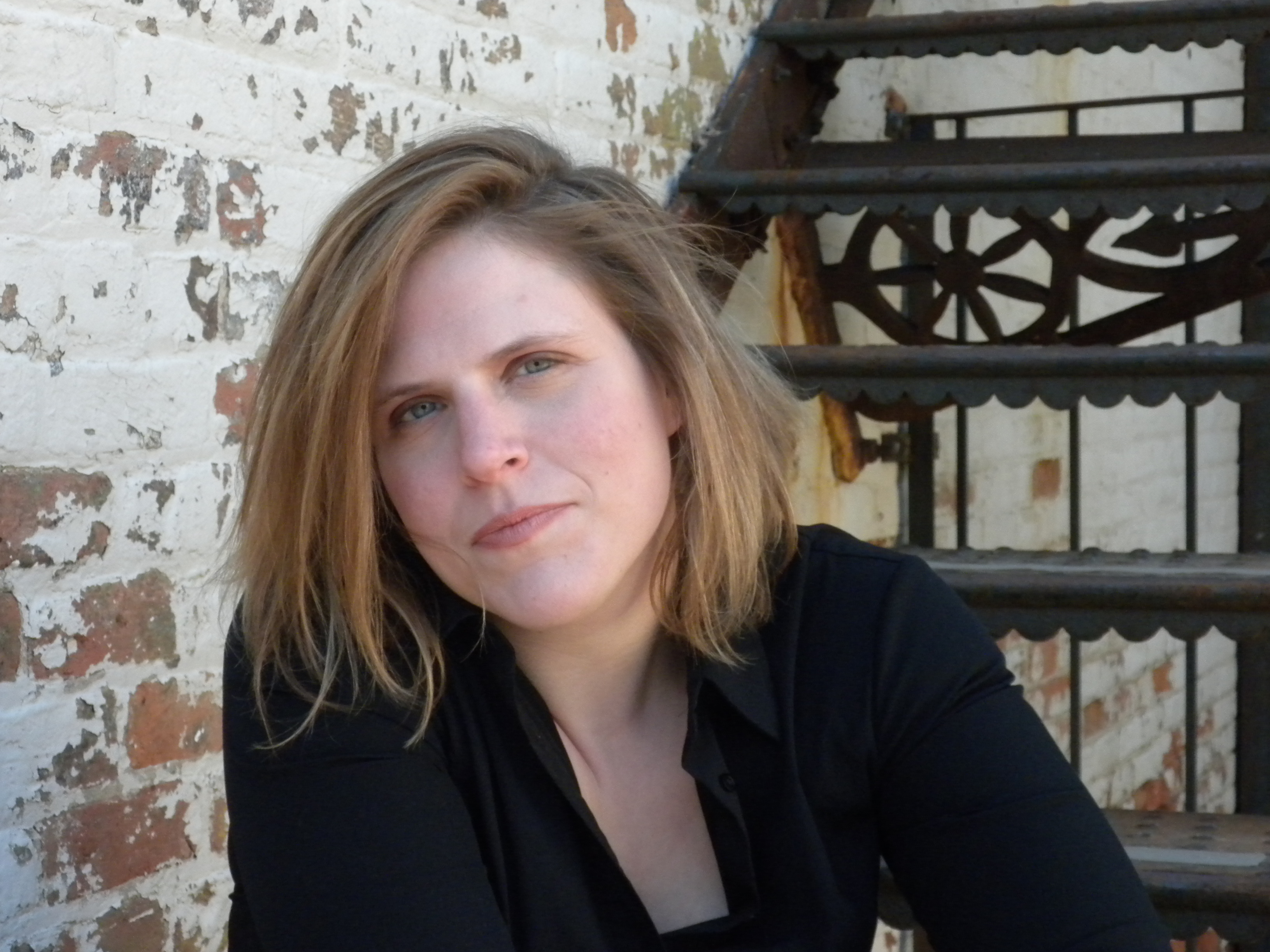
sara henning

Sara Henning is the author of A Sweeter Water (Lavender Ink, 2013), as well as a chapbook, To Speak of Dahlias (Finishing Line Press, 2012). Her poetry, fiction, interviews and book reviews have appeared or are forthcoming in such journals as Willow Springs, Bombay Gin and the Crab Orchard Review. Currently a doctoral student in English and Creative Writing at the University of South Dakota, she serves as Managing Editor for The South Dakota Review.
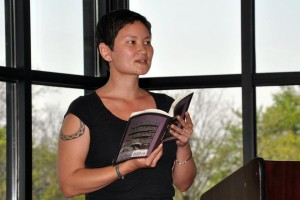
Jennifer Perrine is the author of The Body Is No Machine (New Issues), winner of the 2008 Devil’s Kitchen Reading Award in Poetry, and In the Human Zoo (University of Utah Press), recipient of the 2010 Agha Shahid Ali Poetry Prize. In 2014, she will serve as a member of the U.S. Arts and Culture Delegation to Cuba. Perrine teaches in the English department and directs the Women’s and Gender Studies program at Drake University.
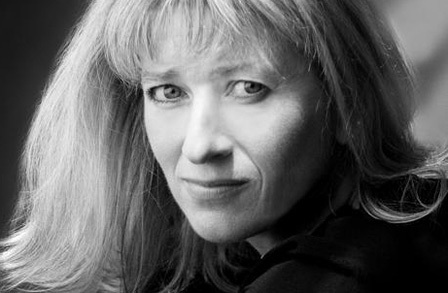
Leslie Adrienne Miller is author of six collections of poetry including Y, The Resurrection Trade and Eat Quite Everything You See from Graywolf Press, and Yesterday Had a Man in It, Ungodliness, and Staying Up For Love from Carnegie Mellon University Press. Professor of English at the University of Saint Thomas in Saint Paul, Minnesota, she holds a Ph.D. from the University of Houston, an M.F.A. from the University of Iowa Writers’ Workshop, an M.A. from the University of Missouri, and a B.A. from Stephens College.
omaha2014

Laura Madeline Wiseman is the author of more than a dozen books and chapbooks and the editor of Women Write Resistance: Poets Resist Gender Violence (Hyacinth Girl Press, 2013). Her recent books are American Galactic (Martian Lit Books, 2014), Some Fatal Effects of Curiosity and Disobedience (Lavender Ink, 2014), Queen of the Platform (Anaphora Literary Press, 2013), Sprung (San Francisco Bay Press, 2012), and the collaborative book Intimates and Fools (Les Femmes Folles Books, 2014) with artist Sally Deskins. Her work has appeared in Prairie Schooner, Margie, Mid-American Review, and Feminist Studies. www.lauramadelinewiseman.com


blurbs for First Wife, forthcoming Hyacinth Girl Press

I’ve been working on getting things ready for my forthcoming chapbook FIRST WIFE (Hyacinth Girl Press, 2013). I’ve mentioned the lovely cover art (above) created by the talented Megan Sanders, now I’m happy to share the blurbs from Alicia Ostriker, Leslie Adrienne Miller, and J. Hope Stein.

Like most young poets, I’d been reading Alicia Ostriker’s work for years. The first year I presented in Washington, D.C. at Split this Rock in 2008, Alicia read with a wonderful lineup of poets that included Mark Doty and Naomi Shihab Nye. It was such a treat to hear the readings. Several of her books were on my comprehensive exams reading list, included No Heaven. In the spring semester of 2011, I took Alicia Ostriker’s master poetry workshop at the University of Nebraska-Lincoln when she was the visiting writer here. I adored her class—her craft talks, the writing prompts and discussions on the sacred, the requirement to write a poem (or more) every day, and the one-on-one tutorial. While she was at UNL, I taught The Volcano Sequence to my poetry class and while her master class was in session, I brought her writing prompts to my students. They loved them. It was fun talking with them about what she were teaching, the prompts, and our interpretation of the sacred in poetry and in her work.

During the workshop, I specifically remember Alicia’s comments about the poem I was working on about a gravestone of a widow. I think in many ways, the poems that I started writing in Alicia’s class and the discussions we had about the sacred in that workshop became fodder for what has become my collection FIRST WIFE. Here’s Alicia,

Who is Lilith? Is she the mythic first wife of Adam, who escaped subservience to her husband and her husband’s God and became stigmatized as a demoness? Or is she an ordinary woman preoccupied with gardening, cyberspace, irritation at the requirements of “pretty” and ready to choose herself? Does she know that sometimes “words stand in the way of their meaning?” Yes, yes and yes, in the poetry of Laura Madeline Wiseman’s First Wife, whose words are as lyrical, acerbic, and laden with meaning as an apple tree with apples.
~Alicia Ostriker, author of The Book of Seventy

Like Alicia’s work, Leslie Adrienne Miller’s wonderful book The Resurrection Trade was on my PhD comps reading list. Her work is stunning as it explores issues on the body, gender roles, the representation of the female body by institutions, and historical presentations of the feminine. I was just delighted that Leslie could offer a few words on my forthcoming chapbook:

The haunting poems of Laura Madeline Wiseman’s First Wife radiate from fragments of the apocryphal story of Lilith, Adam’s first wife, and recall Louise Gluck in their intricate segues between a mythical female figure’s surprisingly contemporary inner turmoil and a contemporary woman’s questioning of a stubbornly patriarchal culture.
~Leslie Adrienne Miller, author of Y and The Resurrection Trade

Finally, the last blurber is J. Hope Stein, fellow Dancing Girl Press and, now, Hyacinth Girl Press sister-poet. I read with Stein in Chicago in June in a DGP reading and it was lovely. She’s also interviewed in my blog series on the chapbook. Here’s Stein:

Laura Madeline Wiseman’s First Wife is filled with the rich imagery of Eden and apples and poems of Lilith combined with a vision of a modern marriage marked by the imposed labels: “engagement”, “newlyweds”, “honeymoon”, and “anniversary.” Like Louise Gluck’s Meadowlands, in First Wife Wiseman explores a unique brand of truth that interweaves the disintegration of a marriage with myth.
~J. Hope Stein, author of [Mary]: and [Taking Doll]

call for poems on gender violence

Here’s the CFP for anyone who has poems about gender violence and violence against women:

WOMEN WRITE RESISTANCE: POETS RESIST GENDER VIOLENCE (Blue Light Press, 2013), a new anthology of American poets, seeks poetry submissions to round out the collection. The poets in this anthology intervene in the ways violence against women is perceived in American culture by deploying techniques to challenge those narratives and make alternatives visible. See description below. More information: https://www.facebook.com/WomenWriteResistancePoetsResistGenderViolence or https://www.facebook.com/events/338957122853722/

There are two ways to submit:

Submit 1-3 unpublished poems in the body of the email or as a doc to <womenwriteresistance(at)gmail.com> (replace (at) with @ in sending e-mail). This is the preferred submission.

Or: Submit 1-3 previously published poems in the body of the email or as a doc to <womenwriteresistance(at)gmail.com> (replace (at) with @ in sending e-mail). For this submission, please also include the following: 1) the title of your poem; 2) the name of the book, journal, or anthology where it originally appeared; 3) the name of the press or journal who published it; 4) the year or issue it was published. Please double check to make sure that you as the author retain the rights to this poem(s) or that it can be reprinted at no cost other than acknowledgement to the original source.

Please also include in your submission a bio (50-100 words) and a mailing address. Deadline for submissions is September 30, 2012.

Contributors include Kristin Abraham, Lucy Adkins, Lana Hetchman Ayers, Wendy Barker, Ellen Bass, Grace Bauer, Kimberly L. Becker, Laure-Anne Bosselaar, Shevaun Brannigan, Kristy Bowen, Susana H. Case, Joy Castro, Allison Hedge Coke, Sandi Day, Jehanne Dubrow, Rain C. Goméz, Megan Gannon, Judy Grahn, Nicole Hospital-Medina, Judy Juanita, Julie Kane, Susan Kelly-Dewitt, Paula Kolek, Alexis Krasilovsky, Marianne Kunkel, Lisa Lewis, Lyn Lifshin, Frannie Lindsay, Ellaraine Lockie, Alison Luterman, Marie-Elizabeth Mali, Leslie Adrienne Miller, Deborah A. Miranda, Linda McCarriston, Dawn McGuire, Sara Luise Newman, Claire Ortalda, Cati Porter, Laura Van Prooyen, Natanya Ann Pulley, Carol Quinn, Hilda Raz, Kimberly Roppolo, Lucinda Roy, Carly Sachs, Marjorie Saiser, Maureen Seaton, B. T. Shaw, Kathleen Tyler, Judith Vollmer, Davi Walders, Tana Jean Welch, Judy Wells, Rosemary Winslow, Karenne Wood, Andrena Zawinski, and many, many others.

WOMEN WRITE RESISTANCE: POETS RESIST GENDER VIOLENCE (Blue Light Press, 2013) views poetry as a transformative art. By deploying techniques to challenge narratives about violence against women and making alternatives to that violence visible, the American poets in WOMEN WRITE RESISTANCE intervene in the ways gender violence is perceived in American culture. A poem from a victim’s perspective, for example, might use explicit imagery but also show the emotional consequences often obscured when newspapers, video games, films, and television programs depict violence in superficial or sexualized ways. A poet might also critique dominant narratives, such as calling into question the perception that certain women deserved to be raped.

The introduction, which draws on the work of Tami Spry, Kimberlé Williams Crenshaw, and Chela Sandoval, frames the intellectual work behind the building of the anthology by describing how poets break silence, disrupt narratives, and use strategic anger to fight for change. Poetry of resistance distinguishes itself by a persuasive rhetoric that asks readers to act. The anthology’s stance believes poetry can compel action using both rhetoric and poetic techniques to motivate readers. In their deployment of these techniques, poets of resistance claim the power to name and talk about gender violence in and on their own terms. Indeed, these poets fight for change by revising justice and framing poetry as action.