Steel Pen Panel on Historical (Re)tell: The Writing and Craft of Telling Retellings of the Historic

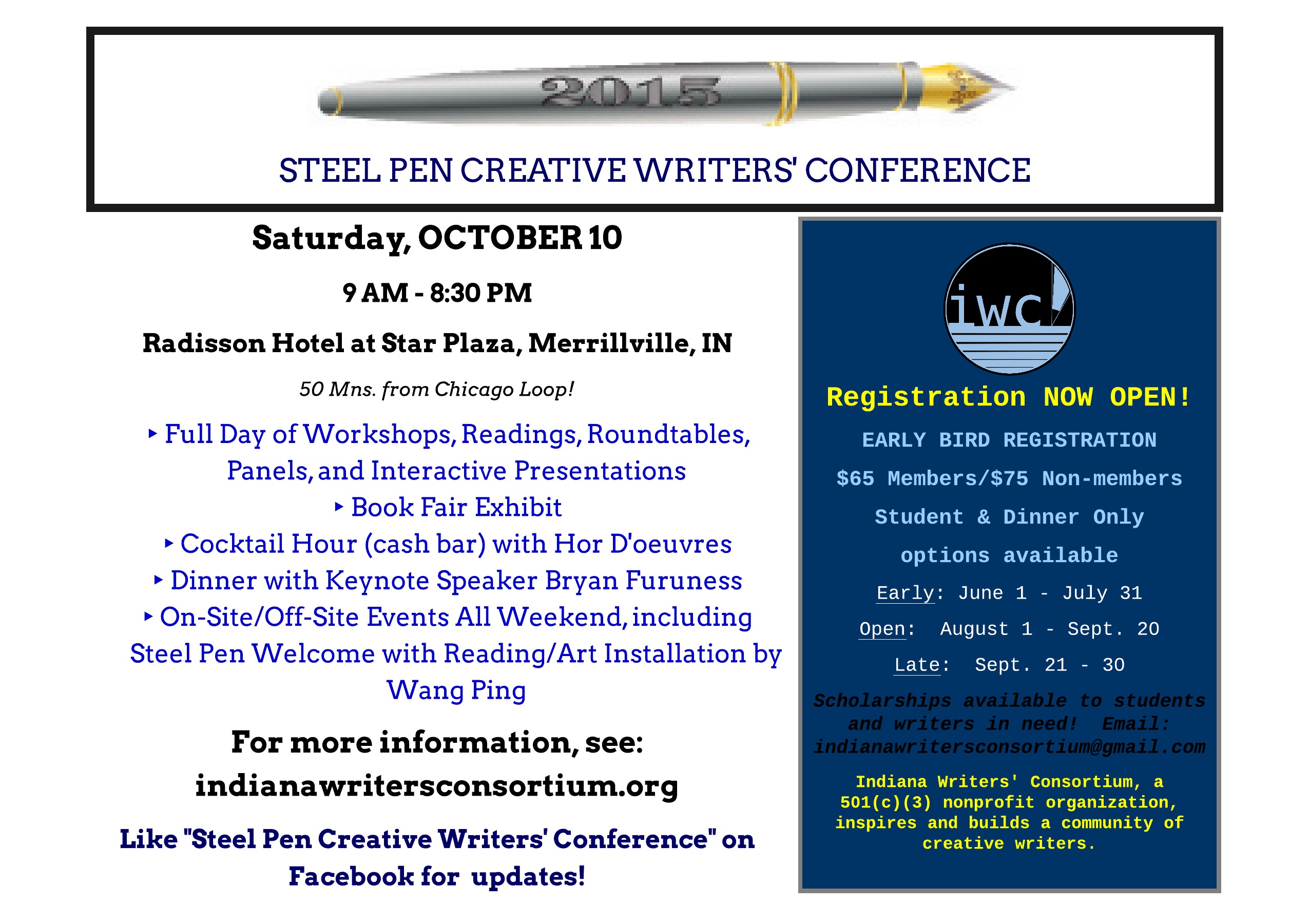
2015 Steel Pen Print Flier

This weekend, I’m attended the Steel Pen Conference in Indiana. I’m really excited about speaking in the panel “Historical (Re)tell: The Writing and Craft of Telling Retellings of the Historic” with Cat Dixon, Britny Cordera Doane, Lindsay Lusby, and P. Ivan Young. Here’s the details for the event, the proposal, presenters bios, and descriptions of their anticpated readings and talks. I hope you’ll consider attending. It should be great fun.

Historical (Re)tell: The Writing and Craft of Telling Retellings of the Historical
with Cat Dixon, Britny Cordera Doane, Lindsay Lusby, Laura Madeline Wiseman, and P. Ivan Young
Indiana Writers’ Consortium’s 2015 Steel Pen Creative Writers’ Conference
9-10 am, Saturday, October 10, 2015
Radisson at Star Plaza, 800 East 81st Avenue
Merrillville, Indiana

Historical (Re)tell: The Writing and Craft of Telling Retellings of the Historic

“Tell the truth but tell it slant,” writes Emily Dickinson. This panel of poets and writers presents work that engages with the historical past by telling retelling of the historic, tales that offer what wasn’t said but should’ve been, what wasn’t written down but likely happened, whose voices speak that didn’t speak because at the time there wasn’t a platform on which for them to stand. Panelists explore the craft aspect of myths and legends retold from other voices, new perspectives, and counterintuitive stances. Accurate, inaccurate, or close, this panel of authors will explore how facts become transformed into the tales, histories, and family stories that inform how we tell our worlds. Panelists will discuss the craft of such writings and read from their work as they engage with the questions: What is the process for writing poems based on research and pre-existing texts? What kind of research is required to (re)tell a historical kinship between historical luminaries? How does a poet navigate fact and (in)accuracy when writing about the past? How does the influence of the world outside the poet hinder or enrich the truth as it is conveyed in poetry of (re)telling? What are the strategies of other contemporary writers who do similar work on the historical record? At what points can a writer depart from fact in the service of the story that wants to be (re)told?
 

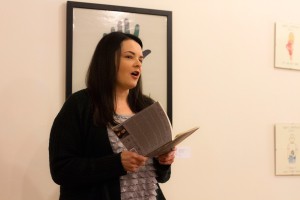
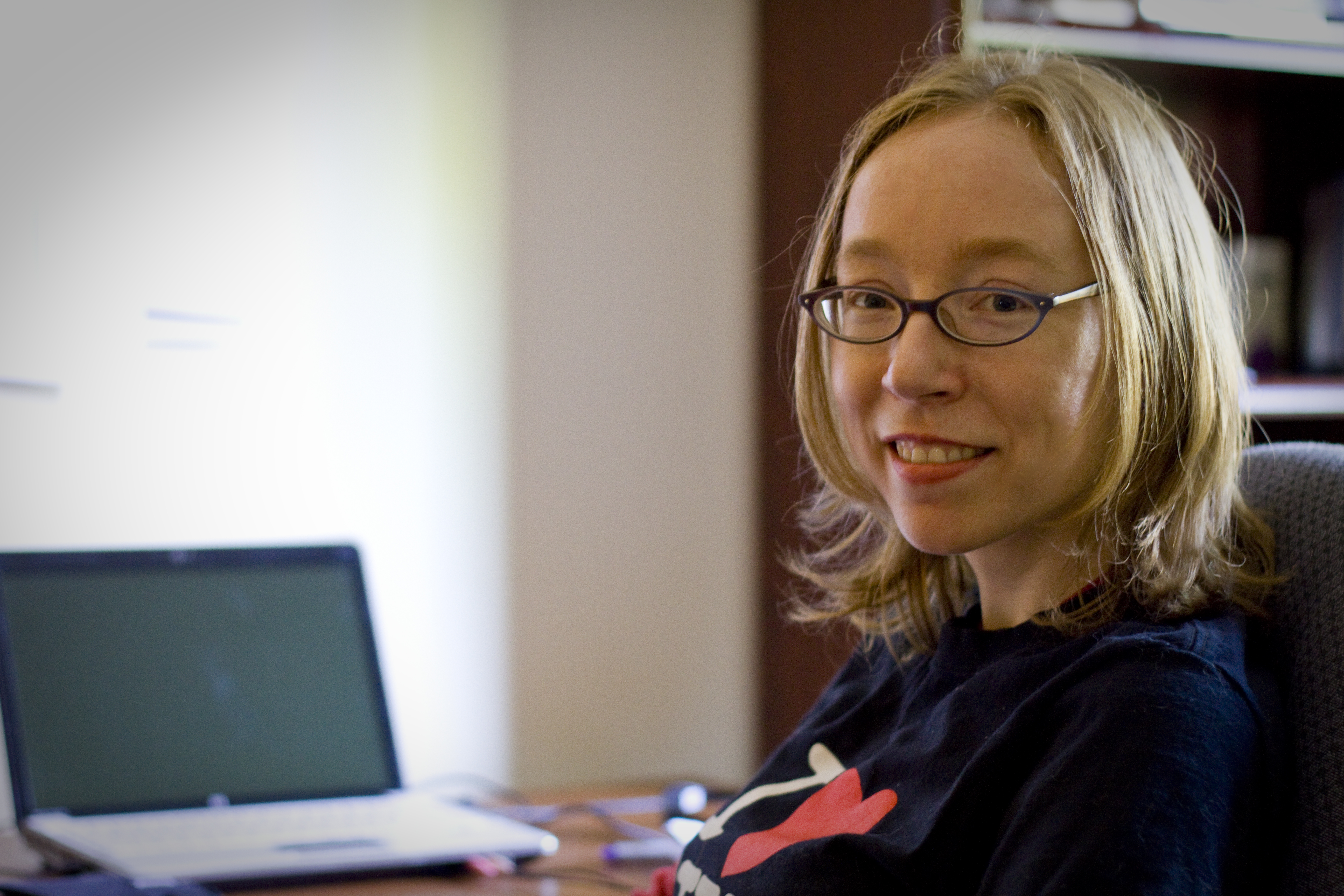
Dixon photo

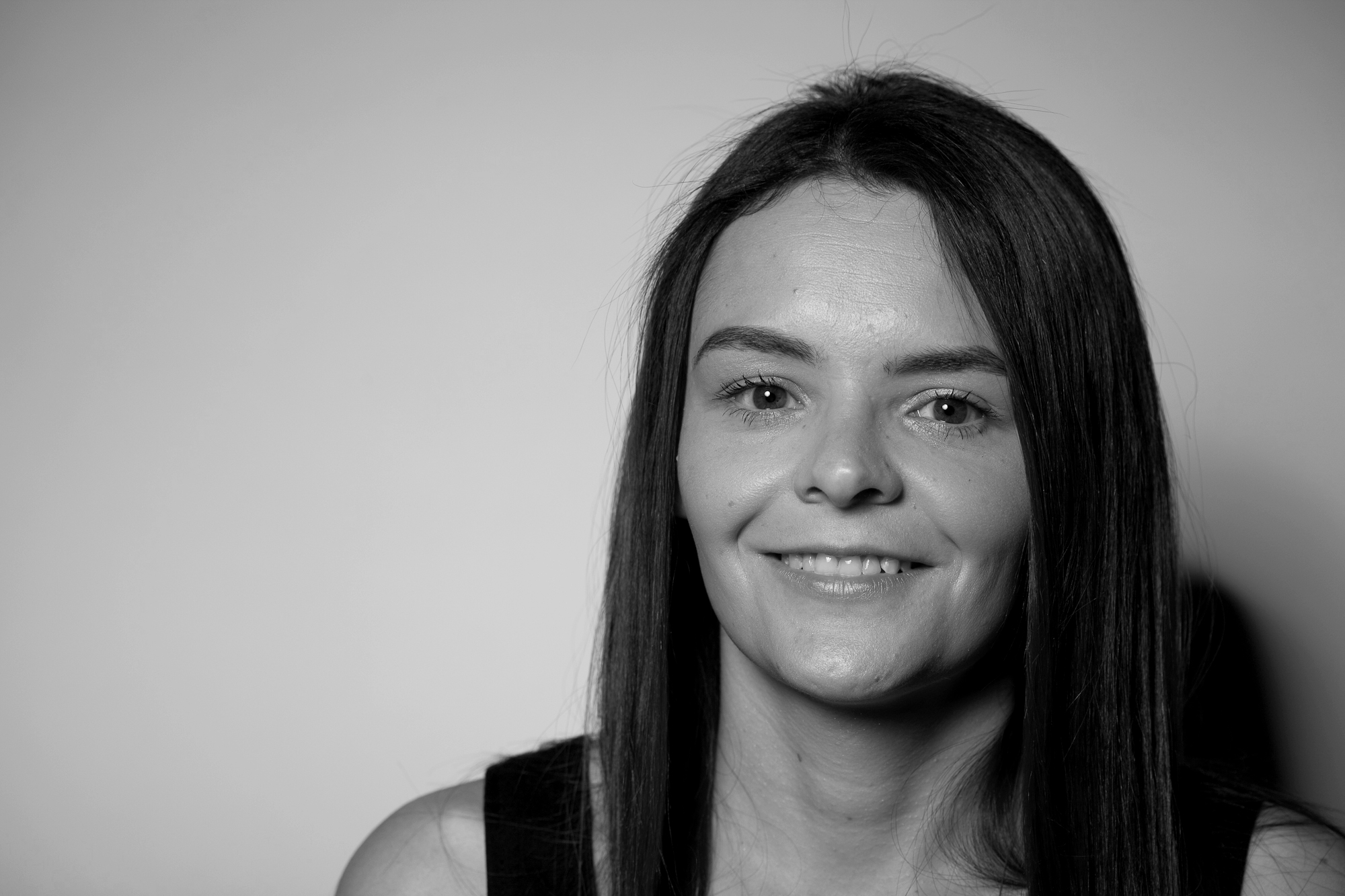
Cat Dixon

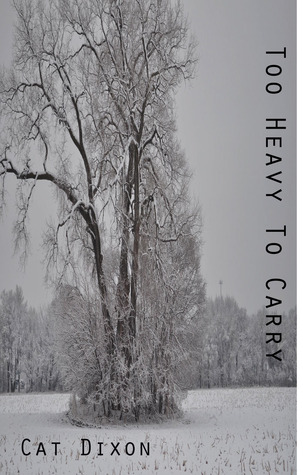
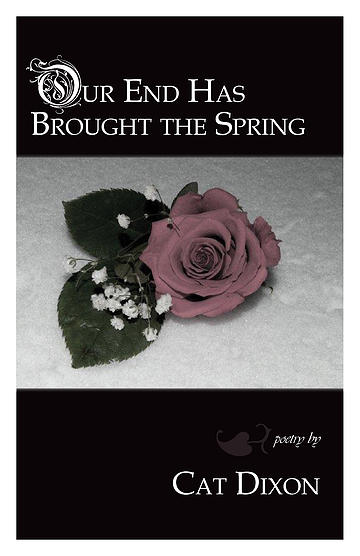
Cat Dixon is the author of Too Heavy to Carry (Stephen F. Austin University Press, 2014) and Our End Has Brought the Spring (Finishing Line Press, 2015). Her poetry and reviews have been published in Mid-American Review, Midwest Quarterly, and Sugar House Review. She volunteers with The Backwaters Press. www.catdix.com.

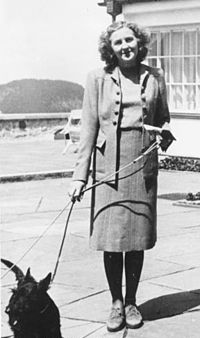
Cat Dixon will be speaking about her work with Eva Braun collected in her new chapbook Our End Has Brought the Spring (Finishing Line Press, 2015). She will address researching her subject, the time period, and Hitler’s reign as well as the few sources devoted to Braun’s life. She will address the question: Does the poet have the right to humanize what public opinion perceives as a monster? Dixon will also discuss her manuscript of work on Bob Levinson and her process that includes family interviews and research on hostage survival, hostages that have been released, and on her subject. Her talk will address the questions: Does the poet have the right to give voice to a man held in captivity? Should the poet contact the family of the person? Her presentation will address authors that have done similar retell work such as Alvin Greenberg, Angela Lambert, Zeina Hashem Beck, W.D. Snodgrass, and Frank Walker.
 

Britny Doane

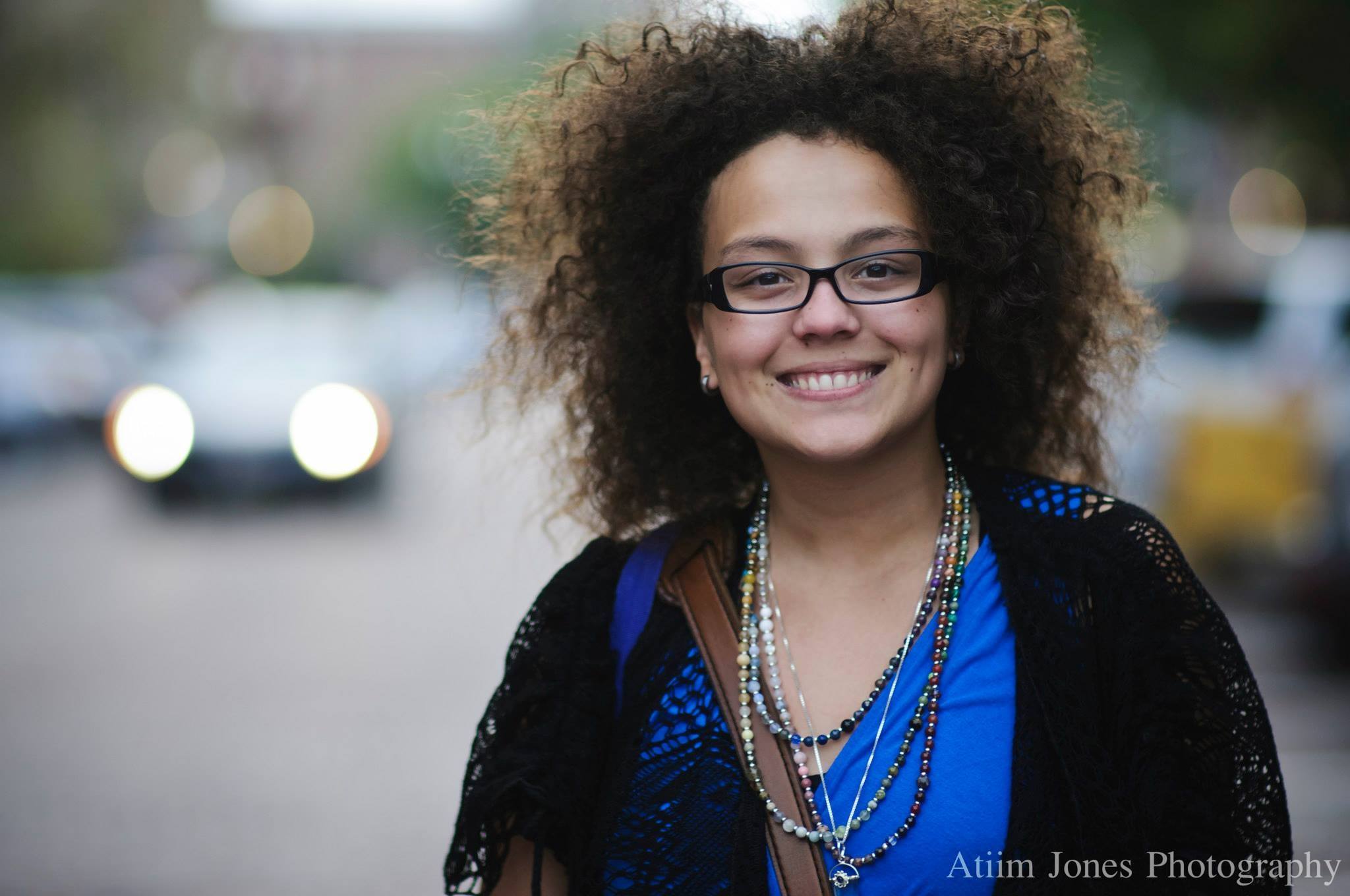
Britny Doane

Britny Cordera Doane is the youngest author to have a book published in the history of the University of Nebraska at Omaha. Her poetry has been featured in UNO’s 13th Floor literary magazine, the Mythic Poetry Series by Silver Birch Press, the Women for Women international publication: Forget Me Not, and most recently in both the Fall 2014 and May 2015 Pinyon Reviews. Her maiden voyage, Wingmakers, was published by Pinyon Publishing in February 2015. Known locally as the Old Market Poet, she is often set up with her typewriter, in Omaha’s Old Market district, sharing her work with others.

Drawing from the work of Mircea Eliade, Technicians of the Sacred Edited by Jerome Rothenberg, and Joseph Brodsky, Britny Cordera Doane will discuss how mythology was used to give meaning to things that were at one time unexplainable and how writers use mythology to not only preserve the past, but also to explain the unexplainable within their own lives. Doane presentation will explore the importance of origin stories, and how every culture has a unique origin story for their myths, the connections and patterns found within mythology, cross-culturally, and intertextually, and the language of the sacred found in symbols, mythology, and poetry, to convey our everyday experiences and to connect with the mysteries of the universe. Her talk will also explore the phenomena of axis mundi within mythology and sacred traditions.
 

Lindsay Lusby

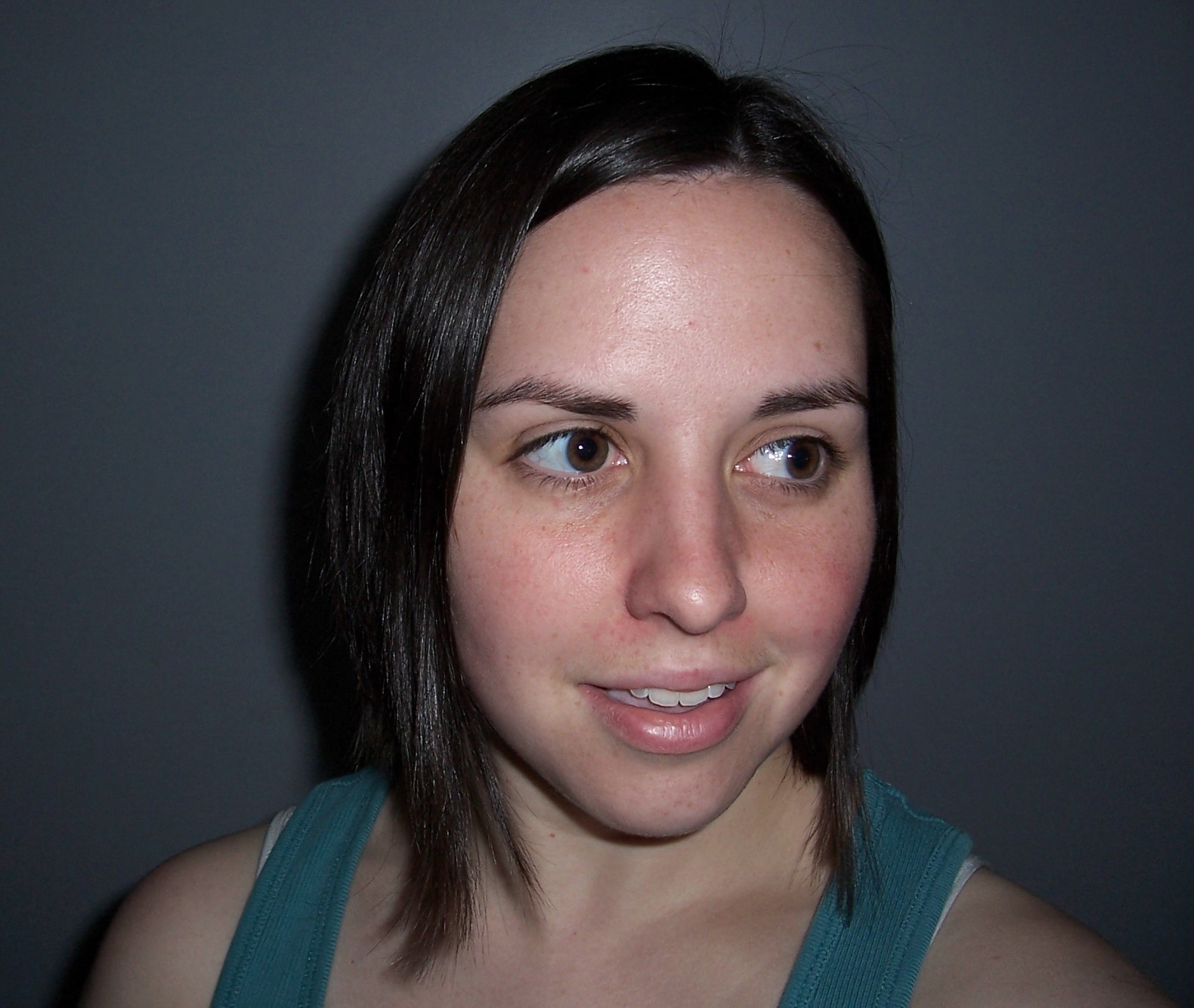
Lindsay Lusby

Lindsay Lusby is the author of Imago (dancing girl press, 2014). Her poetry has appeared in Sugar House Review, The Lumberyard, Fairy Tale Review, and elsewhere. She is Assistant Director of the Rose O’Neill Literary House, serving as assistant editor for Literary House Press & managing editor for Cherry Tree.

Referencing the work of contemporary (re)tell writers such as Kate Bernheimer, A.S. Byatt, Italo Calvino, Angela Carter, Neil Gaiman, and Jeanette Winterson and drawing upon her reading of the scholarly text Twice Upon a Time: Women Writers and the History of the Fairy Tale, by Elizabeth Wanning Harries, Lindsay Lusby’s talk will touch on the long tradition of (re)telling in the folk and fairy tale genre, how different versions play off one another to create new meaning through historical contrast, and how the (re)telling of fairy tales has traditionally leaned toward reframing the stories in a way that highlights the need for current social change.
 

laura madeline wiseman KHN

Laura Madeline Wiseman

Laura Madeline Wiseman is the author over twenty books and chapbooks and the editor of Women Write Resistance: Poets Resist Gender Violence (Hyacinth Girl Press, 2013). Her most recent book is Drink (BlazeVOX Books, 2015). She teaches creative writing, English, and women’s and gender studies in Nebraska. www.lauramadelinewiseman.com

Drawing from the work of contemporary (re)tell work such as that done by Carole Simmons Olds, Natasha Trethewey, and Margaret Atwood and the work of feminist scholars such as Elaine Scarry, Laura Madeline Wiseman will explore scholarly framework when approaching writing about family violence, the body, and girlhood as those stories challenge depictions of gendered expectations in fairy tales and myths such as those of mermaids, the wives of bluebeard, and the lady of death. Specifically, her work is interested in exploring the narrative quality of myths and troubling the plots such tales offer. Her presentation will also address researching a family ancestor and the craft of writing poems that seek to preserve a voice that might otherwise be lost from the historic record, as such work invokes the political, educational, and reformist landscape of the nineteenth century.


P. Ivan Young

Ivan Young is the author of Smell of Salt, Ghost of Rain (Brick House Books, 2015) and the chapbook A Shape in the Waves (Stepping Stones Press, 2009). He teaches Creative Writing at University of Nebraska Omaha and is Coordinator of The Center for Faculty Excellence.

Ivan Young presentation will explore classical mythology, biblical myth, and fairy tale as one method for retelling of self. His talk will build from Sir Philip Sidney’s notion of the poet as a combination of the philosopher and the historian (in the older context) and will transition into Mark Doty’s piece on the perspective box. His seeks to address the question: What are we accomplishing in retelling the past? Sidney suggests that the poet finds a greater truth in retelling, but Doty explores the possibility that we may be distorting the past. Young seeks to explore the space in between such positions, how both clarity and distortion are a way of shaping the self within the contexts of our own experience, education, and political foresight, and the ways retelling not only shapes current experience but also how it reshapes our perceptions of the past.
the chapbook interview: Cat Dixon on writing Eva Braun, wife of Hitler

How did you become fascinated with Eva Braun?

About 15 years ago I read The Fuhrer’s Bunker by W.D. Snodgrass. This collection contains poems from the point-of-view of every person who was in the bunker during the last days of World War II. Snodgrass is one of my favorite poets-I admire him greatly, but I wasn’t thrilled with the way Eva was portrayed: a woman concerned with singing catchy songs and cowering to Hitler’s twisted sexual needs. As the years passed, I researched Eva and found that there are only a handful of books devoted to her, but hundreds written about Hitler. I wondered why she would love this man, why she would die with him. Something in him must have been lovable or at least worthy enough of her attention and devotion. I am fascinated with WWII especially the appeasement that England and France tried by allowing Hitler to take without conflict the Rhineland, Austria, etc. I am intrigued that Hitler laid out his plans in his book Mein Kampf, but people did not take the work seriously enough to see him as a major threat until it was too late and a war world started. I considered that perhaps that is how Eva came to be with Hitler. I assume that he tested his power in their relationship and when he found that she wasn’t on the defensive, he continued the manipulation until it was too late. Eva was a working class girl and she did not have many options. She chose to stay and be able to live comfortably rather than go home to her parents. Then she chose to die with her lover rather than leave the bunker. What she knew of the death and destruction that Hitler created one cannot really say for sure, but she had to have known as did many of Hitler’s adjutants and generals that Germany was moving in the wrong direction.

Genocide of any sort is wrong, but has been allowed to occur in our world even after the Holocaust. I believe we need to discuss these atrocities to raise awareness because it seems history likes to repeat itself. As I examine Eva’s life and death, I hope to present her as a human being—flawed, ignorant, creative—a woman who went down the wrong path.

I love research and work that is generative to the writing process—as Snodgrass was for your own thinking and writing. I’m especially admiring of the work writers do to rewrite and re-represent women writers in the historical and/or literary record as a way to reimagine their lives. I’m thinking, for example, of the work by Carole Oles’ Waking Stone, Natasha Trethewey’s Bellocq’s Ophelia, Anne Sexton’s Transformation, Jennifer Franklin’s Persephone’s Ransom, as well as work by Alyse Knorr, J. Hope Stein, Sally Rosen Kindred, Julie Brooks Barbour, and many others. In the February 2015 The Writer’s Chronicle feature on pedagogy asks, Who has time to read? How do you make time to read, especially work that is generative to your own creative process? Were there particular texts that you turned to in writing Our End Has Brought the Spring?

One can get lost in the vortex of research, that’s for sure. I have spent years reading books about WWII, Eva and Hitler. The first poems came about in 2009, but it wasn’t until 2013 and 2014 that the other poems were written. I let the history and information fester until I felt that I was ready to write. The Banality of Evil by Hannah Arendt was instrumental to my thought process as I finished the manuscript.

Here are some other books that were helpful:

Gold, Alison. The Devil’s Mistress. Winchester, MA: Faber and Faber. 1997.

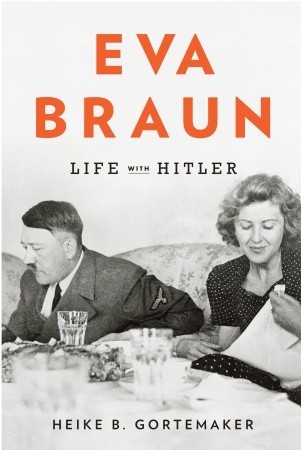
Gortemaker, Heike. Eva Braun. New York: Alfred A. Knopf. 2011.

Lambert, Angela. The Lost Life of Eva Braun. New York: St. Martin’s Press. 2006.

Historical books about the war were important to me, but there are only a handful that actually focus on Eva Braun.

Regarding finding time: I don’t watch TV. I haven’t had cable since 2008 and I don’t miss it. I do work full time, teach part time, parent two kids, so I may work slower than some writers, but I believe eliminating unnecessary time drains has raised my productivity level. Plus, if you are fascinated with a topic, it doesn’t feel like a challenge to research and to read as much as you can.

You write in free verse, as well as in received forms. Our End Has Brought the Spring includes prose poems, often as dreams. Talk about the use of forms in your work.

Denise Levertov’s essay “Some Notes on Organic Form” explores how form grows out of an experience. She challenges the poet to discover the form in the process of writing. Most of my pieces begin with a phrase or an image as is the case with the sonnet “Heaven” in this chapbook. I didn’t intentionally begin that poem in form; instead, I was imagining Eva locked out of heaven, watching others gain admittance, and I wondered how she would react, and what heaven’s gates would feel like on her fingers as she strolls past. I think most poets work this way—beginning with a sound or an image and then deciding later if the piece calls for a form.

You are very observant. As in my other book, I tend to reserve prose poems for dreams and strange surreal scenes. The lack of line breaks tends to convey a feeling of a never-ending nightmare or a continuous magical quality. In my poem “Hell,” Eva is a hunted bird who is shot down over and over. There is no escape from the hunters. I wanted to convey that even though she may have been removed from the atrocities her lover committed against humanity that she, too, would have to pay for eternity.

For the most part I work in free verse. I like the juxtaposition, the swinging from line to line, and the forward momentum that lineated poetry offers.

How do you define chapbook? A collection of 20-30 poems that flow together well and hinge on a single persona or theme.

What makes a good chapbook? Revision requires that the writer find the best word and eliminate clutter in her lines. The chapbook does that on a larger scale-narrowing down the collection to the strongest pieces. When every poem is effective and the last line of one poem swings to the first line of the next, I find the verse lively. I like the brevity of chapbooks.

What chapbooks are inspiring you these days? One of my favorite poets right now is Dan Nowak. His chapbooks the hows and whys of my failures (Hyacinth Girl Press, 2014) and we were never built for warmth, but for finding (Yellow Flag Press, 2014) are intriguing. I have been following his career for a few years now and I am always pleased when I read a new Nowak piece.


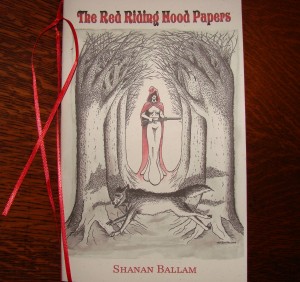
What chapbooks or chapbook poets have impacted your writing the most? Shanan Ballam’s chapbook The Red Riding Hood Papers published by Finishing Line Press in 2010 resonated with me. Shanan and I studied together in our MFA program and I read many of the poems in workshop and had the chance to see the pieces evolve. When the book arrived in my mailbox, I read it in one sitting, and have returned to it many times. I was impressed with her retelling, personalizing and modernizing of the story. Shanan inspired me to start work on a chapbook of my own.

apollon_img_6615

What’s next for you? Even though I completed the chapbook, I do not feel finished with Eva Braun yet. I am revising and writing more poems and hope to find the manuscript a home in the future. I’m also working on poems about my full-time position at the church. Because of the location of the church, I meet many people who are struggling from homeless veterans to mothers who do not have money for food and diapers.

Number of chapbooks you own: Somewhere around 40

Ways you promote and serve other chapbook poets: I attend as many readings as I can in Omaha. Since I work on the board of The Backwaters Press, I help organize and promote its quarterly reading series and also assist a couple of other reading series-creating flyers, Facebook events, etc. I think it’s important to help promote poets especially chapbook authors.


ibb_1

Where you spend your chapbook earnings: Buying more books of course!

Residence: Omaha

Chapbook Bio: Cat Dixon works full-time as a church administrator and teaches creative writing part-time at the University of Nebraska, Omaha. She is the board secretary of The Backwaters Press, a nonprofit publishing house in Omaha. Her work has appeared in Sugar House Review, Midwest Quarterly Review, Coe Review, Eclectica among others. Her full length poetry book Too Heavy to Carry was published in 2014 by Stephen F. Austin University Press, and her chapbook Our End Has Brought the Spring will be published in June from Finishing Line Press.

Connect Gallery presents Laura Madeline Wiseman, Sally Deskins and Cat Dixon

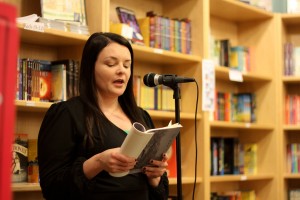
I’m reading today in Omaha. I hope to see you there! Here’s the details.

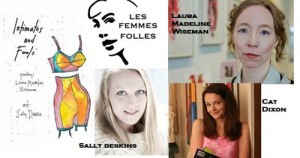
connect reading image

Omaha, Nebraska, Wednesday, April 22, 2014 ― The Connect Gallery is pleased to hold a poetry reading to celebrate National Poetry Month. Some of Deskins’ work will be on display for this event. Coffee and finger foods will be available for this lunch time reading.

WHEN: Tuesday, April 22

TIME: 12:00PM TO 1:00PM

WHERE: Connect Gallery, 39th & Leavenworth, Omaha, Nebraska

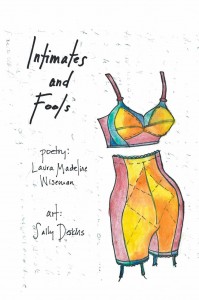
Poet Laura Madeline Wiseman and artist Sally Deskins collaborated in Intimates & Fools. Coupling body art and poetry, Intimates and Fools intimates the complicating pairing of the female form and cultural notions of beauty while playfully seeking to bare and bear such burdens of their weight. Body art and illustrations by Sally Deskins. Laura Madeline Wiseman’s poetry explores notions of the bra and its place near the hearts of women, while contemplating literary and pop cultural allusions and illusions of such intimate apparel. Sally Deskins’ body art and illustrations make vivid and bright the female form while calling into question the cultural narratives on such various shapes we hold dear, be they natural, consumer, or whimsy.

Intimates & Fools, poetry by Laura Madeline Wiseman with art by Sally Deskins, Les Femmes Folles Books, ISBN: 978-0-615-94749-5, 38 pages, Les Femmes Folles Books, January 2014, price: $14

IntimatesFools

Information about Cat Dixon’s book Too Heavy to Carry: People expect that their lives move in majestic sweeps, but that’s only because memory and legend work that way. Reality works in the small moments of our experience. Too Heavy to Carry explores those moments by focusing in close. This collection aims to name the evils that women live through: loneliness, betrayal, inadequacy, and loss. Dixon captures not just the glimpse of hope, but shows the agony and obstacles one must endure before she crawls out of the bottom of the well. This is a must for survivors of any variety-divorce, depression, domestic violence, abandonment/neglect and other painful experiences.

Too Heavy to Carry, poetry by Cat Dixon, ISBN: 978-1622880560, 88 pages, Stephen F. Austin Press, February 2014, price: $16

AUTHOR BIOS

LAURA MADELINE WISEMAN is the author of Queen of the Platform (Anaphora Literary Press, 2013), Sprung (San Francisco Bay Press, 2012), and the collaborative book Intimates and Fools (Les Femmes Folles Books, 2014) with artist Sally Deskins, as well as two letterpress books, and eight chapbooks, including Spindrift (Dancing Girl Press, 2014). She is the editor of Women Write Resistance: Poets Resist Gender Violence (Hyacinth Girl Press, 2013). Her book, American Galactic, is forthcoming from Martin Lit Books. Wiseman has a doctorate from the University of Nebraska-Lincoln. She has received an Academy of American Poets Award, the Wurlitzer Foundation Fellowship, and her work has appeared in Prairie Schooner, Margie, and Feminist Studies. Currently, she is a writer-in-residence at the Prairie Center of the Arts in Illinois. www.lauramadelinewiseman.com

SALLY DESKINS is an artist and writer, focusing on women and feminist writers and artists, heavily inspired by artist Wanda Ewing. Her art has been exhibited in galleries in Omaha, New York, Philadelphia and Chicago; and has been published in publications such asCertain Circuits, Weave Magazine, Her Kind: A blog by VIDA Women in Literary Arts, Vagina, CLAP and Whitefish Review. She has curated various solo and group exhibitions, readings and performances centered on women’s perspective and the body. Her writing has been published internationally. She edits the online journal Les Femmes Folles, and has published three anthologies of art and writing. sallydeskins.tumblr.com

CAT DIXON teaches creative writing at the University of Nebraska, Omaha. She is the secretary of The Backwaters Press. Her work has appeared in Sugar House Review, Midwest Quarterly Review, Coe Review,Eclectica among others. Her full length poetry book Too Heavy to Carry was just released from Stephen F. Austin University Press. Her website is www.catdix.com.