the chapbook interview: Sarah A. Chavez on craft, revision, the job market, and chapbook advocacy

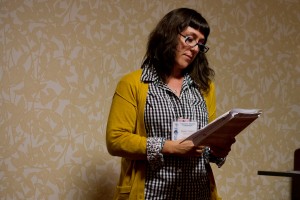
IMG_6176_reading

The Writer’s Chronicle September 2014 issue features Debra Spark’s mediation on research and writing. In her essay she quotes Lorrie Moore who said, “For the writer, the facts of life are like ingredients in a kitchen cupboard…the cake you make is the fiction. That’s how life and art are related” (87). Talk about your work as a poet, your poems in All Day, Talking (Dancing Girl Press, 2014), and your sense of making art from life.

I find this quotation fascinating. I love cake, and I love fiction and poetry. To think of these as being the same makes a lot of sense, even though it never occurred to me before. Cake is made of so many things that on their own amount to little use (flour, baking powder, vanilla extract) but together they create this nourishing, soul-warming, textured experience, much like poetry. What is a word on its own? A letter? A comma? Together though they make meaning, and like the cake, can be simultaneously sweet and nurturing, both comforting and maybe a little bad for you.

When I’ve been asked if the relationship in the chapbook is “true,” if there was a real Carole and if am I the speaker in the poems, I have a hard time giving anything but a convoluted answer. Whether I say yes or no, both are true and both are false. Poems cannot accurately represent the people in our lives or the situations we experience. We are, in essence, forced to pick and choose the ingredients that help us tell whatever particular story we need to tell at that moment. The first “Dear Carole” poem came to me while working on exercises for a poetry forms class during my PhD program. I was having a hard time deciding on which form to use and a hard time deciding what to write about; so I went for a walk and began to ask myself questions. I realized that half the time I ask these kinds of questions, or narrate my activities (yes, I can be caught narrating my activities, sometimes in song – if I was a better singer, I’d be great in a musical!), I rarely feel as if I’m talking to myself. I’m not always talking to the same person, but I do often go back to those people I have lost. It feels as if they know my problems all the way around, or conversely that they don’t know anything about my life, which makes me wonder if I would seem like a stranger to them.

After the first “Dear Carole” poem was written, what continued to fuel these poems were feelings of loneliness during my PhD program. I have made wonderful friends there that I am still in close contact with and whom I love, but I often felt like the me in this program, the me in this lovely, low-crime Midwestern town, the mean in such a privileged position that I could go walk around a lush and tree-thick park whenever I didn’t know what to write was notreallyme, but an alternate version of myself. A cleaned-up, gentrified version. A lie self, maybe. I knew what was really inside, and it wasn’t what I showed those people who I wanted to respect me, to take me seriously.

So the poems in this chapbook are culled ingredients from the different versions of love I’ve received and expressed in the past, the space for self-reflection I’m afforded now, from the relationships I mourn. They are my attempt to negotiate feeling lost while in the middle of stability, to feel anchored to memory in a way that honors it without losing the present.
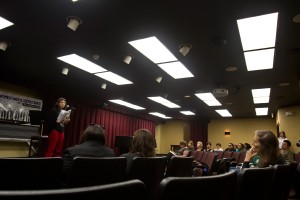
IMG_9397_reading

We both recently attended the keynote talk by Barbara Shoup at the Indiana Writers’ Consortium Conference and Bookfair. During her talk, an audience member asked Barbara how she knew when her novel was finished. She quoted Toni Morrison by saying, “All art is knowing when to stop.” Talk about knowing when a poem is finished, about knowing when a chapbook is done.

Barbara Shoup’s keynote resonated for me particularly when she spoke on missteps and revision. She shared with the audience that she had to write her way into a book. She may have a clear idea regarding plot, but it is often necessary for her to experiment then with point of view, character relationships, etc. I feel that is rather representative of my own process regarding the writing of a poem.

I often begin with an image or a feeling and that becomes either a starting or ending point for the writing. Part of my problem with writing is that I rarely know when a poem has ended. My first “ending” usually comes because I run out of fuel (so to speak) and don’t know what comes next. Most of the time, nothing needs to “come next” and in fact, a poem’s real ending is somewhere half a dozen or so lines before my earlier draft’s last line. Of course ending a poem does not mean a poem is finished. Unfortunately for me, I am a slow writer. More accurately, I may write a lot quickly or in a short period of time, but then need a long time for revision. I have learned that in my writing process, I often become attached to the idea I think the poem was going to be, but then need to put it away for a week or so before returning to it. If when I return there is a coherent/cohesive feeling invoked by reading it, I know it’s close to being done. I think of my poems as slivers of an emotional experience expressed through narrative. Even if the emotions are complicated, I want to make sure that the language is precise, and there is nothing extraneous, no images or words that aren’t working toward getting the reader to the end of the poem. Everything must have a purpose.

An integral part of my knowing when a poem is finished is sharing it with a fellow poet and then someone who is not a poet. Often the fellow poet can talk with me about the craft side of the poem and whether or not the devices used are working toward what I wanted to communicate. Then listening to feedback from the reader who is not a poet helps me gauge the poem’s overall success. My main goal with writing is to communicate stories or experiences that represent peoples or situations main stream culture often ignores or presents in shallow, reductive ways. If the non-poet reader doesn’t get (at least partly) what I am trying to communicate, the poem definitely isn’t finished. I guess in this sense, I rely rather heavily on community for knowing when a poem is done. The writing of the poem is solitary and very internally driven, but the finished product is dependent on a community of readers. This isn’t necessarily because I think I don’t know how to finish a poem, but rather that I want an audience bigger than myself. I want as wide an audience as possible. If I were just writing for myself or for people who were just like me, I think my experience writing would be much easier. But I personally do not see the value in such exclusivity.

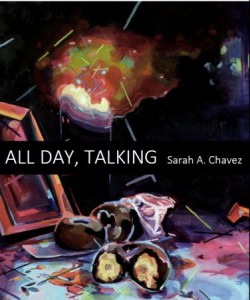
As for knowing when a chapbook is done, I try to look for the arc in a larger narrative. The chapbooks that appeal to me most are those that have strong individual poems, but together present a larger narrative. For All Day, Talking, I wanted each letter-poem on its own to further develop the relationship between the speaker and Carole. As a whole though, the letters work together to illustrate grief and the speaker’s attempts to negotiate living with that loss. When I wrote “Dear Carole, I wake up like this now” (which was originally titled “All Day, Talking”), I knew it would be the last poem in the chapbook. The first poem worked to introduce the relationship and the situation between the speaker and Carole, and I wanted the last one to highlight the most important aspect of their relationship, or at least ultimately how the speaker feels about Carole. After I had those two poems in place, it was about filling the spaces in between. When working on a chapbook, I usually try to amass a small store of poems, see how they speak to each other, and then let them show me what the larger, more comprehensive narrative is. Once that story feels full, the chapbook is most likely done.
cover pic from DGP page

I recently attended the Omaha Lit Fest and Karen Shoemaker said during her panel presentation, “Be willing to be an advocate for your own work.” Writers often talk about promotion and book sales, but not advocacy. Some argue that chapbooks are not viewed with the same prestige among some circles as a full-length book, books from university presses, or books that win prizes, awards, and national contests. Do chapbooks need advocacy? Do poetry collections from small presses need advocate work? How are you an advocate for the chapbook work you’re doing?

This question is, and was this past year, so salient for me. I was in the process of graduating and was on the academic job market (a phrase I can only say with a minimum of a quarter of an eye roll – I mean, how much more like a product could we make ourselves sound?) and I was getting advice and warnings from every which way, and specifically a lot of advice about what kind of publications I would need to be a desirable candidate. At that point my chapbook had been accepted by dgp and had a tentative release date, so when asked about whether I had a book or not (this is what makes or breaks your success for many creative writing academic jobs), I would tell people about my chapbook. Sometimes this was met with interest and other times with confusion, like, “wait, I just asked if you had a book, not a chapbook.” And while I understand there is a difference between a full-length poetry collection and the significantly shorter chapbook, it appears that as an industry academics is saying that quantity always trumps quality, and that quality can only be judged by those presses who exclusively publish full-length collections. This is an issue with fiction as well; many fiction writers must contend with whether it is enough to have a collection of short stories (or a chapbook of stories, as is becoming more common) or does one need to publish a novel. This bias not only effects academic environments, but also literally what texts are available to the public at large.

Because of the mixed reactions I encountered about the legitimacy of the chapbook as something that “counts” on one’s CV, I would most certainly say that the chapbook as a legitimate form needs advocacy. It is no coincidence that many presses that publish chapbooks have feminist mission statements or actively seek the work of writers of color and queer writers. The chapbook form and independent presses are addressing the dire need for more diversity within literary publishing. Each year VIDA exposes the disturbing statistics regarding the continued imbalance of male to female writers being published in the “top” literary journals and magazines. I can’t imagine that the diversity of race/ethnicity fairs any better. If as readers we want to have access to different voices, we must support the small presses and alternative publication models, such as the chapbook. It is important for readers to have the possibility of different narrative structures (and narratives). Frankly, the truth of the matter is that many of the national awards and university presses have established identities, established relationships with certain regions or economic environments, which can translate into a particular type of writer being published. I am not implying that these established relationships are purposeful necessarily, but rather that when something has been functioning in one way for fifty or a hundred years, it is difficult to look outside that aesthetic (both in writer and writing). Like the debates regarding the literary canon in educational institutions, it is important to ask ourselves, who are the gatekeepers, and what are we being kept from?

At this point, the advocacy I’m doing for my chapbook work is to get the word out as much as possible, which currently that means doing readings, interviews, writing book reviews of other chapbooks and small press books, as well as teaching chapbooks and small press collections in the university creative writing and literature classes I teach. Next semester I am privileged to be teaching two sections of an introduction to poetry literature course and an intro to creative writing class. These are students who have a very limited idea regarding where “good” (read validated) literature comes from, and I see this as a perfect opportunity to introduce them to alternative texts and writers. The current overwhelming popularity of shorter mediums (Twitter, Facebook status updates, journals like Brevity, etc.) seem to make this historical moment the perfect time for the chapbook to really assert itself and the potential it holds.
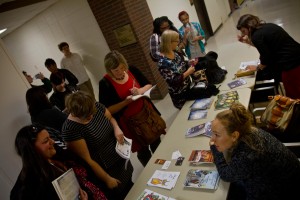
IMG_6101_reading

How do you define chapbook? A chapbook is contained and complete. The poems work on their own, but tell a more complicated/nuanced story together. Also, I think the industry consensus regarding length is somewhere between 16 – 40 pages, so you know, like a largish snack: something small enough to eat on the train, but substantially filling.

What is inspiring you these days? Seeing the successes of writers that I admire. It is immensely gratifying to see writers who are hard workers, whose work I think is amazing, have the successes (large and small) they so rightly deserve. It fills me with hope and excitement for the future landscape of contemporary poetry.

How are you trying to get better as a poet? By writing of course, but equally important, reading. Reading and copying lines from poems that stand out to me, then free writing on what about the line makes it stand out, whether it’s an idea presented, the musicality, the word play, etc. I want to feel the line, but then I want to understand how it functions.

What’s next for you? Well, I don’t want to say too much about this because my idea isn’t fully formed, but I’ve been doing some writing about turtles. I’ve always loved the sort of practical beauty of their shells and tough skin, the deliberate way they move. They are very important to indigenous mythologies of the Americas and I’ve been doing some reading on that. There’s a simplicity in the physical body of the turtle, as well as the structure of mythological origin stories and oral tradition that I’m feeling drawn to.
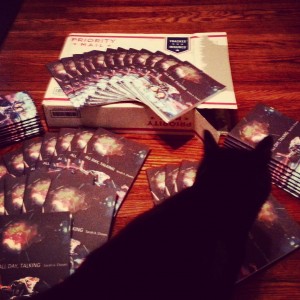
Talulah with chapbooks

Number of chapbooks you own: More than I remember! I don’t know, thirty-five maybe? Enough that they required their own box(es) when my partner and I moved.

Number of chapbooks you’ve read: Less than I want. I’ve read most of the ones I own, and certainly peruse chapbooks at indie book stores or book fair tables at AWP. Do those count?

Ways you promote and serve other chapbook poets: Other than reading and purchasing other poets’ chapbooks, I’m excited to be able to assign them to my poetry lit and creative writing classes. That not only presents the form in an institutionally validated environment, but it also shows young readers and writers the possibility of the chapbook and hopefully encourages them to want to read more and/or write their own.

Where you spend your chapbook earnings: Ha! Well, at this point, with my modest earnings, I’m mostly reinvesting, as it were, by buying other chapbooks and paying for cups of coffee at the coffee shop where I like to write in the late mornings on non-school days. If I am (p)lucky enough to make more, I want to use it to fund a DIY chapbook tour.

Your chapbook wish: Is this a wish for my own chapbook or for chapbooks as an art form? Though I guess my wish for both is the same: more visibility.

Residence: Huntington, WV.

Job: Visiting assistant professor at Marshall University where I teach literature, creative writing, and composition.

Chapbook education: My most influential chapbook education came from the wonderful poet Grace Bauer at the University of Nebraska – Lincoln. In her forms poetry workshop we were asked to assemble a chapbook for the final project. That’s what really got me thinking more about seriously about chapbook structure and its many options.

Chapbook Bio: Sarah A. Chavez, a mestiza born and raised in the California Central Valley, is the author of the chapbook, All Day, Talking published by Dancing Girl Press (2014). She holds a PhD in English with a focus in poetry and Ethnic Studies from the University of Nebraska – Lincoln. Her work can be found or is forthcoming in Spoon River Poetry Review, So to Speak: Feminist Journal of Language and Art, and Acentos Reciew, among others. Her manuscript, This, Like So Much, was an Honorable Mention for the 2013 Quercus Review Press Poetry Book Contest. A selection from her chapbook manuscript All Day, Talking won the Susan Atefat Peckham Fellowship in 2013. She is a proud member of the Macondo Writers Workshop. www.sarahachavez.com
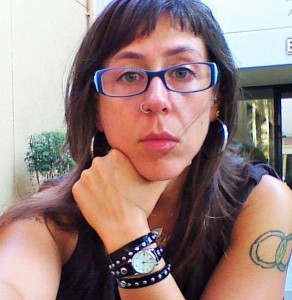
pic with glass from July 2014 (1)

“necessity is the mother of experimentation”: the chapbook interview: Brenda Sieczkowski on research, experimentation, and goodness

author1

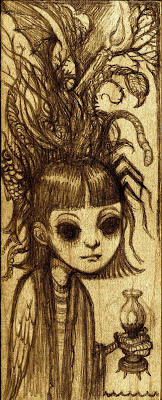
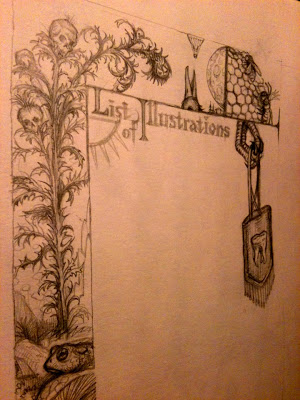
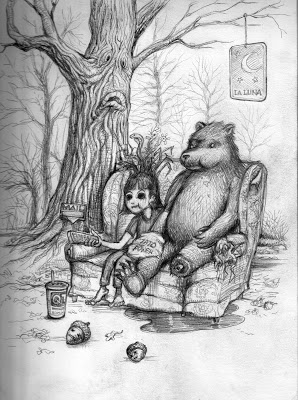
I adore collaborations and couplings of art and poetry. I recently attended the Art & Words Show curated by Bonnie Shufflebeam, a show that starts with a CFP for art and words. After the art is selected, the curator assigns one short story, essay, or poem to an artist and one piece of art to the writer. The artists and writers then have a few months to create something inspired by the assigned work. Can you talk about the collaborative work you did with Chad Woody who illustrated your fabulously titled chapbook Wonder Girl in Monster Land (Dancing Girl Press, 2012)?

Yes! I share your enthusiasm for cross-media collaborations. The type of collaborative process you describe as part of the Art & Words Show is so fertile—as an individual who works primarily in text, I appreciate the ways a compelling piece of visual art can jump-start me from a groove I’m stalled in and propel me in new directions. (I recently reconnected with an old friend who started a press with a similar collaborative mission, Prompt Press: http://promptpress.com/). The collaborative process between Chad Woody and me for Wonder Girl in Monster Land was somewhat different, however, because I’ve known Chad, and his work, since 1999, when we met in the M.F.A. program at the University of Florida. Chad is one of those insanely talented people who excels in a multitude of creative fields—(a vast range of) visual media, poetry, prose, performance art . . .To experience what I mean, spend some time exploring his blog: http://cranialstomp.blogspot.com.

When I wrote Wonder Girl in Monster Land, my process diverged from previous writing projects, was inverted, in the sense that I arrived at the umbrella mood and logic of the chapbook before I had any of its specific text or details. Although Monster Land shifted and adapted as the individual poems in it took shape, the composition felt primarily like a top-down operation. But when I eventually completed a draft of the manuscript, I couldn’t shake the feeling that there was an element of its world I couldn’t realize in text; that’s when I first thought about enlisting the aid of a visual artist. Chad was the first person I thought of since I have always felt that, despite differences in our projects or processes, our work shares an affinity for the dark, the irreverent, and the whimsical/absurd. But at the same time, his work commits to risk and doesn’t fold its hand when the emotional stakes are high.

Chad and I have kept in sporadic contact since Florida. A few years before I wrote Wonder Girl in Monster Land, I had sent Chad an (unrelated) email asking if he could build me a bird-sized coffin. His response was classic Woody: “Crow-sized or sparrow-sized?” I wrote back “sparrow-sized,” and a hinged wooden coffin, just what I had wanted, arrived soon after. This anecdote perhaps demonstrates why I had such a high level of confidence that I could just send Chad the chapbook manuscript, and he would come up with brilliant illustrations. I felt more comfortable NOT dictating a lot of instructions or parameters because I didn’t just want to enlist his technical skill; I wanted to enlist his visual imagination and energy. And the results were amazing. My one regret is that I had no clue how labor-intensive the illustrating work I had asked Chad to do would turn out to be. You get a sense from the reproduced illustrations, for example the ones for “On Halloween” and “On the Conditional,” how incredibly detailed the drawings are. But the reproductions don’t even come close to the originals. I have a print from the original etching of “On Halloween,” and the level of detail is unbelievable—you can make out the expressions on the most distant faces in the crowd around the door, and you can see each grain of wood in the kitchen table. I owe him significantly more than one.

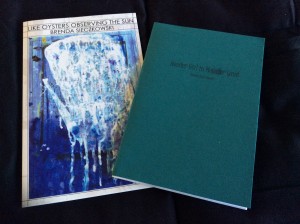
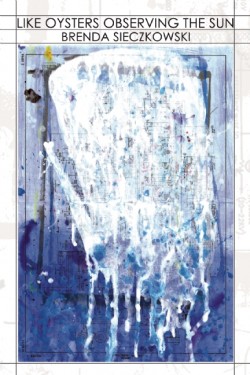
I love the poems “Mix Tape (Hypothetically in Love)” and “10 Amendments (An Erratum).” These, like so many in your chapbook and like other poems collected in your full length collection Like Oysters Observing the Sun (Black Lawrence Press, 2014), are funny and smart as they experiment with poetic form. Can you talk about poetic experimentation?

I’m glad you mentioned “Mix Tape” because the background to its composition is particularly funny in the context of your question. As my family can attest, I’ve always had a stubborn streak, so when someone lectures me on why I can’t do a certain thing, my brain immediately starts spinning out how and why I can. If someone tells me I must do x, I immediately begin to transform that x into y/why. I wrote “Mix Tape” in response to the assignment, given in one of my graduate workshops, to write a sonnet. I occasionally do write sonnets of my own volition, but being asked to produce one on command activated knee-jerk evasive maneuvers. For some reason, the translation of sonnet as “little song” was floating around in my head, and I think I was (somewhat subconsciously) thinking, “I’m not giving you that little song; you’re just getting a bunch of little song titles.”

Though I certainly don’t model my poetic vision on Plato, I’m happy to twist his words into a more general response to your question; for me, necessity is the mother of experimentation. If I’m adapting or distorting a particular form or mode of expression, it’s because I can’t work out any other way of communicating what I mutably perceive I might mean. I can’t snap my notions of poetic experimentation into line with ideas of objectively designed experiments or implementations of controlled variables. I have no hypothesis until a discovery is already palpable. And then the discovery sensibly rediscovers itself.

brenda's chap

I love the idea of knee-jerk evasive maneuvers activated by workshop assignments and the ways they can inspire poems. And too, that friendships started in graduate school can manifest later into collaborations that produce beautiful chapbooks. I’ve been thinking about writing and community, those that foster creative exploration and others. The Writer’s Chronicle September 2014 issue features an interview with novelist Xu Xi who contrasts her business life with the writing life. She explains, “Publishing is a loathsome industry, one that is too much about connections and where you came from and privilege…publishing and the literary life, generally, is a lot about whom you know and even where you went to school…the whole literary scene is a lot more about the one degree of separation than not. In time, you learn to play the game” (73). Xu Xi is a novelist. How true do you think this is for poets? How important is community for a poet, who you know, where you went to school, and learning to play the game?

The question of community, how to cultivate and sustain it, is vitally important for any writer—poet or fiction writer. I think it is crucial, however, to distinguish between network and community. Although networking, making professional connections, overlaps with and can absolutely lead to community, it can also jeopardize the potential for real companionship if it privileges elitism over sincere, mutual respect and support. My suspicion is that “playing the game” is a bigger factor in fiction, where the stakes are (or are at least perceived to be) higher than in poetry. But I am not familiar enough with the intricacies of the publishing industry to make any definitive claims. It does seem clear, however, that the lifeblood of contemporary poetry is in small presses. I can only speak about those with which I have personal experience, but I think that, largely, small presses are building essential channels for community. I’m thinking about Kristy Bowen at dancing girl press, and what she has accomplished, almost single-handedly, towards providing exposure for a huge community of women writers. Jen Tynes, Mike Sikkema, Erica Howsare, and Jennifer Denrow at Horse Less Press; Nathan Hauke and Kirsten Jorgenson at Ark Press; Gina Myers at Lame House Press; Dawn Pendergast at Little Red Leaves; the folks at SP_CE in Lincoln, NE; Bruce Covey and Co. at Coconut—all these people exemplify for me a true spirit of and dedication to community. Diane Goettel and the editorial staff at Black Lawrence Press had likely never heard of me when they plucked my full-length manuscript for publication, but they believed in my work and labored tirelessly to bring it into print. Do editors of small presses sometimes publish people whose work they already know? Sure. This is a problem when it interferes with those presses’ abilities to provide access and range. We all need to push ourselves harder to expand the borders of our community. This extends, in my mind, to pushing ourselves, those of us who are teachers, to expand the communities of writers we assemble in our syllabi. This extends to pushing ourselves to diversify and challenge the community of writers we make a place for on our bookshelves.

One of my mentors at the University of Utah, Don Revell, said very early on in my studies that only “a good person can write good poetry.” In typical knee-jerk fashion, I immediately thought to myself, “Nope, obviously not true. I can think of plenty of poets who act like total assholes and write pretty brilliant poems.” But Don’s statement stuck with me. The more I began to let go of worrying about whether I thought other poets and writers met this standard and focused only on how it applied to me, the more I realized it was true. I couldn’t be a good poet if I wasn’t a good person. This realization has been my salvation in some very challenging times.

brenda's chap 2

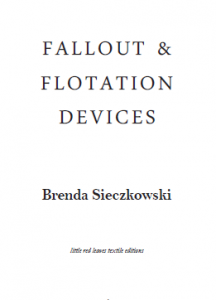
In your forthcoming chapbook Fallout & Flotation Devices (Little Red Leaves, 2014)—which includes the pieces “Notes,” “Conflated Color Index, Autocad,” and “Memorandum” with subsections of intention, discussion, background, and foreground—gestures towards research, a research that might resist some readers expectations. Let’s talk about research and writing the chapbook. How do you deal with the transition from research to writing? At what point in the writing process do you research and why do you do that research? When do you take notes?

The transition between research and writing in most of my projects—Fallout & Flotation Devices is no exception—is extremely fluid. From the moment I learned to read, my appetite for knowledge and explicit detail has been insatiable. Whatever spare moments I had were lost in books—to the extreme that when I turned 16 and learned to drive, I realized that I really didn’t know how to get much of anywhere in the city I grew up in; all my passenger time had been spent reading. Reading (in a frenetically wide range of subjects—neuroscience is an enduring stimulant) sparks most of my writing. A sheer infatuation with some fact or idea fuels initial lines or sketches. But then those lines or sketches are not sharp enough to satisfy me, so I have to go back and dig up more information on the subject, or basically on the subject, or very tangentially related to the subject. I’ve had to learn to cut myself off from research at a certain point, however; otherwise, I find that the research process often becomes a procrastination technique to avoid the sometimes-difficult generative work that needs to follow.

I also often borrow forms from genres that I, somewhat unwilling, have had to engage with in my professional life. “Memorandum,” for example, opened out from my need to find creative outlets when I’ve been forced to teach technical and business writing classes. (I once made my business students convert William Carlos Williams’ “This Is Just to Say” into memo format. They loved it?).

Every aspiring writer who has sat through a creative writing workshop has probably heard that old gem: “Write what you know.” I think this is terrible advice if you interpret it as your cue to circumscribe your writing into the narrow, limited world you ordinarily inhabit. If, however, you take this advice as a challenge to know more, to know widely, then I think it is genius.

tiny-house-movement

How do you define chapbook? I think of a chapbook as the tiny house model (artisanal and/or DIY) in the poetry construction industry.


What is inspiring you these days?

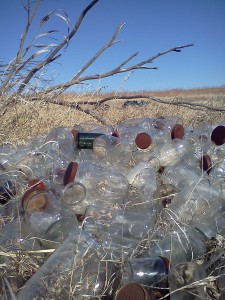
monowi_signMonowi_mason

1) Close to home:

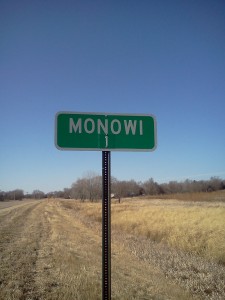
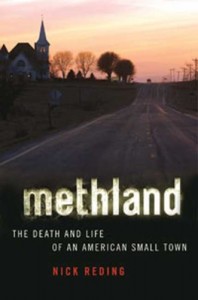
When I moved back to Omaha after spending most of my 20s and 30s in other parts of the country, I found myself re-enamored with the Mid-West’s grassy, unraveling spaces, all its rusting mills and factories. Over the past few years, I’ve taken frequent regional road-trips, from Moscow, IA, to Oregon, MO. My favorite of these journeys, however, took me to Monowi, NE, population 1. The sole resident (and mayor, bar-tender, librarian) was unfortunately out of town for the weekend, but I had a great time exploring Monowi’s abandoned frame houses and trailers. It’s a town I definitely plan to revisit. These mini-journeys, coupled with Nick Reding’s Methland: The Life and Death of an American Small Town, provided much of the inspiration for “The Great Plains Alchemy of Weather” (the second section of Fallout & Flotation Devices).

methland

2) Cross-section of more universal pursuits:

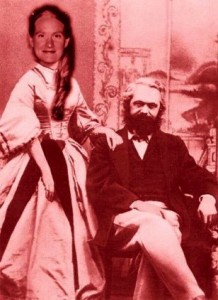
Marxist and post-Marxist theory. Dialectic force fields.

marx

Dreamers, self-starters, work-horses scrambling every day to provide and improve the poetry community. In addition to those people and presses I mentioned above: Megan Kaminski and the Taproom Poetry Series, Hanna Andrews and the women of Switchback Books, Zack Haber and the Other Fabulous Reading Series, Lara Candland Asplund’s features on her Girls in a Tight Place blog, this wonderful chapbook interview series (!), MC Hyland at DoubleCross Press, Nate Pritts and H_NGM_N, the folks behind The East Bay Poetry Summit, everyone at VIDA fighting the good fight, Pussipo, 100 Thousand Poets for Change . . .I could go on in this vein for a LONG time.

DIY websites.

The Eclipse archive and UbuWeb.

Neuroscience, phrenology, biology, apiology, gross anatomy, taxidermy, botany, natural history, geology, Victorian sciences . . .

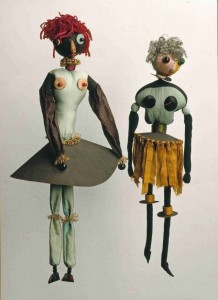
Dada dolls.

hoch_dolls
How are you trying to get better as a poet?
I’m always trying to increase the depth and breadth of my reading. That’s my abiding longitudinal tactic. But I’ve taken a much different approach in the last five or six years. When my graduate funding evaporated, I had to put my studies on hold to work full time (+). I wasn’t sure if or how I would ever find the resources to finish my degree, and I think the potential for despair or bitterness was there. But, at the same time (this was right at the start of the economic recession), I was acutely aware of how many people’s lives, particularly those who were already extremely underprivileged and vulnerable, were being devastated by the financial crisis. I funneled my employment search into social services and began working in support services for chronically homeless individuals, street kids, prison inmates. Although this may seem paradoxical—because committing to the work I was doing severely limited the time and emotional resources I had left to invest in writing and academic pursuits—struggling every day to combat (in whatever tiny way I could) the enormous heartaches of poverty, mental illness, and addiction was the single most important thing I could have done for myself to improve as a poet.

What makes a good chapbook? Elliptical vision. Embroidery that curls away from strict linearity.

What’s next for you? I’m hoping to finally complete my PhD in the next year, and I’m very purposefully trying not to think past that hurdle yet. If I do, I may never finish.

Your chapbook credo: Sew love, not war.

Number of chapbooks you own: 40-50

Number of chapbooks you’ve read: 70-80

Residence: Omaha, Nebraska

Job: I recently took a hiatus from working in homeless outreach and support services, and am now employed as a graduate consultant at the University of Nebraska Omaha’s Writing Center. I work part time as a free-lance editor and also for Disability Support Services at a local community college. In my spare time, I’m attempting to wrap up my much-delayed PhD in creative writing and literature.

Chapbook Bio: Brenda Sieczkowski’s poems and lyric essays have appeared widely in print and on-line journals including The Colorado Review, Versal, The Seneca Review, Bone Bouquet, Ilk, The New England Review, Poetry Daily, Verse Daily, Diagram, The Florida Review, Gulf Coast, Poet Lore, Dusie, Sidebrow, and Subtropics among others. Her chapbook, Wonder Girl in Monster Land, was published in 2012 by dancing girl press. A second chapbook, Fallout & Flotation Devices, is forthcoming from Little Red Leaves. Like Oysters Observing the Sun, her first full-length collection, was recently released by Black Lawrence Press.


Where we can find your chapbook:

You can find Wonder Girl in Monster Land here:
http://dulcetshop.ecrater.com/p/14189202/wonder-girl-in-monster-land-brenda

Fallout & Flotation Devices will be available shortly from Little Red Leaves’ Textile Series:
http://www.textileseries.com/

If you’re game for a longer ride, my full-length collection, Like Oysters Observing the Sun, is available here:
http://www.blacklawrence.com/like-oysters-observing-the-sun/