the chapbook interview: David O’Connell on first and best readers

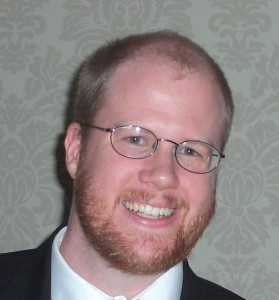
Dave O'Connell photo 2

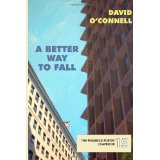
The Writer’s Chronicle September 2014 issue features Debra Spark’s mediation on research and writing fiction to consider when research overwhelms a work and when research enhances the story the author is seeking to tell. She writes, “you always need to ask yourself what justifies the inclusion of researched material” (97). You chapbook A Better Way to Fall opens with an epigraph on mythology and features several poems that explore myth, as well others on contemporary culture. Talk about research and inspiration in your work.

Though I find research can be very helpful in the revision process, I almost never begin a poem by first reading about the subject material. Whenever I’ve tried to write a poem around a number of interesting tidbits I’ve come across, the language of the poem always seems to fall flat. If I don’t begin with the music of the language as my primary concern, I become too preoccupied with my attempts to work in all the great trivia I have in my notes.

The majority of poems in the chapbook (the non-myth poems) were inspired by my response to things going on in the news. The myth poems began while I was writing my MFA thesis and decided to try my hand at the dramatic monologue. Though I had reread a number of accounts of the myth by the time I wrote “Ariadne,” I just relied on what I remembered of the myth when I began “Icarus.” It wasn’t until later that I decided to juxtapose the two types of poems and began to note parallels between the myth and post 9/11 America.

With both types of poems, however, once early drafts were written, I found it helpful to double check facts (both mythic and historic). Some of what I learned found its way into the final drafts of the poems. For example, while revising “Etymology,” I read up on the Manhattan Project and discovered that Fermi built the first nuclear reactor under the stands of the unused football stadium at the University of Chicago. This found its way into the published draft.

When putting together the chapbook, the last step I took was to choose the Edith Hamilton quote. I thought the epigraph would serve both as a general note, of sorts, reminding readers of the plot of the myth, and also that it would help set the ground for the larger themes of the chapbook. I had read Hamilton’s Mythology in high school, which is why I went back to her book for an epigraph.
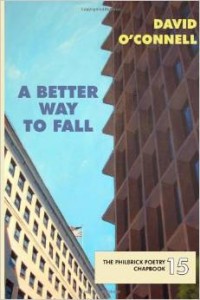
dave's book

I was recently listening to an older interview with Billy Collins on Wait, Wait…Don’t Tell me in which he says that we are each born with 200 bad poems within us. How many bad poems were you born with and how many are still within you? How do you know what a poem is bad, good, or complete?

It may be true that everyone’s born with 200 bad poems, but I know I surpassed that estimate years ago, and hope to write many more before I’m done. Feeling free enough to write disastrous, embarrassing poems (while hoping that I’m discerning enough to keep them to myself) is the only way for me to get to the ones worth putting before a reader.

I recently began sending out a draft of my first full length manuscript. It contains forty-one poems. The earliest poem in the collection was written before the turn of the millennium. So. . .that should give you some idea of my own estimate of my good/bad ratio.

I can’t really explain why I sense a poem, after a number of drafts, is done, let alone good. Though this might sound silly, I believe it involves more of a physical intuition than cognitive process. If I get a jolt of adrenaline when I read over a draft, I’ve learned to leave the poem alone. If I still feel that way, more or less, after reading the poem a few months later, I’ll begin sending it out. It helps when my wife, my first and best reader, is enthusiastic about the poem as well.
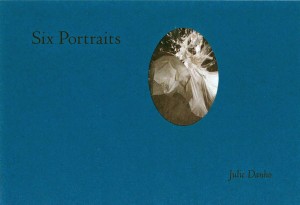
Six_Portraits Julie Danho

When have you been most satisfied with your chapbook work? I was most satisfied when I first sent the chapbook to contests in the form it was published. I had previously conceived of a chapbook more of a brief “best of” collection than as an organic whole. I had sent out this earlier version to a few contests without any response. Once I began to see the chapbook as a collection that could easily be read in a single sitting, I realized that the myth poems, when interspersed among poems concerned with post-9/11 America, created interesting tensions that weren’t there in the earlier draft.

How do you define chapbook? A short collection, usually less than 30 pages.

What makes a good chapbook? I’ve found that my favorite chapbooks are centered on a single theme and work as a cohesive whole.
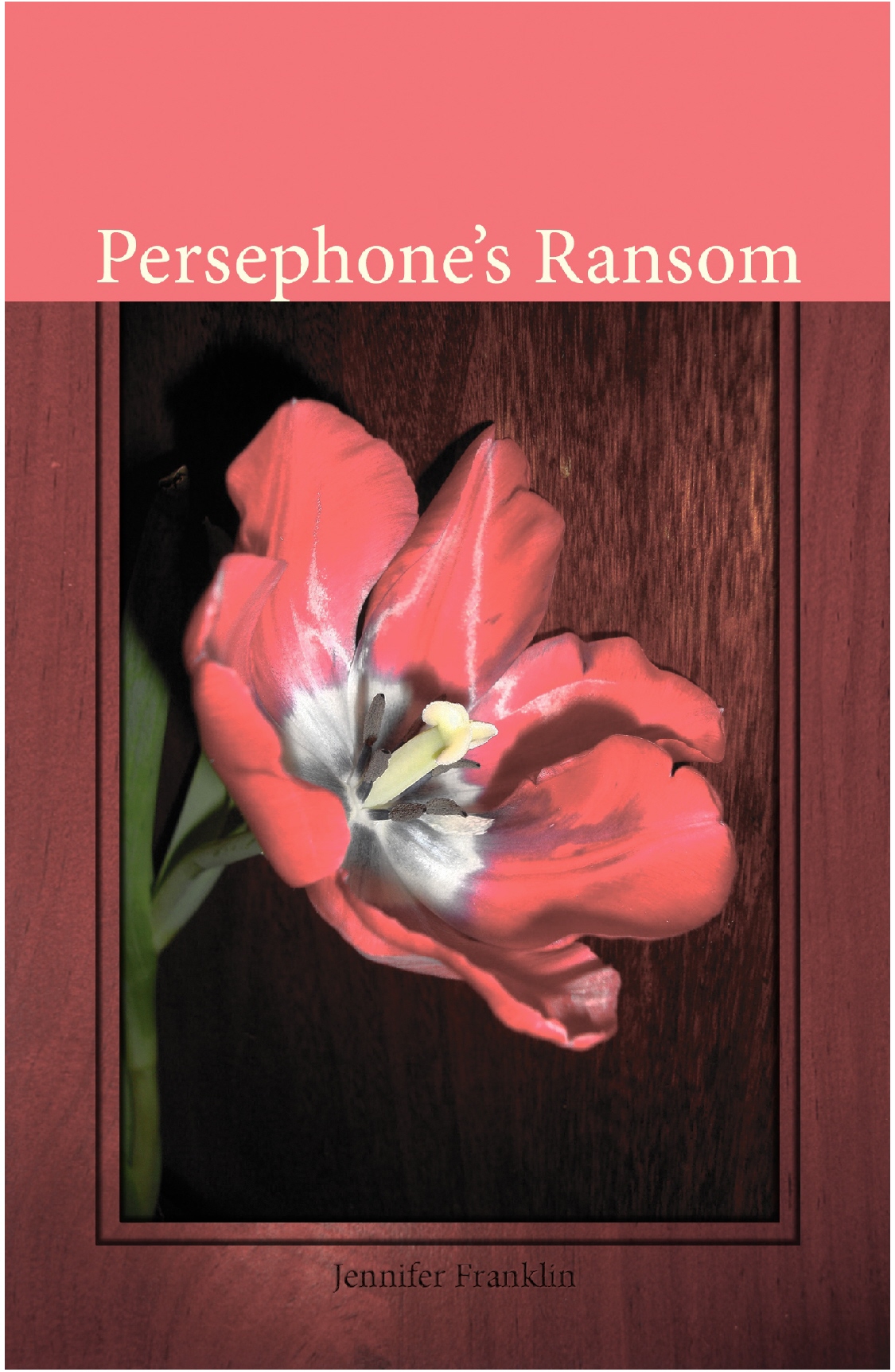
What chapbooks are inspiring you these days? I recently finished both Jennifer Franklin’s “Persephone’s Ransom” and Tony Hoagland’s “Don’t Tell Anyone.” Both are fantastic.

What chapbooks or chapbook poets have impacted your writing the most? As I mentioned before, my wife, Julie Danho, author of the fantastic chapbook Six Portraits, is the first person I show my work. She, more than anyone, has shaped my chapbook. Kathleen Aguero’s work also influenced the way I put the chapbook together. Her chapbook Investigations: The Mystery of a Girl Sleuth taught me how a chapbook can benefit from the ways individual poems are ordered to create a unified manuscript.

How are you trying to get better as a chapbook poet?
I think the best thing I can do is to keep reading as many chapbooks as I’m able.

Current chapbook reading list: I’m looking forward to reading Craig Morgan Teicher’s “Ambivalence and Other Conundrums.”

Number of chapbooks you own: Somewhere around 30.

Number of chapbooks you’ve read: Maybe 50.

Ways you promote and serve other chapbook poets: Since most chapbooks can’t be found in the library system, I think the best thing anyone can do is put their favorite chapbooks into the hands of people who will appreciate them. I think chapbooks, because they are brief, can be more inviting to people who don’t usually read poetry.

Where you spend your chapbook earnings: Books.

Your chapbook wish: I hope chapbooks stay affordable. When chapbook prices rise too close to the cost of a full collection, I believe it threatens the viability of the form.

Job: Stay-at-home dad.

Chapbook Bio: After earning my M.F.A. from Ohio State University, I taught high school English for nearly a decade. My poems have been published in Columbia Poetry Review, North American Review, Poet Lore, and Rattle, among other journals. I’ve received two fellowships from the Rhode Island State Council on the Arts.
the chapbook interview: Julie Danho on the punctuation of poetry

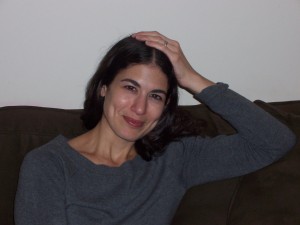
Julie Danho photo

I love your use of punctuation as titles in Six Portraits. You open your chapbook with the epigraph from Jennifer DeVere Brody, “Punctuation marks can serve as both sense and sensibility—as the most human element in certain sentences,” an epigraph that speaks to the tension you create in your poems as you consider issues of family and love. Talk about your interests in punctuation and poetics.

I’ve been working as a copywriter since I finished my MFA, so now I’m more of a grammar and punctuation geek than ever before. Punctuation is so often used incorrectly, but its use—and misuse—can have a tremendous impact on a sentence’s meaning. I always thought of each mark as having its own identity, and these poems were a way of exploring that. I found the “.” poem the most difficult to write because the period is really the king of punctuation. All the other punctuation marks in the book (except the parentheses) are visually derived from the period, and the “.” poem is about the struggle of coping with power. I placed each of the six punctuation poems with two other thematically related poems to create the six portraits in the title of the book. For example, the “.” poem is in a portrait with two other poems about “stops,” or, specifically, deaths: “When the First Father Dies,” and “On Seeing the Bag of John Lennon’s Bloody Clothes.” But it’s not quite as morbid a portrait as it may sound!

Six_Portraits Julie Danho
Jeffrey Hecker’s chapbook Hornbook and Katrina Vandenberg’s book The Alphabet Not Unlike the End of the World look at the shape typography makes of letters, much like the work you’re doing in your poems “?” and “!”. Likewise, some of the poems in Six Portraits move from the ekphrasis to wonder why and how art was made. Can you talk about your dazzling impulse to approach punctuation as art?

“?” was the first punctuation poem that I wrote, and it was actually inspired by a book that Melissa Khoury, a close friend who is a graphic designer, was writing about typography. Her book explored the history of each letter’s visual representation, and she photographed letters in unusual circumstances, including a “y” frozen in an ice cube. I loved the idea, and I started looking at punctuation in a similar light. Many of my other poems take art as a starting point, so the idea of looking at the question mark as an art object makes sense, although I don’t think it was a deliberate move at the time. In the book, I placed the “?” poem with two poems about art pieces—both of which question whether a work actually is art—to create the first “portrait” of the book. While none of the other punctuation poems focus as explicitly on art, “!” and “,” both also play on the punctuation’s shape. I tried to give each punctuation mark its own persona, and some of the later poems focus more on the use of the punctuation mark than its look.


Many of the poems in Six Portraits address issues of grief and loss, joining the rich tradition of poets writing of these issues, such as Emily Dickinson’s “I measure every Grief I meet” and Elizabeth Bishop’s “One Art.” Were you ever scared to write about such topics?

Absolutely. But I was actually much more anxious about showing the poems to the people I’d written about over the years. About a half hour after I received the incredible news that Slapering Hol was publishing my chapbook, I realized that I had to show some of my friends and family the poems I’d been keeping from them. Many of the poems in Six Portraits about grief aren’t about my own losses. Instead, they’re about the helplessness I feel—that so many of us feel—when someone we love is grieving the loss of a child or parent. And, of course, we can’t help but fear that grief coming to our own door. It ended up being a really good thing to have those conversations with the people I’d written about. They liked the poems, and I felt that I’d said something to them in print that I wasn’t great at expressing in person.

Let’s talk press and publication. Do your poems, in their final form, turn out the way you want them when they reach the readers’ hand on the printed page of the book? How does the form of the book constrain or free your poetic expression?

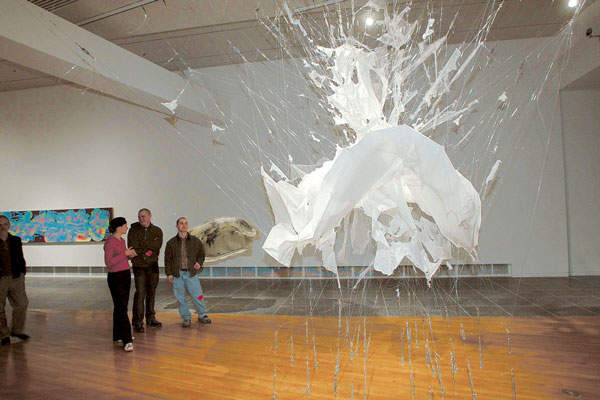
Because a lot of the poems in Six Portraits are about art, the way the book looked was really important to me. I’d always imagined the cover of my first book being Bombshell, this incredible sculpture by the artist E.V. Day. Made of fishing line, turnbuckles, and fabric, the sculpture looks like Marilyn Monroe’s white dress blowing up in The Seven-Year Itch—if Marilyn Monroe’s dress had exploded. My poem, also titled Bombshell, is shaped to look like the sculpture. I had first seen the work in The Wexner Center for the Arts on the Ohio State campus, but it’s now owned by the Whitney Museum. Margo Stever, co-editor of Slapering Hol, was tremendous in working with E.V. Day to get permission to use the image, which E.V. Day graciously donated.

A lot of the poems in the book have long lines, so the book’s designer—Ed Rayher of Swamp Press—put it in a landscape format that complemented the book’s structure. It’s beautiful, which I can say because I definitely can’t take any credit for it. Slapering Hol is known for putting out lovely chapbooks. So I’d say my poetic expression was freed in ways I never dared expect.

Given that you’ve just had a first chapbook released from Slapering Hol Press, what’s the influence of performing your poems on your writing—does the anticipation of reading or giving readings influence how your work appears on the page?

When I’m trying to decide if a poem is finished, I sometimes ask myself if I’d choose it over other poems to read in front of an audience. If I wouldn’t, the poem either might not be done or it might not be worth finishing. But I also have poems that I just think work better on the page. For example, the punctuation poems in Six Portraits play with how the layout of the poem relates to the punctuation mark, so I do think they come across differently when read aloud.

What is inspiring you these days? How are you trying to get better as a poet?

I always find reading the work of other poets to be inspiring. If I’m in a writing slump, I often realize that I haven’t been reading enough poetry. I also find that being a spectator for other arts—whether by going to an art museum, the ballet, or the theater (all of which I love)—can also help me come up with new ideas. I’m trying to get better as a poet by working more steadily. I believe much more in writing every day rather than waiting for inspiration, but it can be difficult to do with a family and a full-time job. I’ve been better about it this year than I have in a long time, and I find I’m enjoying that time more than ever. My husband, David O’Connell, is also a poet, and he’s an amazing editor. So I’m really lucky to get help with my poems without even leaving the house.

Your chapbook credo: A shorter format offers room to experiment.

Number of chapbooks you own: About 30

Number of chapbooks you’ve read: Probably around 50

Ways you promote and serve other chapbook poets: I support other chapbook poets by buying their work, going to readings, and lending their wonderful chapbooks to other readers. My favorite chapbook to promote is A Better Way to Fall, which is a great collection by my husband David O’Connell.

Where you spend your chapbook earnings: I bought a slice of my favorite Russian Tea Cake, a cappuccino, and some extra copies of my chapbook to sell at readings.

Your chapbook wish: That more people appreciate this unique book format

Residence: Providence, Rhode Island

Job: Copywriter/Editor

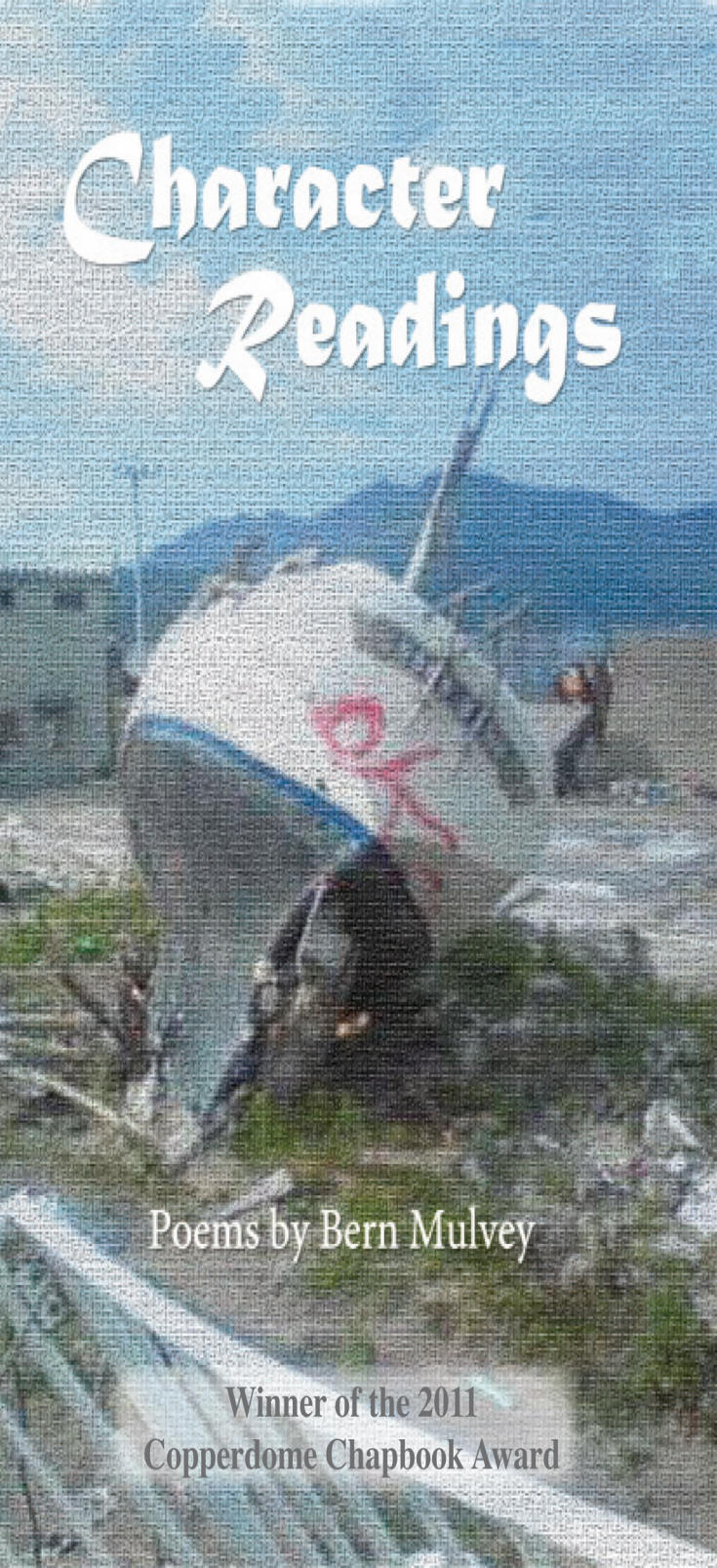
Chapbook education: I actually learned a lot by losing chapbook contests. My first attempts were more of a collection of my best work than a cohesive, thematic chapbook. I read the chapbooks that did win and realized how to put a chapbook together. One of my favorites was Character Readings by Bern Mulvey, which won the 2011 Copperdome Chapbook Award.

Chapbook Bio: Julie Danho’s chapbook, Six Portraits, won the 2013 Slapering Hol Press Chapbook Competition. Her poems and essays have appeared in Barrow Street, Mid-American Review, West Branch, Southern Poetry Review, and Bellingham Review, among other journals. She received an M.F.A. from Ohio State University and has been awarded fellowships in poetry from the Rhode Island State Council on the Arts. You can reach her at [email protected] or juliedanho.weebly.com.