the chapbook interview: “I didn’t know that chapbooks existed” Raylyn Clacher on chapbook existence

Capture

You are the author of the chapbook All of Her Leaves (Dancing Girl Press, 2015) and have a MFA from the University of Nebraska. What did you learn during your MFA studies and undergrad degree about the chapbook?

I was first introduced to the chapbook during a summer writing workshop through the University of Nebraska Lincoln with Zachary Schomburg. Before that class, I was kind of writing in this little bubble with no concept of the outside writing world. Honestly, I thought I was a freak for coming home from my job as a manager and working on these little poems that never went anywhere. Drafts kept accumulating but never got completed.

In that class, Zach brought in a bunch of chapbooks the last day. They were beautiful. It sounds silly, but I didn’t know that chapbooks existed. I thought your poetry collection had to be larger to be published. I loved the size of the books, how they felt like these compact little nuggets of power and emotion. During that workshop he also talked about creating continuity in your collection through repetition and naming.

Through my MFA studies, I learned how to actually see my poems through to completion, how to harness the wild imagery into a larger narrative. I learned to give them direction and force. I learned to persevere. These experiences came into play when I started taking a look at the work I’d accumulated the summer before my graduating semester. I started to notice some threads running through my work. I thought about that workshop with Zach and began to play around with the idea of a character who could step into some of the poems to give them a larger narrative.
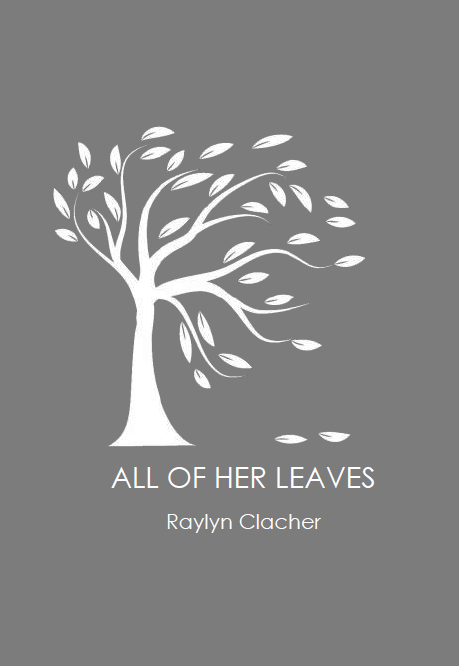
That’s what I adore about your poetry—the wild imagery. All of Her Leaves offers Laura Ingalls Wilder, tornadoes, owls, cooking and eating, motherships, fire, crows, and worms hefted around your lines with fierce verbs. What poets and collections of work do you admire that have employ imagery in ways you find provocative and inspiring?

Thank you! That’s part of what I love about writing - the permission to let your imagination run free and play. As far as inspiration, it always kind of begins and ends with Sylvia Plath for me. I was introduced to her poem, “Mirror” in Mrs. Borrego’s sophomore English class and have been fascinated with how Plath uses imagery ever since then. Her work has this clear, visceral edge to it that (for me) comes from the startling, exact images. In “Mirror,” I can inhabit the world of this object. I can feel the unstoppable terror of age approaching, this “terrible fish” that she’s becoming. You can’t leave a Plath poem without at least one powerful image pinned in your brain.

I’ve also been inspired by Zachary Schomburg and Patricia Lockwood’s work. Schomburg has this way of inhabiting and animating something unexpected, like a refrigerator in “Refrigerator General” and not only bringing it to life, but giving it emotion and resonance. I love how Lockwood employs imagery in her work and lets her imagination run wild. It’s like each poem of hers sees a string of images or association of words through to their full conclusion. She explores every possibility before putting a poem to bed.

As I revise work, I’ve been trying to think of Elizabeth Bishop more and balance her out with my impulse to run wild. I love how she calmly inhabits an image and gives it it’s full due. There’s this methodical calm to her work - like in “The Weed,” she takes her time to focus on and fully flesh out this weed rather than moving on too hastily. I’m trying to work on this balance.

With all the things in life that conspire against the work of poems, what brings you to and inspires you to write the images and stories you tell in your poetry and specifically in All of Her Leaves?

Ironically, I feel like it’s those things in life that conspire against the work of poems that generate images and stories for me - that kind of chaos and upheaval that makes it hard to sit down and write. The work in All of Her Leaves came out of a really chaotic time for me. Not only was I going through a lot of life changes, but my friends were too. I had a lot of anxiety and uneasiness, which I’ve found usually leads me to look at things differently. I think it’s my brain’s way of making sense of things and neutralizing them.

For example, the poem “My Heart is Overfed” started with the image of the pig’s bladder from the Little House on the Prairie books and this feeling of wanting to go back in time. Then it became this idea of trying to swallow all of the good things of the earth before they disappear. It was this idea of being in love, but also being worried that that love may leave or not work out, this feeling of grabbing everything you can while you can, of savoring the moment.

It’s this kind of disconnect and tension that generates poetry for me. When I’m anxious or struggling with something an image or phrase will pop into my head. Sometimes it happens while I’m driving or at work. I jot it down for later when I can come back to it. The trick is finding the time to flesh out the poem.

Beyond your publishing record and your MFA, I know you work full-time and are an expecting mother. Talk about your writing discipline. How does work and pregnancy make possible moments to flesh out your poetry?

Like all of us, I’ve learned that I have to make time to write - if I wait for a chunk of time to present itself, it’s never going to. My list of to do’s will always be there. The best time for me to write is early in the morning, before the day starts. Otherwise my brain is mush by the end. Sometimes I can sneak some writing or reading in over my lunch break too. I’m trying to get better at making the most of shorter bursts of time, because I have the feeling that’s going to be key once the baby comes. I have no idea what life is going to be like in a few more months, but I know that writing is one of the things that I want to hang onto and make time for.
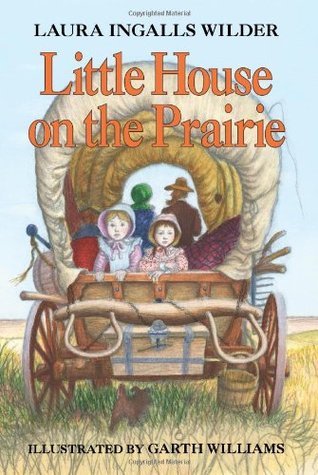
How do you define chapbook? A smaller collection of poetry, usually tightly focused on a theme or narrative.

What makes a good chapbook? Something that’s tightly woven thematically, that pulls me from poem to poem.
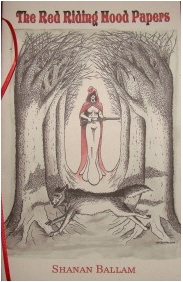

What chapbooks or chapbook poets have impacted your writing the most? Shannan Ballam’s The Red Riding Hood Papers

What do you look for when you put together a chapbook? A good story line that will keep people engaged.

How are you trying to get better as a chapbook poet? I’m trying to read more and support the chapbook community.

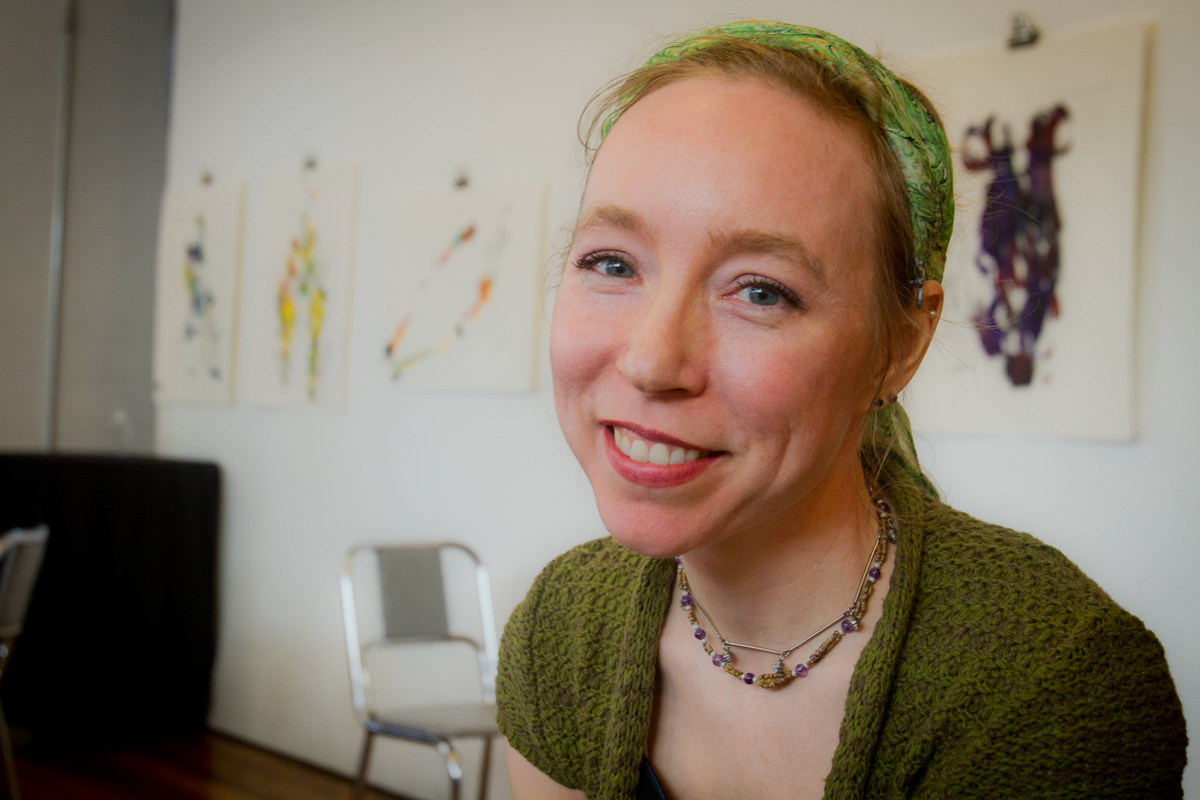
Raylyn Clacher

What’s next for you? Working on getting my full length manuscript out there, hopefully pulling another chap together, ideally putting together a reading series in my hometown of Wichita, Kansas.

Current chapbook reading list: The Girl of My Dreams by April Salzano; Housewifery by Carly Anne Ravnikar; Small Like a Tooth by Carolyn Williams-Noren
Number of chapbooks you own: Not enough. About 10.

Number of chapbooks you’ve read: about 10. I need to get to more!

Your chapbook credo: I tell other writers to submit! Gather your poems together and see what kind of story they’re telling. You might have a chapbook brewing that you’re unaware of.
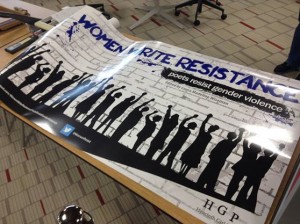
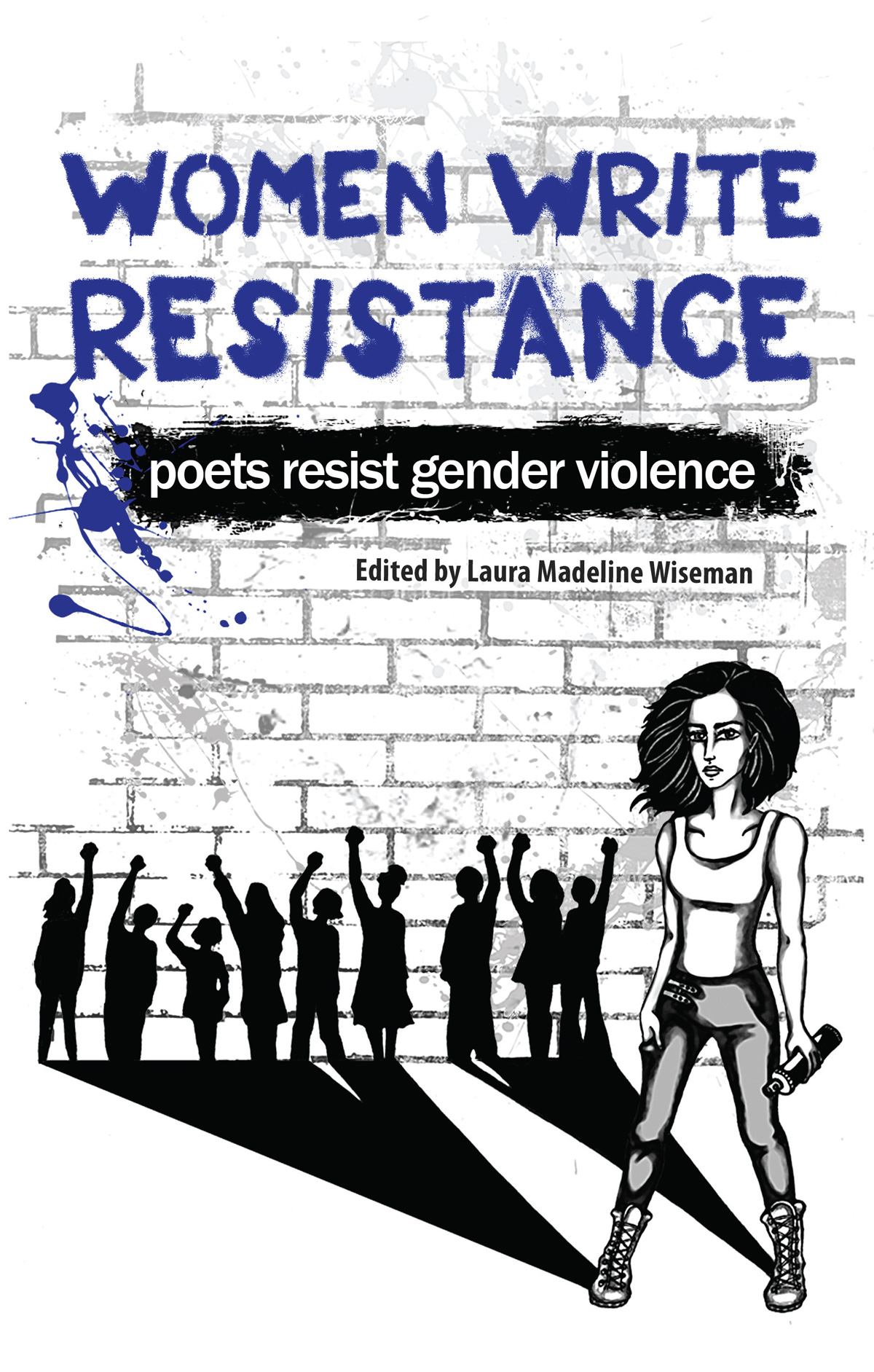
Women Write Resistance 2nd Birthday Party @ AWP 4.11.15, 7-9pm

Women write resistance banner

We’re celebrating the two-year birthday of Women Write Resistance at the 2015 AWP Conference in Minneapolis!

What: Women Write Resistance 2nd Birthday Party
Who: Wendy Barker, Sarah A. Chavez, Allison Adelle Hedge Coke, Rebecca Foust, Alice Friman, Megan Gannon, Sara Henning, Therése Halscheid, Julie Kane, Jill Khoury, Christina Lovin, Tyler Mills, Danielle Sellers, Larissa Shmailo, Laura Madeline Wiseman, & Kimbery Wieser
When: Saturday, April 11, 2015 at 7:00-9:00 p.m.
Where: The Crooked Pint, 501 South Washington Ave

wwr_CoverImage

The birthday party’s theme is resistance and gender. There’s an open bar of delicious refreshments, a signing of the anthology, a book table for poets to buy, trade, sell, and/or autograph, and fabulous literary conversation. It will be great fun! Bring a friend to the event,check out the event page, follow us on twitter, and check out the book trailer. We look forward to seeing you at AWP!

Bios & Photos

Wendy Barker’s sixth collection of poetry, One Blackbird at a Time, has received the John Ciardi Prize and is forthcoming from BkMk Press in 2015. Her fourth chapbook of poems is forthcoming from Wings Press. Among her other books are a selection of poems with accompanying essays, Poems’ Progress (Absey & Co., 2002), and a selection of co-translations, Rabindranath Tagore: Final Poems (Braziller, 2001). Her poems have appeared in numerous journals and anthologies, including The Best American Poetry 2013. Recipient of NEA and Rockefeller fellowships, she is Poet-in-Residence and the Pearl LeWinn Endowed Professor of Creative Writing at the University of Texas at San Antonio.

pic with glass from July 2014

Sarah A. Chavez, a mestiza born and raised in the California Central Valley, is the author of the chapbook, All Day, Talking (Dancing Girl Press, 2014), which was featured on Sundress Publications’ book spotlight, The Wardrobe’s Best Dressed. She holds a PhD in English with a focus in poetry and Ethnic Studies from the University of Nebraska – Lincoln. Her work can be found or is forthcoming in Stirring: A Literary Collective, Spoon River Poetry Review, Luna Luna Magazine, among others. Her manuscript, This, Like So Much, was an Honorable Mention for the 2013 Quercus Review Press Poetry Book Contest. A selection from her chapbook manuscript All Day, Talking won the Susan Atefat Peckham Fellowship in 2013. She is a proud member of the Macondo Writers Workshop. www.sarahachavez.com

300 DPI Allison profile shot

Allison Adelle Hedge Coke’s books include authored (poetry) Dog Road Woman, Off-Season City Pipe, Blood Run, and Streaming, and a memoir, Rock Ghost, Willow, Deer and edited anthologies Sing: Poetry of the Indigenous Americas, Effigies and Effigies II. She most recently served as a Distinguished Writer at the University of Hawai’i, Mānoa and directs the Literary Sandhill Crane Retreat, performs with the band Rd Klā, and is currently at work on an environmental documentary film, Red Dust: Native resiliency in the dirty thirties. Hedge Coke came of age working fields, factories, and waters, and serves as an alternative field mentor. Awards for her work include an American Book Award, a Paterson Prize, a Sioux Falls Mayor’s Award, and fellowships or residencies with MacDowell, Black Earth Institute, Hawthornden Castle, Weymouth Center, Center for the Great Plains, and Lannan at Marfa.

megan

Megan Gannon was born in Chattanooga, Tennessee, and graduated from Vassar College (BA), the University of Montana (MFA), and the University of Nebraska-Lincoln (PhD). Formerly, she was a Peace Corps volunteer in The Gambia, West Africa, and she currently teaches at Ripon College in Ripon, Wisconsin.

Becky_author photo_cropped_7-12-14

Rebecca Foust’s fifth book, Paradise Drive, won the 2015 Press 53 Award for Poetry and will be released in April. Foust was the 2014 Dartmouth Poet in Residence and is the recipient of fellowships from the Frost Place and the MacDowell Colony.

alice

Alice Friman’s sixth full-length collection is The View from Saturn from LSU Press. Her previous collection is Vinculum, LSU, for which she won the 2012 Georgia Author of the Year Award in Poetry. She is a recipient of a 2012 Pushcart Prize, is included in Best American Poetry 2009, and has been published in 14 countries. Friman lives in Milledgeville, Georgia, where she is Poet-in-Residence at Georgia College. Her podcast series, Ask Alice, is sponsored by the Georgia College MFA program and can be seen on YouTube.

Therése Halscheid’s new poetry collection is Frozen Latitudes (Press 53). Previous collections are Uncommon Geography, Without Home and Powertalk. She received a Greatest Hits chapbook award by Pudding House Publications. Her poetry and essays have appeared in such magazines as The Gettysburg Review, Tampa Review, Sou’wester, Natural Bridge. She is an itinerant writer by way of house-sitting. Her photography has appeared in juried shows and chronicles her nomadic lifestyle. She has taught in unusual locales such as an Eskimo village in northern Alaska, and the Ural Mountains of Russia. www.ThereseHalscheid.com

author photo_Sara Henning

Sara Henning is the author of A Sweeter Water (Lavender Ink, 2013), as well as two chapbooks, Garden Effigies (Dancing Girl Press, 2015) and To Speak of Dahlias (Finishing Line Press, 2012). Her work has appeared or is forthcoming in such journals as Connotation Press, Green Mountains Review, Crab Orchard Review, Greensboro Review, and RHINO, and anthologies such as Women Write Resistance: Poets Resist Gender Violence (2013). She holds an MFA from George Mason University, and she is currently a doctoral student in English and Creative Writing at the University of South Dakota, where she serves as Assistant Managing Editor for the South Dakota Review and on the Editorial Board at Sundress Publications.

julie kane

Julie Kane’s poetry collections include Rhythm & Booze (2003), a National Poetry Series winner; Jazz Funeral (2009), a Donald Justice Prize winner; and Paper Bullets (2014), a new collection of humorous poems. The 2011-2013 Louisiana Poet Laureate, she teaches at Northwestern State University in Natchitoches, Louisiana.

Window view tight crop

Jill Khoury is interested in the intersection of poetry, visual art, representations of gender, and disability. She holds an MFA from The Ohio State University. Her poems have appeared or are forthcoming in numerous journals, including Arsenic Lobster, Copper Nickel, Inter|rupture, and Portland Review. Pudding House Press released her chapbook, Borrowed Bodies, in 2009. Her first full-length collection, Suites for the Modern Dancer, is forthcoming from Sundress Publications in 2016. Find her at jillkhoury.com.

Lovin_Author Photo Web

A native Mid-Westerner, Christina Lovin, now makes her home in Central Kentucky, where she is currently a full-time lecturer in the English & Theatre Department at Eastern Kentucky University. Lovin’s writing has appeared in over one hundred different literary journals and anthologies, as well as five volumes of poetry (Echo, A Stirring in the Dark, Flesh, Little Fires, and What We Burned for Warmth). She is the recipient of numerous poetry awards, writing residencies, fellowships, and grants, most notably the Al Smith Fellowship from Kentucky Arts Council, Kentucky Foundation for Women, and Elizabeth George Foundation Grant.

danielle

Danielle Sellers is from Key West, FL. She has an MA from The Writing Seminars at Johns Hopkins University and an MFA from the University of Mississippi where she held the John Grisham Poetry Fellowship. Her poems have appeared in River Styx, Subtropics, Smartish Pace, The Cimarron Review, Poet Lore, and elsewhere. Her first book, Bone Key Elegies, was published by Main Street Rag. She teaches English at Trinity Valley School in Fort Worth, Texas.

larissa WWR

Larissa Shmailo is editor-in-chief of the anthology Twenty-first Century Russian Poetry (Big Bridge Press), poetry editor for MadHat Annual, and founder of The Feminist Poets in Low-Cut Blouses. She translated Victory over the Sun for the Los Angeles County Museum of Art’s celebrated reconstruction of the first Futurist opera; the libretto is now available from Červená Barva Press; Larissa’s poetry collections are #specialcharacters (Unlikely Books), In Paran (BlazeVOX [books], A Cure for Suicide (Červená Barva Press), and Fib Sequence (Argotist Ebooks). Her poetry CDs are The No-Net World and Exorcism (SongCrew); tracks are available from Spotify, iTunes, Muze, and Amazon. Her novel, Patient Women, is forthcoming from BlazeVOX [books]. She blogs at http://larissashmailo.blogspot.com/

omaha2014

Laura Madeline Wiseman is the author of twenty books and chapbooks and the editor of Women Write Resistance: Poets Resist Gender Violence (Hyacinth Girl Press). Her recent books are Drink (BlazeVOX Books), Wake (Aldrich Press), The Bottle Opener (Red Dashboard), and the collaborative book The Hunger of the Cheeky Sisters (Les Femmes Folles) with artist Lauren Rinaldi. Her work has appeared in Prairie Schooner, Margie, Mid-American Review, and Feminist Studies.

Kimberly

Dr. Kimberly Wieser is an Assistant Professor of English and an affiliated faculty member with Native American Studies at the University of Oklahoma. She is Director of Native Writers Circle of the Americas and serves as Acting President of the Board of Wordcraft Circle of Native Writers and Storytellers. She is one of the co-authors of Reasoning Together: The Native Critics Collective (OU Press), named one of the most important books in her field in the first decade of the 21st century by NAISA and the winner of the NWCA First Books Award for Prose 2004 for Back to the Blanket: Reading, Writing, and Resistance for American Indian Literary Critics. She has written and published poems, stories, plays, articles, book reviews, and reference entries for anthologies and for publications from Studies in American Indian Literatures to American Indian Quarterly to News from Indian Country and Talking Stick Arts Newsletter. Her areas of interest are American Indian critical theories, literatures, rhetorics, and gender studies as well as creative writing and theatre. She is currently revising her poetry manuscript Spanglish is the Language of the 21st Century and shopping for a publisher.

the chapbook interview: Liz Kay on good books, good conversations, and bad girls

The February 2015 issue of The Writer’s Chronicle features Grace Cavalieri’s “The Last Word: The Poet and the Poem from The Library of Congress, Poets Laureate on Public Radio, 1977-2014.” In her piece, she quotes Louise Gluck who held the chair in 2003-2004. Gluck noted, “We have to contend with the idea of mortality: We all, at some point, love, with the risks involved, the vulnerabilities involved, the disappointments and great thrills of passion, so what you use is the self as a laboratory in which to practice, master, what seem to you central dilemmas.” Your chapbook Something to Help Me Sleep (Dancing Girl Press, 2012) and your forthcoming novel that I had the privilege of hearing you read earlier this year at Indigo Bridge Books, are concerned with love, desire, romance, and attraction. Talk about how you contend with love in your work.

What a great question, Madeline. A lot of my work revolves around questions of sexual power, which is to say that I’m interested in love, in questions of desire, but I’m specifically interested in how it plays out when the playing field isn’t level. And of course, in our culture, it never is. Even the most feminist of us (and I consider myself in this group) are informed by our experiences with the patriarchy, and what gets really uncomfortable is when we start to consider how many of those experiences feel positive, how many of those experiences allow us to feel, as women, some kind of power. It’s a limited power, certainly.

I think also, there’s not a lot of nuance available to women when it comes to love and desire. We can be sexual or frigid. Stand-offish or clingy. A doormat or a bitch. And then of course, to navigate the power dynamics, these things become performance. We perform aloofness. We perform sexuality. We perform whatever it is that we think will get us to the place that we want, which is, often, just a place where we can stop fucking performing for once.

And I don’t mean to say that men don’t have similar experiences or feel constrained by expectations of masculinity. I like to talk about the patriarchy (a lot), but in general I’m interested in attacking the system. I feel a great deal of sympathy for the men who have to live in it. In the end though, it’s my job to speak to the experience of being a woman, so that’s where my focus is.

In the chapbook, the character Ella is lovesick, heartsick, and while she’s craving the experience of love, she doesn’t want the vulnerability that comes with it. So she takes these lovers, except that they aren’t really lovers, they are stock characters recruited to play a part, to act it out—the fingers on the wrist, the teeth on the lip. In the morning, she is always, ever, alone. And yet, there’s still a vulnerability there because of the judgment she’s internalized, the ‘dirtiness’ she’s picked up. I’m interested also in how the stories we tell ourselves are versions, usually ugly versions, of stories the world tells, so I very much like subverting gender tropes. Ella is then a fairytale character, but of course her narrative arc is inverted. What kind of girl are you if you don’t run away at midnight? What kind of girl are you if the prince doesn’t follow you home?

I’m teaching in women’s and gender studies this semester. I very much appreciate your response. One of the articles I’m teaching this term explores the dominant heterosexual scripts that limit the ways women engage in heterosexual encounters and quotes Judith Butler’s suggestion “that discourses do actually live in bodies. They lodge in bodies, bodies in fact carry discourses as part of their lifeblood” as a means by which to describe the internalization of gendered stories and the ways those stories playout in women’s lives. I’m interested in resistance and the ways writers resist hegemonic narratives even as they work within discourses that reinscribe oppressions. Talk about writers you admire that are doing the work you seek to do in the chapbook form and in other genres.

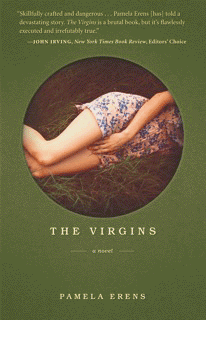
Oh, absolutely! I’m always interested in work that explores the margin between expectation and experience. I loved Pamela Erens’ The Virgins, which is such a smart examination of sexuality-it’s limits and demands. I think what I love most about the book, though, is it’s very conscious use of POV, with the narrator a sort of obsessive voyeur who’s building the intimate moments shared by the main characters almost entirely in his imagination. Their sexuality, then, is a projection of both his own desires and broader cultural judgments.

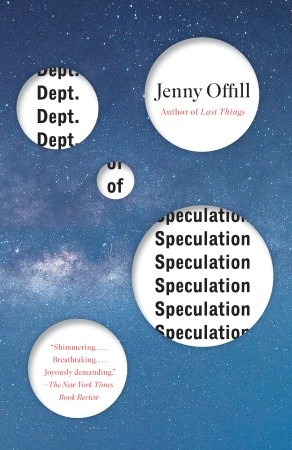
Jenny Offill‘s Dept. of Speculation is this very intimate portrait of a marriage, and it’s exquisitely written.

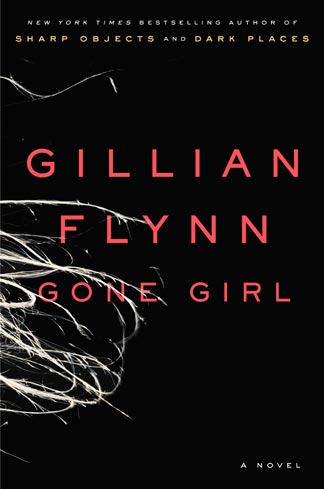
I also really loved Gillian Flynn’s Gone Girl, which I think is one of the smartest examinations of gender tropes I’ve read in years. We have these really horrible characters who quite consciously perform “grieving husband,” “precocious daughter,” “rape victim.” It’s a fun read, but it’s also just really, really smart.

On the very opposite end of the spectrum, Veronique Olmi’s Beside the Sea is the most important book I am loathe to recommend.

The premise, if you’re not familiar with it, is that a mother takes her two children for a seaside holiday before she kills them. It’s really an act of psychic violence, reading this book, but it’s a glimpse into both serious psychosis, and at the same time, an exaggeration of both the love and failures we, as mothers, constantly feel.

Writers and poets often talk about advocating for their work, promoting their work, and supporting the work of other writers by giving back, thereby creating a community where literary endeavors of small presses and the writers they publish is celebrated, discussed, and read. What strategies of advocacy and promotion do you think are most helpful?

I think it’s difficult to find the balance between promotion and engagement, and I think if you’re going to get the balance wrong, err on the side of engagement. The end goal is for the work to get out there, to be read, to be talked about, but there’s that sales aspect along the way that gets uncomfortable. And I’ve seen it handled poorly. I’ve gotten email blasts with “Buy my book!” in the subject line. I’ve also seen writers with new books (I know they have a new book) who never ever breathe a word about it. I don’t think either approach is going to get you there. I recognize that selling is uncomfortable, but what’s never uncomfortable is conversation. I love interviews and essays and blogs. I love to hear writers talking about their own struggles with the work and with publishing, talking about what they’ve learned along the way. And talking about what they’re reading! God, writers are some of the smartest, best readers there are, and I want their recommendations. I also love to hear publishers talking about the books they’re passionate about. I don’t know if you go to AWP, but one of my favorite things about AWP is the book fair. There are basically 3 types of tables in the book fair. There are the unmanned tables-or the may as well be unmanned because the person sitting behind it is never going to look up unless you’re actually trying to put money in their hand. There are the pushy tables, where you almost don’t want to stop: Do you have a subscription? Why don’t you have a subscription? Are you on our email list? And then there are the tables where people are talking, really talking, about books.

Sometimes, when I turn around, Jen (Lambert, my co-editor) is hand-selling a book or journal she just bought from another publisher. She’s like, Look at this cover. Look at this art. And then she’s chasing them away from our table because god, they’d better go buy that book before the other publisher sells out. And, honestly, these are the people who come back day after day. They come to see us the following year. They buy our journals (when they can). They follow the poem of the week series on our blog. Sometimes we overhear these Twitter exchanges between reader and poet, and that’s the end goal-not the sales, but the conversation. So, I think, you do what you can to create those moments of connection. And really, it shouldn’t be that hard-we have this thing right in front of us that we’re all passionate about.

What makes a good chapbook?

I think what I love about chapbooks is that they tend to be cohesive. They tend to be thematic or narrative projects. They tend to be distilled. This is what I look for too in full-lengths, but I think I find in more in chapbooks. I am drawn to series work, and the chapbook in particular seems to be where that kind of work is thriving these days.


What chapbooks are inspiring you these days?

The last chapbook I read was yours-threnody. I knew I wanted to read it when I heard you read some of the death poems from it.

Kristy Bowen (who is like the patron saint of chapbooks) has an electronic chapbook I Hate You, James Franco that I’m completely in love with. I don’t know how many times I’ve read it at this point.

What chapbooks or chapbook poets have impacted your writing the most? Kristy Bowen, hands down. I love her work, but I also think that the books she puts in the world through {dancing girl press} are exquisite and sharp and so smartly curated.

What’s next for you? I am deeply enthralled with fiction now. Since my chapbook Something to Help Me Sleep, which is a narrative sequence, I’ve just been moving farthing into narrative and character and then I was like, “dialogue seems fun,” and now I’m hooked. I am, as we speak, finishing some revisions on my forthcoming novel Monsters: A Love Story. And as soon as I send that off, I’ll get back to a novel that’s in progress.

Number of chapbooks you own: Don’t know. Dozens?

Ways you promote and serve other chapbook poets: I think one thing I love about chapbooks is that you can buy more of them. I mean, they tend to be 5-7 bucks? And they’re little, and you can carry a whole bunch of them back from AWP. And then you haven’t invested a ton of money, so you can pass them along. I love introducing someone to a new writer, and I think chapbooks are a perfect way to do that.

Where you spend your chapbook earnings: Ha! You are hilarious.

Bio: Liz Kay is a founding editor of Spark Wheel Press and the journal burntdistrict. Her poems have appeared in such journals as Willow Springs, Sugar House Review, and Beloit Poetry Journal. She is the author of a chapbook, Something to Help Me Sleep (dancing girl press, 2012). Her debut novel Monsters: A Love Story will be published by Putnam in 2016.

Writing Ekphrastic poetry

My students have asked me to think of ways we tell stories and where we find inspiration for those stories. One place I’ve turned to and continue to turn to for inspiration, is art. Author Tracey Chevalier discusses the Vermeer painting that was her inspiration for her novel Girl With The Pearl Earring in her TedTalk, “Tracy Chevalier: Finding the story inside the painting.”

Several poets discuss ekphrasis prompts and poems from Diane Lockward in this forum and suggest the following to approach poem writing:

1. Imagine yourself observing the artist at work.
2. Consider the effect of the artwork on your speaker.
3. Observe someone else observing and responding to the artwork.
4. Focus on a limited aspect of the work, e.g., the bottle of wine on a fully laden table.
5. Enter the artwork and become part of the scene.
6. Consider what is left out of the artwork.

Now begin a draft. Bring in your description and list of details. If your artwork is dominated by a particular color, weave that color in and out of your poem. If there are multiple colors, bring them in. Of course, your poem should be rich in imagery. You are painting a picture with words. Let your imagination be stimulated by the artwork. Allow a few enigmatic metaphors to enter the poem. Don’t be excessively literal.

Other places for prompts and discussions of ekphrastic include the Lantern Review and the Ploughshares blog. As we’re getting ready for April’s month of poetry, perhaps my students and I will will try our hand at writing poems and stories to these paintings from artists’ work I’ve recently come to adore.

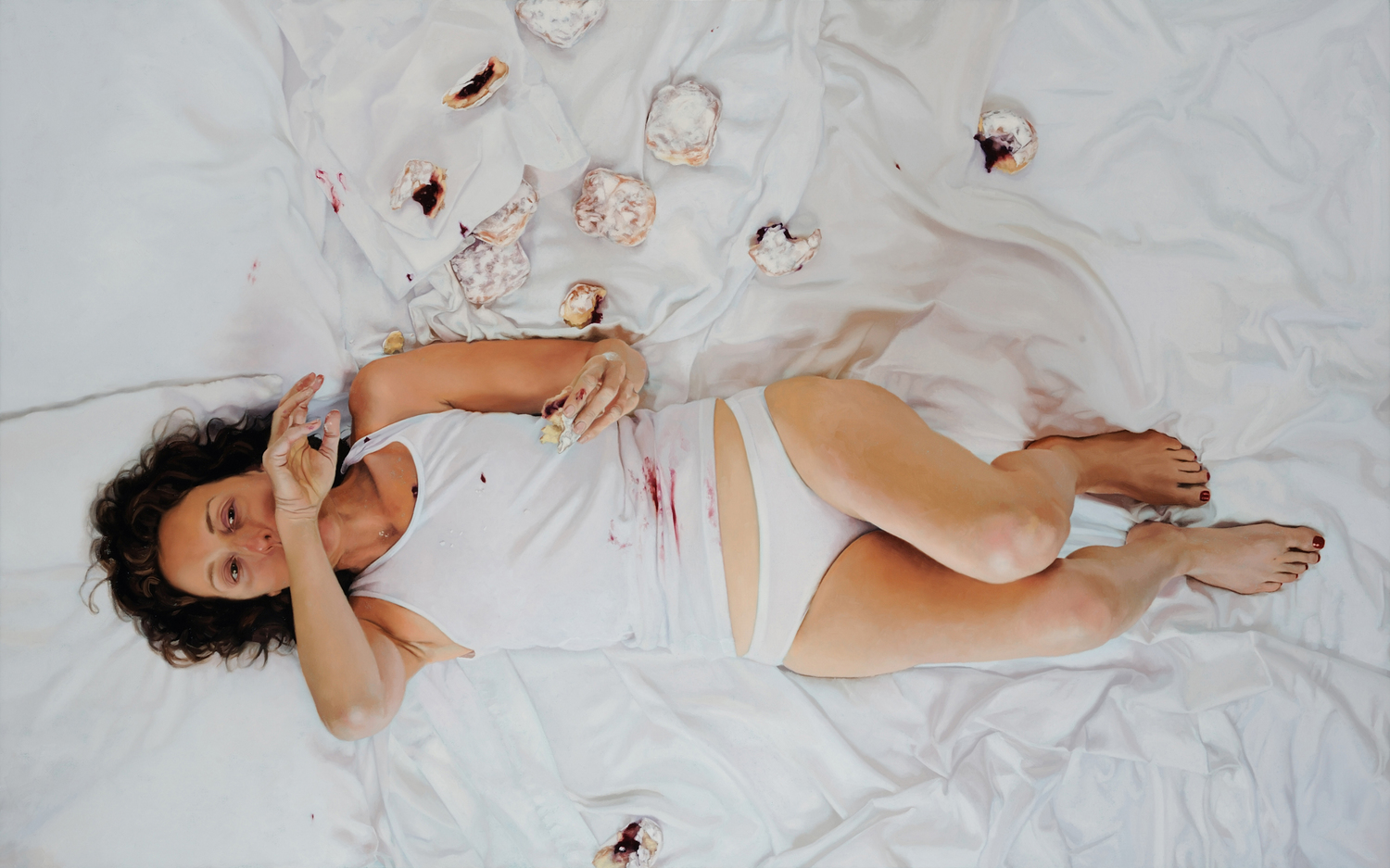
Lee Price, Jelly Doughnuts, Oil on Linen, 40″ x 64″

Courtney Kenny Porto, Mirror, Acrylic, 15″x19″, 2014

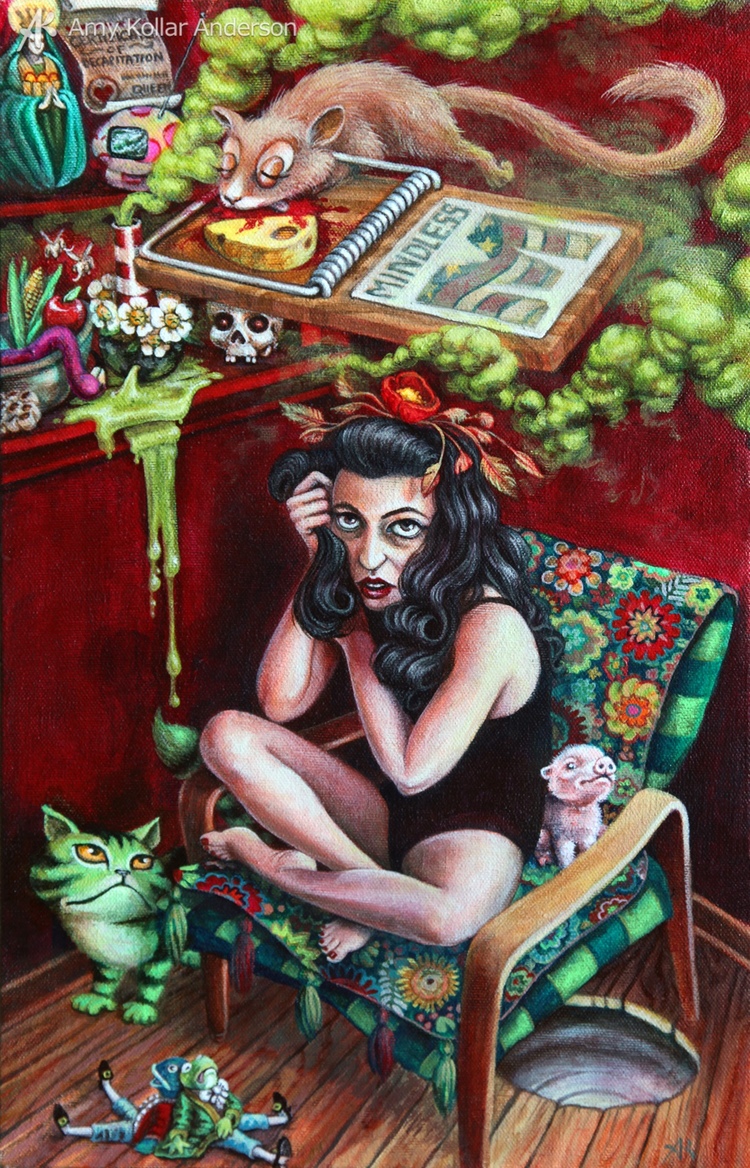
Amy Kollar Anderson, What the Dormouse Said, acrylic on canvas : 10″ x 16″ : 2012

Art + Poetry: A Les Femmes Folles Salon, 7 pm, March 23

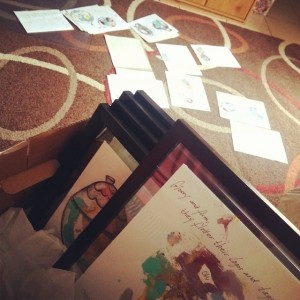
box of Intimates and Fools art

Art + Poetry: A Les Femmes Folles Salon
with Sally Deskins, Jill Khoury, Sarah A. Chavez, Michelle Furlong, Hillary Leach, & Lisa Giuliani
7-9 pm, Monday, March 23, 2015
Sally Deskins Studio
Morgantown, WV 26508

Hillary Leach is an artist, painter, and free-thinker living and working in Morgantown, WV. She is originally from Jacksonville, FL but has spent most of her life living in the Northeastern U.S. Currently she makes her home in the mountains of West Virginia. Hillary received her BFA in painting from West Virginia University in May of 2014. Hillary graduated from WVU cum laude and was named to the Dean’s List with a 4.0 GPA. She was a recipient of the National Merit Scholarship, the Johnston Scholarship, and the Promise Scholarship. In the summer of 2010, Hillary traveled to Paris, Lichtenstein, Munich, and Switzerland to explore the art and culture of these places, and these travels have since informed her work and ignited her heart. In the fall of 2015, Hillary’s work will be published as part of the International Painting Annual, an annual ehibition-in-print curated by Manifest Gallery of Cincinnati, OH. Her paintings have also been featured in a group exhibition juried by Carol Hummel, along with various other exhibitions around Morgantown and the surrounding areas. http://hillaryleach.carbonmade.com/

Jill Khoury earned her Masters of Fine Arts from The Ohio State University. She teaches writing and literature in high school, university, and enrichment environments. Her poems have appeared or are forthcoming in numerous journals, including Bone Bouquet, RHINO, Inter|rupture, and Stone Highway Review. She has been nominated for two Pushcart Prizes and a Best of the Net award. Her chapbook Borrowed Bodies was released from Pudding House Press. You can find her at jillkhoury.com.

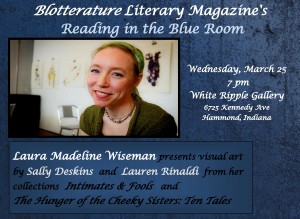
Laura Madeline Wiseman is the author of twenty books and chapbooks and the editor of Women Write Resistance: Poets Resist Gender Violence (Hyacinth Girl Press). Her recent books are Drink (BlazeVOX Books), Wake (Aldrich Press), The Bottle Opener (Red Dashboard), and the collaborative book The Hunger of the Cheeky Sisters (Les Femmes Folles) with artist Lauren Rinaldi. Her work has appeared in Prairie Schooner, Margie, Mid-American Review, and Feminist Studies.

Lisa Giuliani is the owner of Lock House Studio.

Michelle Furlong, the artist behind One Peace at a Time Art, focuses on positive message pieces. She finds her experiences, good and bad, have been an inspiration in her life. She believes that the way she chooses to live is a form of art. She uses mixed mediums to create and repurposes items for her pieces. Michelle compares her life to a bracelet and those moments when she has profound human connections are the charms. She creates from those charm moments. She lives in Morgantown, West Virginia with her Australian husband. She has raised money for local charities by donating pieces to be auctioned. She has exhibited at Mon Arts, and was a featured artist in the publication, Appalachian Jamwich where she was referred to as the “Mother of Positivity”.

Sally Deskins is an artist and writer. Currently a Teaching Assistant in the Art History Graduate Program at West Virginia University, her work challenges society’s definitions of femininity, exploring womanhood and motherhood in her life and others’. Her art has been exhibited in galleries in Omaha, New York, Philadelphia and Chicago; and featured in publications such as Certain Circuits, Weave Magazine, andPainters & Poets. She has curated various solo and group exhibitions, readings and performances centered on women’s perspective and the body. Her writing has been published internationally in journals such as Stirring, Prick of the Spindle, Bookslut and Bitch. She is founding editor of LES FEMMES FOLLES. She has published four LES FEMMES FOLLES anthologies of art, poetry and interview excerpts can be found on blurb.com. Her first illustrated book Intimates & Fools, with poetry by Laura Madeline Wiseman, came out in 2014.
http://sallydeskins.tumblr.com/

Sarah A. Chavez earned a PhD in English with a focus in Creative Writing (poetry) and an interdisciplinary specialization in Ethnic Studies, with a focus on Chican@/Latin@ & Native American literature and culture, from the University of Nebraska - Lincoln. Her poetry can be found or is forthcoming in the anthologies Women Write Resistance: Poets Resist Gender Violence, Not Somewhere Else But Here: A Contemporary Anthology of Women and Place, and In Gilded Frame: An Anthology of Ekphrastic Poetry, as well as the journals Third Wednesday, LunaLuna Magazine, The Fourth River, North American Review & The Acentos Review among others. Her chapbook, All Day, Talking, was published by Dancing Girl Press in September 2014.

the chapbook interview: Alyse Knorr on research, teaching, and inspiration

The Writer’s Chronicle September 2014 issue features Debra Spark’s mediation on research and writing fiction. She writes, “In life, you only get to be one person. You only get to go where you go, and do what you do. Not so in fiction. You get to be many people, to go places you’ll never get to go, and to do things you’ll never do” (98) and “Fiction gives you permission to have a bigger life. To go somewhere you’d not otherwise go, to read endless books about an obscure subject, to achieve a form of expertise in a field you’ll never actually pursue, to ask nosy questions” (99). Your chapbook Alternates (Dancing Girl Press, 2014) explores quantum mechanics, alternative universes, and love. Talk about how research and writing enables you to have a bigger life.

I really love these quotes, and the first one in particular feels so perfect for Alternates, because the idea of being more than just one person and living all of your potential lives is what’s at the heart of this book. When I wrote Alternates, I was experimenting with the lyric sequence form and I was also reading about quantum theory-specifically, the “many-worlds interpretation” of quantum mechanics. The many-worlds interpretation postulates that every possible future and every possible past are real, and each exists in its own parallel, alternate universe. Basically, there are an infinite number of universes in which everything that could have happened has actually happened.

The profound beauty in this idea blew me away-especially in the ways it relates to love (you actually are happily married to that one person who never loved you back-in another universe!) and the ways it perfectly lines up with the lyric sequence form-distinctly separate parts that sing in chorus together as a whole. Each page of Alternates, then, depicts one of the many different potential life paths of one couple. In one universe, one of them is dead. In another, they have a daughter. In another, they broke up.

I wanted the book to enact the feeling of time as quantum theory (or at least my understanding of it!) interprets it-time as a malleable, all-encompassing experience, not just a linear sequence. All of the past and all of the future are occurring at the same time-right now. That’s how love feels-the people you love are always with you, and all the potential lives you could have had with them are always with you, too-so in a way, they are always happening, forever. Heartbreak contains joy, and vice versa. That potentiality is extremely comforting to me.

As for the second Spark quote, I couldn’t agree more-research is such fun! I conduct research for every project I write. My next full-length book, Copper Mother, converses with NASA’s 1977 Golden Record, launched aboard the Voyager spacecraft, and delves into theories of extraterrestrial intelligence. I’m currently working on another full-length novel-in-verse called “Mega-City Redux” that remixes Christine de Pizan’s revolutionary 1405 proto-feminist text, The Book of the City of Ladies. For Alternates, I read Hawking, Einstein, and Brian Greene’s The Elegant Universe, as well as a lot of really fun, wacky books like The Physics of the Impossible by Michiko Kaku. My favorite scientist to read is Carl Sagan-he writes with a poet’s love of language, beauty, and metaphor. Reading about another world, another discipline, another set of terminology and another way of thinking-what could be better fuel for poetry?

The February 2015 issue of The Writer’s Chronicle features Jane Hirshfield’s essay “Strange Reaches, Impossibilities, and Big Hidden Drawers: Poetry and Paradox.” In her reflecting on Elizabeth Bishop’s poem “The Map” she writes, “Put flatly: good poems make us smarter” (47). I like that. I like the thinking poetry asks us to do. What poems have made you smarter and how?

Well, as a matter of fact, I’d say that Elizabeth Bishop and her poems have taught me a great deal. Bishop’s combined attention to spontaneity, accuracy, and mystery (she had a toucan named Uncle SAM!) have become a writing mantra for me, and her poems remind me of all the ways that observation is a practice that can be mastered and even queered. Her poems are demanding to me on an intellectual and spiritual level, and every time I read them, I discover something new—new questions, new ways of interacting with people and objects and poetics, and new techniques for probing at the deeper (“rainbow, rainbow, rainbow”-colored!) underbelly of the world.

I have two questions about teaching, a topic you invoke in Alternates in the opening poem. The February 2015 The Writer’s Chronicle roundtable feature on pedagogy asks, Who has time to read? First, how do you make time to read, especially readings that are generative to your own creative process? Second, how does teaching serve your creative work and are there specific activities that you use in the classroom that fuel your own writing?

This is an interesting question! For the first part, I honestly don’t have any kind of special system or anything for making time to read—it usually feels like I end up reading what I absolutely could not live without reading. For the book I’m working on right now, which is a non-fiction researched memoir about Super Mario Bros. 3, I read more than 50 books about video game history and theory during the fall semester. But that’s really ALL that I had time to read, so I’m looking forward to diving into all the poetry I’ve been stockpiling this spring—Claudia Rankine’s Citizen, Olena Kalytiak Davis’ The Poem She Didn’t Write and Other Poems, and Matthea Harvey’s If the Tabloids Are True What Are You. I read a really eclectic mixture of contemporary poetry, short fiction, novels, graphic novels, and historical material (usually I’m reading and re-reading alongside my Masterpieces of World Lit class, which covers everything from The Epic of Gilgamesh to Paradise Lost). I also like to read non-literary non-fiction, like quantum theory (for non-scientists, of course!) or cultural criticism (hence all the video game books). So I’m usually reading what I feel like I absolutely must read at that moment—either for research purposes, teaching prep, as language-fuel to feed new poems, or to keep up with the work of the poets I admire most. I read graphic novels when my brain feels too crammed with words and metaphor and I just want to SEE something that’s directly visually stunning.

To answer the second part of the question, teaching plays a big role in inspiring my creative work. I usually teach more than 100 students per semester, so that’s 100 individuals with different life experiences, different perspectives, and different ways of thinking that I get to speak with. Every time I teach a class or sit down to chat with a student during office hours, I’m learning something new and having my brain stimulated by the point of view they bring to the table. So it’s always both broadening and deepening my outlooks on the world. Teaching stimulates the mind and keeps you intellectually alert, which is so important for writing. It forces you to keep your habits of observation, critical thought, and questioning all fine-tuned every single day.

Here’s one specific example—two falls ago, in my Masterpieces of World Lit class, we were reading Christine de Pizan’s The Book of the City of Ladies. A student raised the question, “Why are all the examples of strong, powerful female heroes that Pizan gives us in this text fictional characters and not real women?” I went home that afternoon thinking about the question, and didn’t stop thinking about it. A year and a half later, I have a draft of a manuscript called “Mega-City Redux,” which is a remix of/sequel to Pizan’s work starring my favorite strong, powerful female heroes of our times-Buffy the Vampire Slayer, Xena Warrior Princess, and Dana Scully from the X-Files. There’s no doubt in my mind that this book would not have been written if I hadn’t been teaching that class.

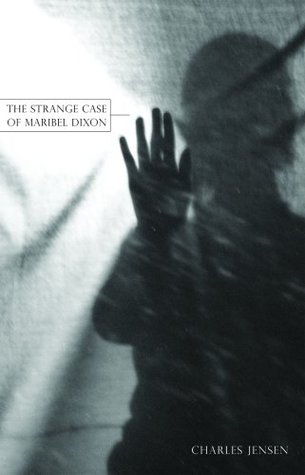
What chapbooks are inspiring you these days? One chapbook I always go back to as an inspiration or model for my own work is Charles Jensen’s The Strange Case of Maribel Dixon. It’s a beautiful love story about a scientist in the 30’s who tries to find a way, through some spooky pseudoscience (no spoilers here!) to save his dying wife. It’s told through snippets of diary, interviews, and shredded documents, and it’s extremely imaginative and compelling-the characters are wonderful and it fits the chapbook form wonderfully.

What do you look for when you put together a chapbook? I want my chapbooks to feel unified in theme-the chapbook is a great form for projects, series, or sequences-and I want it to fully complete the work it wants to do while also experimenting with radical compression.

What’s next for you? I’ve got a couple of projects in the works-the novel-in-verse I mentioned called Mega-City Redux and the non-fiction Super Mario Brothers 3 under contract. I’m also working on a chapbook called “Epithalamia” full of love poems exploring the concept of marriages and weddings in our time. And I’m lucky enough to be working on a couple of collaborations with some really talented poets and friends, so that’s been a lot of fun!


Current chapbook reading list: I can’t wait to read Jeanine Deibel’s Spyre!


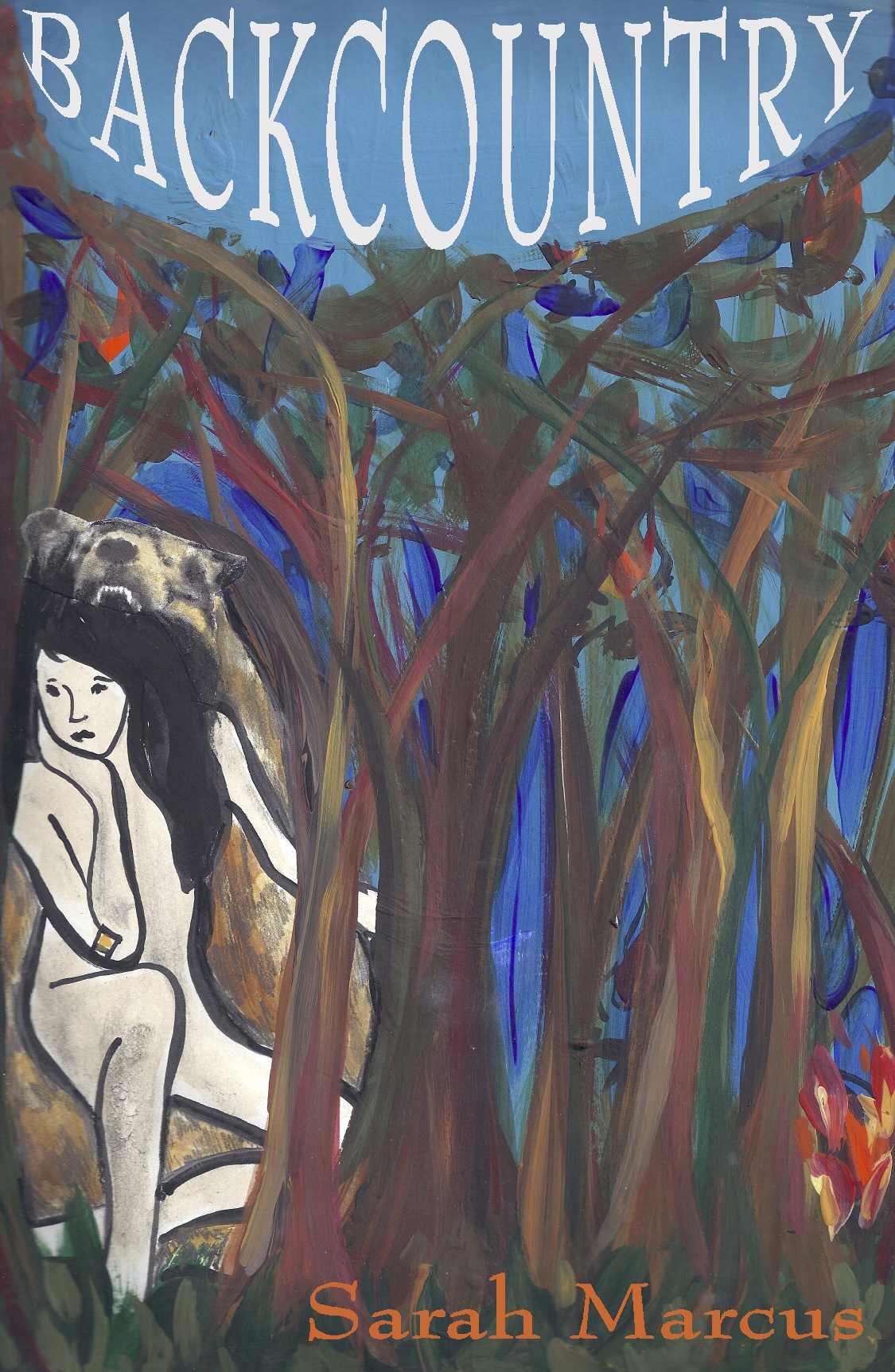
Number of chapbooks you own: Again, too many to count! Some of my favorites are A Conference of Birds by Christopher Martin, Backcountry by Sarah Marcus, and Jane & Paige or Sister Goose by Elizabeth Savage.


Number of chapbooks you’ve read: Again, too many to count! Most recently, I read Anne Carson’s The Albertine Workouts, which is beautiful.

Talk about your commitment to the chapbook writing community. I have a deep commitment to the chapbook writing community. I serve as an editor of Gazing Grain Press, a feminist chapbook publisher. I founded the press in 2012 with poets M. Mack and Siwar Masannat because we saw the need for a press that would publish chapbooks of poetry and hybrid work by feminists of all genders and sexualities. GGP has published three chapbooks of innovative poetry/hybrid work, and this year, we are expanding by adding a prose contest, which will open in March. Our judges for this year’s contests are Natalie Diaz and Amber Sparks. I believe very strongly in giving back to the literary community in some way.

Ways you promote and serve other chapbook poets: Gazing Grain promotes the work of our chapbook poets year-round by setting up AWP and Fall for the Book reading events, mailing out review copies of the books, and setting up online promotions such as interviews and guest blogging. We put a tremendous amount of work into making sure our authors’ chapbooks look exactly the way they want them to look (we started hand-binding books this year) and then we throw our full efforts into promoting the work once it’s out.

Where you spend your chapbook earnings: HA!

Residence: Anchorage, AK

Job: I teach English at the University of Alaska Anchorage.

Chapbook Bio: My chapbook Alternates was published by dancing girl press in the summer of 2014.